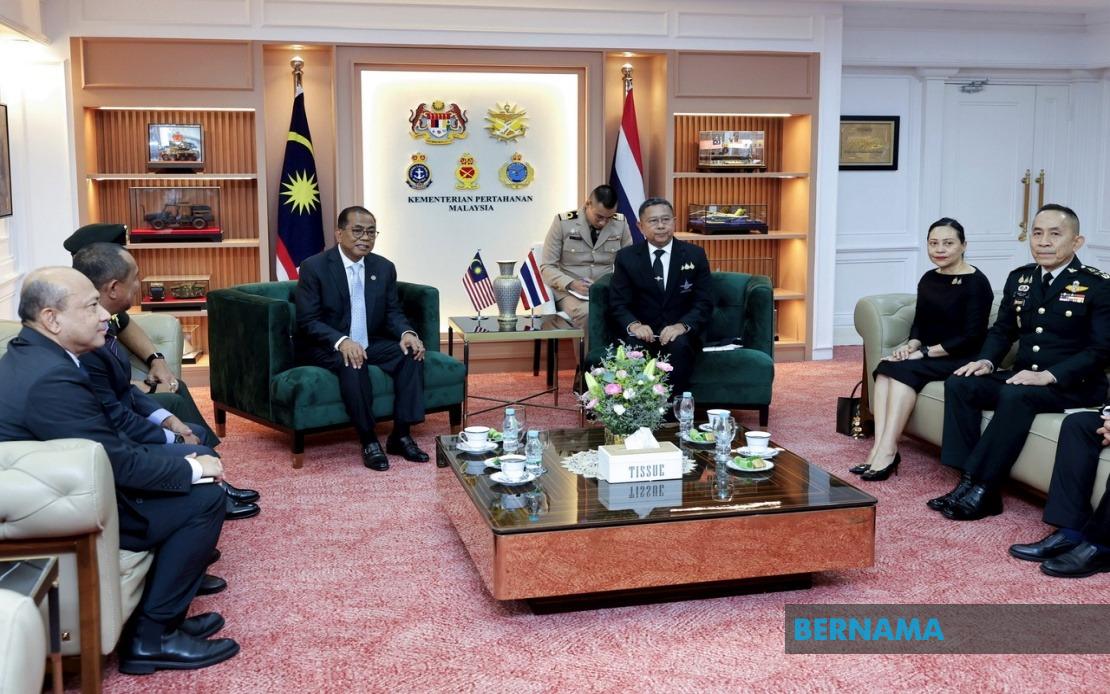
Defence Minister Datuk Seri Mohamed Khaled Nordin has signalled Malaysia's readiness to deepen engagement with Thailand's freshly appointed Peace Dialogue Panel chief, Thanut Suvarnananda, as part of sustained efforts to foster peace and stability across the restive southern region of Thailand. The announcement came during an official visit by Thai Defence Minister Lieutenant General Adul Boonthumjaroen to Kuala Lumpur, underscoring the importance both nations place on resolving a long-standing conflict that has claimed thousands of lives over the past two decades.
Malaysia's warm reception of Thanut's elevation to the role reflects Kuala Lumpur's strategic interest in the resolution of Thailand's southern insurgency, which has affected not only Thailand but also posed security challenges for Malaysia as a neighbouring state. Mohamed Khaled expressed confidence that the personnel change would inject fresh momentum into the peace process, contingent upon sustained bilateral cooperation rooted in mutual understanding and shared commitment to ending the violence. The minister's remarks suggest that Malaysia sees the appointment as an opportune moment to revitalise dialogue mechanisms that have occasionally stalled or lost traction in recent years.
Malaysia's involvement in this peace process remains carefully circumscribed, with the government maintaining that its role extends only to facilitation rather than direct intervention in Thailand's sovereign affairs. Datuk Rabin Basir serves as Malaysia's designated facilitator for the Southern Thailand Peace Dialogue, a position that allows Kuala Lumpur to maintain balance between supporting regional stability and respecting Thailand's autonomy over military operations and domestic security matters. This distinction is crucial, as it shields Malaysia from accusations of overreach while enabling it to provide practical support where required.
Beyond the peace dialogue framework, the two defence ministers used their meeting to address the pressing issue of cross-border security threats. Mohamed Khaled and his Thai counterpart agreed to escalate cooperative efforts aimed at dismantling smuggling networks and preventing the illicit movement of militant operatives across the Malaysia-Thailand border. These transnational criminal and security networks have long complicated enforcement efforts on both sides, occasionally undermining progress made during peace negotiations. The agreement signals recognition that security cooperation complements, rather than contradicts, diplomatic peacebuilding initiatives.
The Malaysia-Thailand General Border Committee, a longstanding institutional mechanism for managing bilateral border issues, will serve as the primary venue for intensifying these security measures. Malaysia is set to host the 57th iteration of the GBC Meeting within the current year, bringing together military and civilian officials responsible for border management. The agenda will encompass a comprehensive range of concerns: conventional border security protocols, coordinated military operations in sensitive zones, socio-economic initiatives designed to improve conditions in borderland communities, and frameworks for disaster response and management. This holistic approach acknowledges that sustainable peace requires addressing not only immediate security threats but also underlying socio-economic grievances that recruitment networks have historically exploited.
Moroccan officials have positioned their country as a supporter of Thailand's bilateral approach to resolving its separate territorial dispute with Cambodia, eschewing multilateral mediation in favour of direct negotiation between the two parties. This stance aligns with the ASEAN Way, a diplomatic principle emphasising non-interference, consensus-building, and peaceful resolution of disputes through private channels rather than public forums that might inflame nationalist sentiments. Mohamed Khaled's affirmation of this position underscores Malaysia's preference for traditional ASEAN norms even as the regional organisation grapples with evolving geopolitical pressures and calls for stronger collective action on contentious matters.
Recognising the 2026 ASEAN Chairmanship will rotate to the Philippines, Malaysia has proactively engaged with Manila regarding the Thai-Cambodian border issue, extending the hope that the Philippines might eventually contribute to de-escalation efforts. This forward-looking diplomatic positioning allows Malaysia to support regional stability without appearing to orchestrate outcomes, while also strengthening Malaysia's voice within ASEAN deliberations on security matters. The confidence placed in the Philippines reflects broader trust in ASEAN mechanisms and the principle that regional problems are best addressed through intra-regional dialogue rather than external arbitration.
The bilateral meeting also functioned as a strategic alignment exercise ahead of upcoming multilateral defence forums. Both ministers used the opportunity to synchronise their positions in advance of the ASEAN Defence Ministers' Meeting and the expanded ADMM-Plus format, which includes major powers such as the United States, China, India, Japan, and Australia. This preparatory coordination ensures that Malaysia and Thailand can present aligned viewpoints during broader regional security discussions, amplifying their influence while maintaining ASEAN solidarity on key principles. Given the geopolitical tensions surrounding the South China Sea and great power competition in the Indo-Pacific, such internal consensus-building within ASEAN becomes increasingly valuable.
As a testament to their broadening defence partnership, Malaysia and Thailand have committed to executing a Memorandum of Understanding within the year that will formalise expanded cooperation in regional security matters and jointly advance the development of their respective domestic defence industries. This economic dimension to their security relationship opens pathways for technology transfer, joint production initiatives, and industrial collaboration that could strengthen the technological foundations of both nations' militaries. Such arrangements also create stakeholder networks within both countries' defence establishments with vested interests in maintaining strong bilateral ties, potentially insulating the relationship from political fluctuations or diplomatic incidents.
The convergence of Malaysia's peace facilitation role, security cooperation initiatives, and defence industry collaboration with Thailand demonstrates a multifaceted approach to regional stability that extends beyond traditional peacekeeping. By simultaneously supporting dialogue processes, enhancing border security mechanisms, and building institutional defence ties, Malaysia attempts to create interlocking incentives and dependencies that reinforce peaceful resolution of the southern Thailand conflict. Whether these parallel tracks can generate sufficient momentum to overcome years of entrenched positions and mistrust between Thai authorities and insurgent groups remains uncertain, but the renewed high-level attention from both governments at least signals that neither side views the status quo as permanently acceptable.

