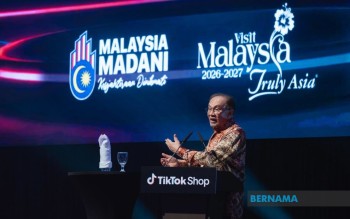
Malaysia is preparing to implement stricter oversight of incoming foreign investment to guarantee that businesses operating within the country deliver meaningful economic returns and employment opportunities to local communities. Prime Minister Datuk Seri Anwar Ibrahim made the declaration following his attendance at the TikTok Shop Summit 2026 in Kuala Lumpur, signalling the government's determination to balance openness to international commerce with protection of domestic economic interests.
The tightened vetting process responds to intelligence provided by the Ministry of Investment, Trade and Industry regarding a troubling pattern where foreign companies establish a minimal Malaysian presence through warehousing and logistics operations while generating virtually no local employment or purchasing activity. These operations exploit Malaysia's business-friendly regulatory environment and strategic port infrastructure without reciprocating through hiring or sourcing from the domestic economy, creating what Anwar characterises as a form of economic extraction rather than genuine partnership.
Among the most concerning practices flagged by authorities are instances where foreign businesses register ostensibly local enterprises under the names of traditional Malaysian businesses—coffee shops, tea stalls, and biscuit makers—only to stock and sell entirely imported merchandise. This deceptive approach undermines consumer trust, distorts market competition by disguising foreign provenance, and denies genuine local entrepreneurs the opportunity to compete fairly in their own market sectors. The Prime Minister emphasised that such arrangements provide no tangible benefit to Malaysia's communities or established small business operators who have invested years building their enterprises.
Anwar illustrated the structural problem through the example of large international investors who lease warehouse facilities at Port Klang, one of Southeast Asia's busiest container ports, purely for redistribution and transit purposes. These operations require no engagement with local labour markets, no procurement from Malaysian suppliers, and no integration into the country's industrial value chains. They represent what economists term "truncated engagement"—businesses that use Malaysia's physical and regulatory infrastructure while remaining fundamentally disconnected from local economic activity. The enforcement division has already begun investigating and taking action against such operations, though government officials view comprehensive policy reform as necessary to prevent proliferation.
The Prime Minister's comments also addressed the broader challenge posed by cross-border e-commerce platforms such as Temu and Pinduoduo, which funnel inexpensive foreign merchandise directly into Malaysia's consumer market at prices that domestically produced goods struggle to match. While acknowledging Malaysia's commitment to free trade principles and the genuine benefits that digital commerce brings to consumers, Anwar indicated that the government recognises predatory pricing practices—commonly referred to as market dumping—as a structural threat to local manufacturing and retail sectors. The strategic question facing policymakers involves distinguishing between legitimate competitive pricing and deliberate market-capture tactics designed to eliminate local competitors.
This investment review initiative reflects a broader recalibration of Malaysia's approach to foreign direct investment, moving beyond the simple metric of capital inflow toward a more sophisticated assessment of net economic contribution. Rather than welcoming all foreign investment indiscriminately, the government is signalling that future applicants must demonstrate concrete mechanisms through which their operations will benefit Malaysian workers, suppliers, and communities. This represents a significant philosophical shift from earlier decades when foreign investment was pursued largely regardless of its domestic linkages or employment effects.
The timing of these remarks is notable given Malaysia's positioning as a regional hub for Southeast Asian commerce and its historical role as an attractive destination for multinational corporations and logistics operations. As countries across the region grapple with similar challenges posed by digital trade platforms and footloose foreign investors, Malaysia's approach may serve as a template for other governments seeking to maintain openness while protecting local economic interests. The model attempts to thread a difficult needle between protectionism and naive openness by focusing specifically on demonstrable local benefit rather than restricting foreign participation outright.
Implementing such a review framework presents considerable technical and administrative challenges. Government agencies must develop transparent criteria for evaluating whether proposed investments genuinely contribute to local economic objectives, train personnel to conduct thorough due diligence, and establish mechanisms for ongoing monitoring of foreign-controlled operations. Additionally, policymakers must ensure that heightened scrutiny does not become a pretext for selective discrimination or corruption, which could damage Malaysia's reputation as a rule-based business environment.
For multinational corporations and investors already operating in Malaysia, the announcement suggests that the era of minimal-engagement business models may be drawing to a close. Companies that have relied on warehousing operations, import-export arbitrage, or nominal local partnerships without substantive local hiring or supply-chain integration may face pressure to restructure their operations or face enforcement actions. This could prompt some businesses to either deepen their Malaysian operations or exit the market entirely, a development with potentially significant implications for logistics sectors and e-commerce infrastructure.
The government's position also carries implications for Malaysia's commitments under various free-trade agreements, which generally prohibit discriminatory treatment of foreign investors. Officials will need to craft investment review criteria that withstand potential legal challenges from trading partners while remaining credible as genuine economic policy rather than disguised protectionism. The distinction between legitimate economic oversight and impermissible trade restrictions often becomes contentious in international dispute resolution, requiring careful legal framing and transparent implementation.
Anwar's comments signal that Cabinet discussions about investment policy have intensified, with MITI providing detailed briefings about problematic investment patterns. This administrative awareness, combined with political direction from the Prime Minister's office, suggests that regulatory changes may be implemented relatively quickly. The specific mechanisms—whether through amendments to investment promotion legislation, stricter conditions attached to manufacturing or trading licenses, or enhanced monitoring of foreign-owned enterprises—remain to be detailed by relevant ministries in coming weeks.

