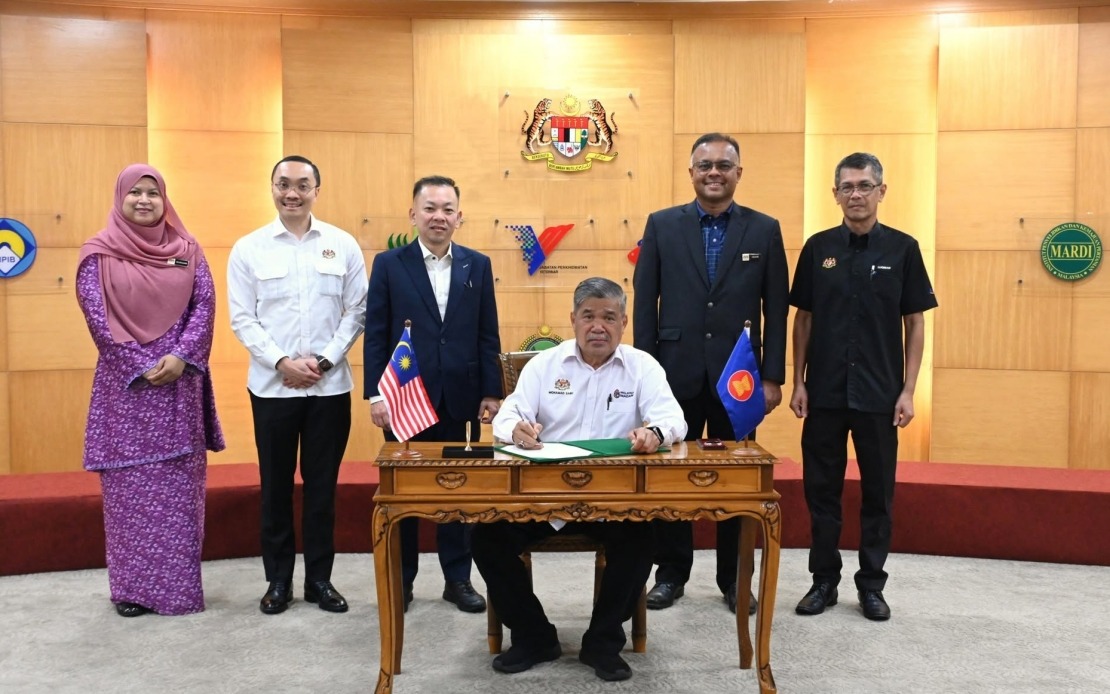
Malaysia has secured two landmark agricultural agreements that promise to reshape the nation's position in regional and international farm product markets while fortifying ASEAN's collective capacity to withstand climate-related agricultural shocks. Agriculture and Food Security Minister Datuk Seri Mohamad Sabu signed both memoranda of understanding at the ASEAN Ministers on Agriculture and Forestry meeting, marking a significant step in the country's agricultural diplomacy and food security strategy.
The first pact, the ASEAN Cooperation in Agriculture and Forest Products Scheme, establishes a comprehensive framework for agricultural collaboration across the ten-member bloc. By focusing on five interconnected objectives—strengthening food security, facilitating trade, encouraging private sector participation, conserving natural resources sustainably, and coordinating regional positions on international agricultural matters—the agreement creates a structured platform for member states to work in concert rather than compete against each other. This coordinated approach reflects growing recognition within ASEAN that fragmented agricultural policies undermine the region's negotiating power in global trade negotiations and weaken collective resilience to supply chain disruptions.
Under this framework, Malaysia assumes leadership roles befitting its agricultural strengths. The Ministry of Plantation and Commodities takes the lead on palm oil and cocoa, sectors where Malaysia maintains significant global market share and production expertise. Simultaneously, the Ministry of Agriculture and Food Security assumes stewardship of agri-food products, positioning Malaysia as a regional reference point for food production standards and innovation. This division of responsibilities leverages existing Malaysian capabilities whilst positioning the country as a standard-setter within ASEAN, enhancing its soft power and market influence.
The strategic implications extend beyond simple trade facilitation. By coordinating marketing campaigns to defend palm oil and agri-food products in global markets, the agreement enables ASEAN members to present a united front against protectionist measures and reputational attacks. For Malaysia particularly, where palm oil faces persistent environmental criticism in Western markets, collective ASEAN advocacy provides diplomatic cover and strengthens the narrative around sustainable production practices. This coordinated positioning proves especially valuable as the nation navigates complex global sustainability requirements whilst maintaining the economic importance of its plantation sectors.
Market access improvements under the first MoU extend across a broader agricultural portfolio than might initially appear. Beyond headline commodities, the agreement facilitates trade in industrial crops, livestock products, herbal remedies, medicinal plants and forest-derived goods including mushrooms, nuts and wild honey. For Malaysian smallholders, cottage industries and value-added processors, these expanded access pathways represent genuine commercial opportunities. A farmer producing specialty medicinal herbs or a cooperative processing forest products now operates within an ASEAN framework explicitly designed to lower trade barriers and streamline logistics.
The second memorandum, negotiated between ASEAN and China, introduces climate adaptation as a central agricultural concern. Spanning eighteen cooperation areas over five years, this agreement acknowledges that Southeast Asia's agricultural future depends on technological innovation and policy frameworks designed specifically for climate challenges. Low-carbon agriculture, sustainable forestry, disaster risk management and agricultural insurance collectively form an emerging agricultural paradigm that Malaysia cannot afford to ignore, particularly given its vulnerability to flooding and drought patterns intensifying under climate change.
Climate-smart technology transfer represents perhaps the most transformative element of the ASEAN-China cooperation. Malaysia gains access to research, policy expertise and proven agricultural practices developed at scale in China, a nation that has invested heavily in precision farming, water-efficient irrigation systems and crop varieties adapted to climate stress. Rather than developing these technologies independently through costly research and development cycles, Malaysian institutions can adopt and localise proven solutions, accelerating the nation's transition towards low-carbon agricultural production.
The disaster resilience component carries particular weight for Malaysia given the nation's exposure to seasonal flooding and the cascading impacts on food production and rural livelihoods. Structured cooperation on disaster risk management, combined with accessible agricultural insurance products, transforms reactive crisis response into proactive risk mitigation. Farmers operating within a coherent regional framework, sharing early warning systems and accessing insurance schemes designed specifically for climate-related losses, face dramatically reduced vulnerability compared to those dependent solely on national mechanisms.
Cross-border pest and disease control, another focus area, addresses a genuine regional concern often overshadowed by headline agricultural trade issues. The fall armyworm, African swine fever and emerging plant pathogens respect no national boundaries. By coordinating surveillance, research and response protocols across ASEAN, member states create a defensive perimeter far more effective than individual national efforts. Malaysia's strategic position as a trade hub means that diseases entering the country rapidly spread throughout the region; conversely, effective Malaysian disease control provides regional benefits extending far beyond the nation's borders.
Research cooperation and trade information-sharing provisions establish the informational infrastructure supporting all other elements. When ASEAN nations collectively pool agricultural research findings, share market intelligence and coordinate policy responses, individual member states benefit from intelligence that would prove prohibitively expensive to develop independently. Malaysian agricultural researchers gain access to findings from across the region and China, whilst simultaneously contributing their own expertise to a collective knowledge commons.
For Malaysian policymakers, these agreements signal a shift towards agricultural modernisation and climate adaptation as core national priorities rather than peripheral concerns. The commitments implicit in these MOUs—requiring investment in research capacity, extension services, and institutional coordination—demand sustained government commitment and budgetary allocation beyond the initial signing ceremony. Success depends on effective implementation at ministry level, coordination between multiple government agencies, and genuine engagement from the private agricultural sector.
These pacts arrive at a critical moment for Malaysian agriculture. Traditional plantation-based production faces mounting sustainability pressures, whilst changing climate patterns threaten productivity. Rather than retreating into protectionism or resigned acceptance of decline, Malaysia's signing of these agreements reflects strategic confidence in agriculture's future when combined with technological innovation, regional cooperation and climate adaptation. The true measure of success will emerge not from the MOUs themselves, but from the concrete changes in Malaysian farming practices, export volumes and climate resilience that follow implementation.

