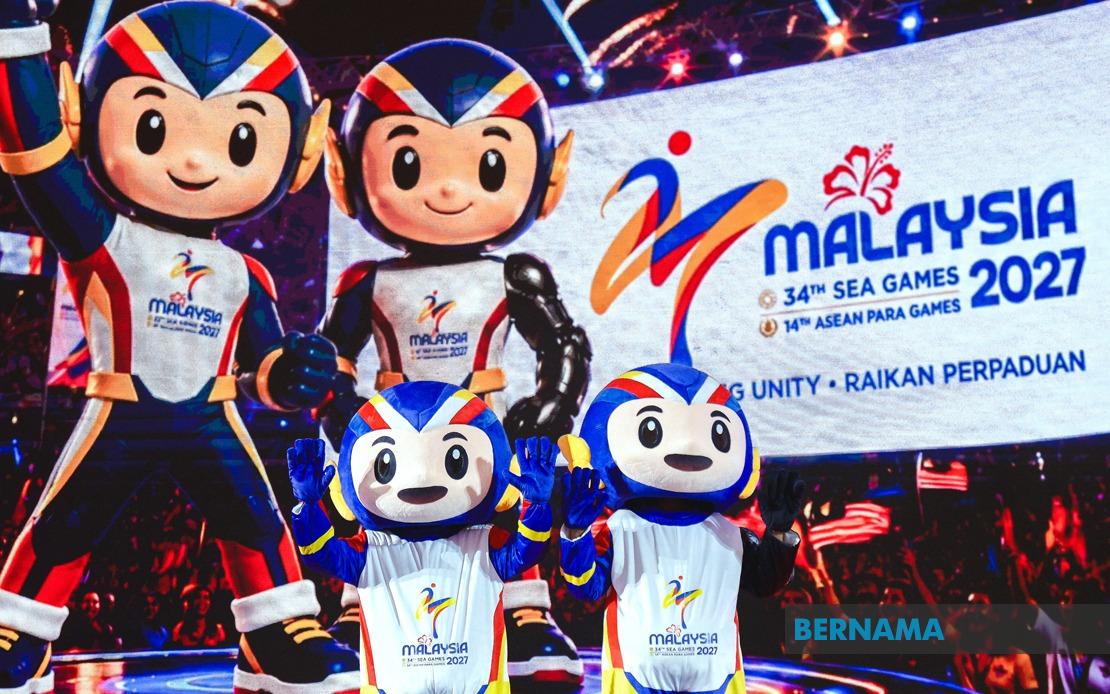
Malaysia has formally unveiled the official theme, mascot, and branding for the 2027 SEA Games and ASEAN Para Games, marking a significant milestone in the host nation's preparation for one of the region's premier sporting events. The unveiling ceremony, held in Putrajaya on July 13, introduced 'Celebrating Unity' as the guiding theme and introduced TUAH, a distinctly modern mascot that departs from the traditional animal-based approach used in previous Games editions.
Youth and Sports Minister Dr Mohammed Taufiq Johari presented the branding during the official unveiling, emphasising how the chosen theme encapsulates the aspirations of Southeast Asian sport. According to Dr Mohammed Taufiq, 'Celebrating Unity' represents far more than a catchy slogan—it embodies a philosophical commitment to strengthening bonds between nations through athletic competition. The minister described the theme as instrumental in driving athletes across the region to push beyond their current capabilities and pursue sporting excellence at the highest levels.
The mascot TUAH signals a deliberate strategic shift in how Malaysia intends to position itself as a host nation. Rather than adopting an animal character, TUAH has been conceptualised as a dynamic, confident, and approachable human figure representing the modern Southeast Asian athlete. This characterisation carries deeper symbolic weight, positioning the Games as a celebration of human achievement and regional solidarity rather than relying on traditional mascot conventions. The choice reflects contemporary thinking about how sports events can meaningfully engage audiences while creating relatable symbols of athletic aspiration.
Visually, TUAH incorporates the colours of the Jalur Gemilang throughout its design, a deliberate choice to reinforce national identity and Malaysian pride. By weaving the national flag's imagery into the mascot, organisers have created a visual bridge between Malaysia's hosting role and the broader ASEAN community. This design decision aims to cultivate a shared sense of ownership and pride not just among Malaysian athletes but throughout the sporting public across Southeast Asia, transforming TUAH into a symbol that transcends national boundaries.
Dr Mohammed Taufiq expressed confidence that TUAH would serve as a fortunate symbol guiding Malaysia towards the overall championship title when the Games take place on home soil. This sentiment reflects the broader competitive ambitions driving Malaysia's hosting efforts. The minister's articulation of hope regarding TUAH's influence underscores how modern sports management integrates psychological and cultural elements alongside technical preparation. The mascot, from this perspective, becomes more than promotional material—it functions as a unifying focal point for national sporting ambitions.
Preparations across Malaysia's distributed hosting model are advancing according to plan, with venues spread across four distinct geographical clusters spanning Sarawak, Penang, Johor, and Kuala Lumpur. Dr Mohammed Taufiq reported that facility development has progressed without significant setbacks, with current focus shifting towards technical and logistical refinement. This decentralised approach to hosting represents an ambitious structural undertaking, distributing the Games across vast distances while maintaining competitive coherence. The minister's confirmation that infrastructure development remains on schedule provides reassurance to stakeholders concerned about Malaysia's capacity to deliver world-class facilities.
The technical aspects now commanding attention include venue readiness, athlete accommodation, transportation networks between clusters, and competition scheduling. These elements, though less visible than physical infrastructure, determine whether the Games ultimately function smoothly for participating nations, athletes, and spectators. Malaysia's emphasis on technical preparation suggests organisers recognise that impressive stadiums mean little without flawless operational systems underpinning competition delivery.
Malaysia's competitive objectives for the 2027 Games are notably ambitious, anchored in the National Sports Council's target of positioning 70 percent of the nation's athletes on the podium at Asian-level competitions by year's end. This benchmark represents a strategic assessment mechanism for determining Malaysia's realistic prospects of capturing overall championships honours. NSC director-general Jefri Ngadirin framed this target as directly predictive of Malaysia's capacity to dominate the 2027 standings. The 70-percent podium aspiration reflects a sophisticated understanding that medal projections for major Games require sustained excellence across multiple sports rather than isolated standout performances.
The timeline for the 2027 Games has been formally established, with the SEA Games scheduled for September 18 to 29, followed immediately by the ASEAN Para Games running October 17 to 23. This back-to-back scheduling creates logistical complexity but also maximises regional sporting momentum and media attention. For Malaysia, hosting both events consecutively within weeks demands exceptional coordination but also extends the nation's opportunity to showcase its sporting governance capabilities and infrastructure quality.
The unveiling of 'Celebrating Unity' and TUAH arrives at a critical juncture in Malaysia's hosting preparations, roughly two-and-a-half years before competition commences. This timing allows sufficient lead time for marketing campaigns, merchandise development, and public engagement initiatives while maintaining urgency around construction and technical finalisation. For Malaysian sports enthusiasts and the broader ASEAN community, the formal introduction of these branding elements transforms the 2027 Games from an anticipated future event into an increasingly tangible reality requiring active preparation and engagement.
The choice of these branding elements carries broader implications for how Malaysia projects itself within ASEAN and to the international sporting community. By emphasising unity through both theme and mascot design, Malaysia signals commitment to inclusive, regionally-focused competition that celebrates collective achievement alongside individual excellence. This positioning distinguishes the 2027 Games conceptually from purely nationalistic sporting events, framing Malaysia's hosting role as a contribution to regional cohesion and shared Southeast Asian identity.

