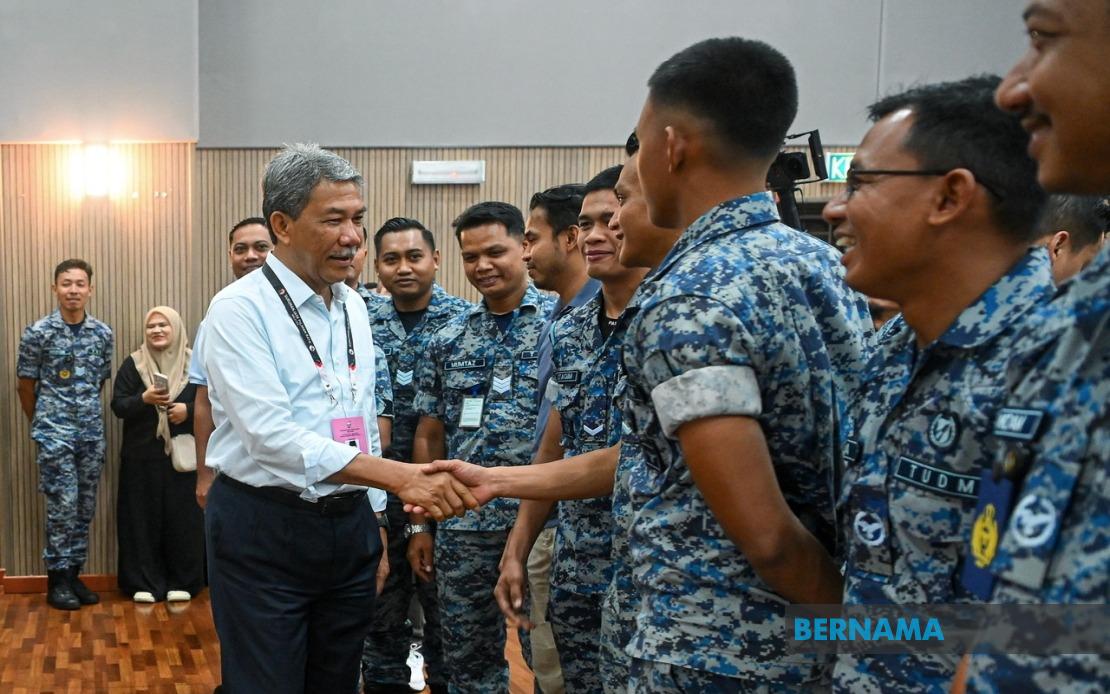
Malaysia's government is prepared to fundamentally reassess its relationship with the United Nations High Commissioner for Refugees if the organisation refuses to adopt stricter collaborative screening measures for refugee applicants, Foreign Minister Datuk Seri Mohamad Hasan warned this week. Speaking after observing early voting procedures at Sendayan Air Base in Seremban, Mohamad articulated growing frustration with what he characterised as insufficient oversight in the refugee documentation system, signalling that Malaysia views UNHCR's continued operational presence as contingent on meaningful cooperation in tightening border and registration controls.
The crux of Malaysia's complaint centres on what officials describe as an alarmingly permissive application process that has essentially transformed UNHCR's Kuala Lumpur office into what Mohamad termed a "magnet" for displaced persons seeking refuge. Rather than implementing rigorous vetting before individuals reach Malaysian soil, the current system permits applicants to submit documentation online from their countries of origin, obtain preliminary approval, and subsequently present themselves at UNHCR offices upon arrival to collect official cards without undergoing substantive in-country screening. This procedural gap has become particularly acute given the region's pressing humanitarian challenges, notably the ongoing displacement of Myanmar's Rohingya population, hundreds of whom were recently documented camping outside UNHCR's premises on Jalan Bukit Petaling in Kuala Lumpur before authorities transferred them to police headquarters for identity verification.
The government's frustration reflects deeper anxieties about irregular migration patterns throughout Southeast Asia, where Malaysia has long served as a transit and destination point for refugees and asylum seekers fleeing persecution and economic hardship. By eliminating meaningful screening procedures, Malaysian officials argue, the current arrangement incentivises further arrivals while simultaneously complicating law enforcement's ability to distinguish between legitimate refugees and individuals who may pose security risks or lack valid claims to protected status. The absence of standardised operating procedures means decisions about card issuance lack transparent criteria, creating administrative chaos that stretches already-strained resources at immigration and security agencies.
Modamad's statement reflects broader Cabinet-level deliberations on the issue, with the matter having been escalated to the Cabinet Committee chaired by Deputy Prime Minister Datuk Seri Dr Ahmad Zahid Hamidi. The government has explicitly requested acceleration of negotiations around a Host Country Agreement designed to establish clearer legal frameworks governing UNHCR operations within Malaysia's jurisdiction. Such an agreement would theoretically establish binding protocols requiring joint screening between UNHCR staff and Malaysian authorities before any refugee documentation is issued, creating accountability mechanisms and standardised criteria for approval. Without such parameters, Malaysia contends it remains exposed to mounting humanitarian burdens without corresponding capacity to manage them effectively.
The timing of these remarks carries significance within Malaysia's broader immigration policy discourse. Southeast Asian nations including Thailand, Indonesia, and Bangladesh already host disproportionately large refugee populations despite possessing limited economic capacity to provide adequate services, educational access, and livelihood opportunities. Malaysia, with its more developed economy and established infrastructure, has become an increasingly attractive destination, intensifying pressure on housing, employment, and social services in urban centres where refugee populations tend to concentrate. By conditioning UNHCR's presence on stricter screening, Malaysia signals its intention to recalibrate its humanitarian burden-sharing approach, though such threats also risk complicating the regional protection framework.
Modamad specifically highlighted the technical deficiencies enabling the current permissiveness. Online application systems designed without adequate verification checkpoints have become the pathway through which individuals bypass in-person assessment. The Foreign Minister's observation that applicants in Myanmar can complete applications digitally, travel to Malaysia, and immediately receive identification documents underscores how technology has inadvertently facilitated irregular flows. Malaysian authorities argue this represents a critical vulnerability where digital convenience has superseded security and vetting rigour, creating what amounts to a de facto open-door policy irrespective of official statements regarding controlled immigration.
From a regional perspective, Malaysia's position reflects growing tensions between humanitarian obligations and national security concerns that characterise contemporary Southeast Asian politics. Member states of ASEAN have historically maintained ambiguous relationships with UNHCR, viewing it simultaneously as a necessary partner in managing displacement crises and as an external actor whose policies may not align with state sovereignty or national interests. Malaysia's threat to reconsider UNHCR's presence therefore sends signals beyond Kuala Lumpur, potentially influencing how other regional governments approach their own operational agreements with the UN body. Thailand and Indonesia, similarly hosting substantial refugee populations, may view Malaysia's negotiating position as a template for demanding greater host-country control over asylum determination processes.
The screening mechanism Malaysia proposes would represent a significant departure from UNHCR's traditional operational model, which emphasises the agency's institutional independence as essential to credible protection determinations. Subjecting UNHCR assessments to joint approval by Malaysian authorities introduces state influence into what the UN body considers its core mandate, potentially creating conflicts where security considerations override protection principles. UNHCR has historically resisted such arrangements in other contexts, arguing that host governments may use security justifications to arbitrarily restrict access to asylum procedures. Malaysia's willingness to issue explicit ultimatums suggests confidence that its position reflects broader regional sentiment, or alternatively, frustration sufficiently acute to justify confrontation with an established international institution.
The practical implications extend beyond diplomatic wrangling. If Malaysia implements its threatened reconsideration of UNHCR's presence, the immediate consequence would be substantial displacement of the roughly 180,000 registered refugees currently documented in the country, most of whom depend on UNHCR for access to services, documentation, and international relocation pathways. Such a development would destabilise already precarious refugee communities while simultaneously elevating humanitarian pressures on neighbouring countries unprepared to absorb additional populations. Alternatively, UNHCR's departure could drive displaced persons into completely irregular status, eliminating even the minimal oversight currently provided through registration systems and facilitating exploitation by smuggling networks.
Government officials framing these negotiations emphasise they seek partnership rather than confrontation, requesting that UNHCR embrace stricter protocols rather than depart entirely. The reference to expediting Host Country Agreement negotiations suggests Malaysia views formal agreements as the resolution pathway, provided UNHCR demonstrates willingness to accommodate Malaysian concerns about screening rigour. This represents a structured approach to a structural problem, acknowledging that neither complete deference to UNHCR authority nor unilateral termination of cooperation serves Malaysia's interests optimally. The middle ground involves rebalancing institutional relationships to grant host countries greater voice in determining which individuals receive refugee status within their territories.
The controversy also intersects with Malaysian domestic political considerations, as refugee issues have periodically become flashpoints in electoral contexts where opposition parties have accused governments of insufficient firmness on immigration control. By publicly demanding stricter screening and threatening UNHCR withdrawal if cooperation isn't forthcoming, the government positions itself as defending national interests against external pressure. However, sustained pressure on UNHCR without movement toward agreed protocols risks international criticism from human rights organisations and development partners invested in regional refugee protection, complicating Malaysia's broader diplomatic relationships and potentially affecting aid and trade relationships with countries that view UNHCR's role as fundamental to humanitarian governance.
Moving forward, Malaysia's position will likely influence how Southeast Asian governments collectively engage with UNHCR during upcoming discussions about the regional humanitarian architecture. Whether the organisation proves willing to accommodate Malaysian demands for substantively tighter screening through joint procedures will determine whether Mohamad's warning represents a negotiating position or a preview of policy transformation. The broader question concerns whether UNHCR can maintain operational credibility while accepting heightened state involvement in asylum determination, or whether doing so undermines the institutional independence that defines its mandate. Malaysia's challenge represents a wider regional reckoning with how to balance humanitarian protection responsibilities against state security and capacity concerns in an era of unprecedented displacement.

