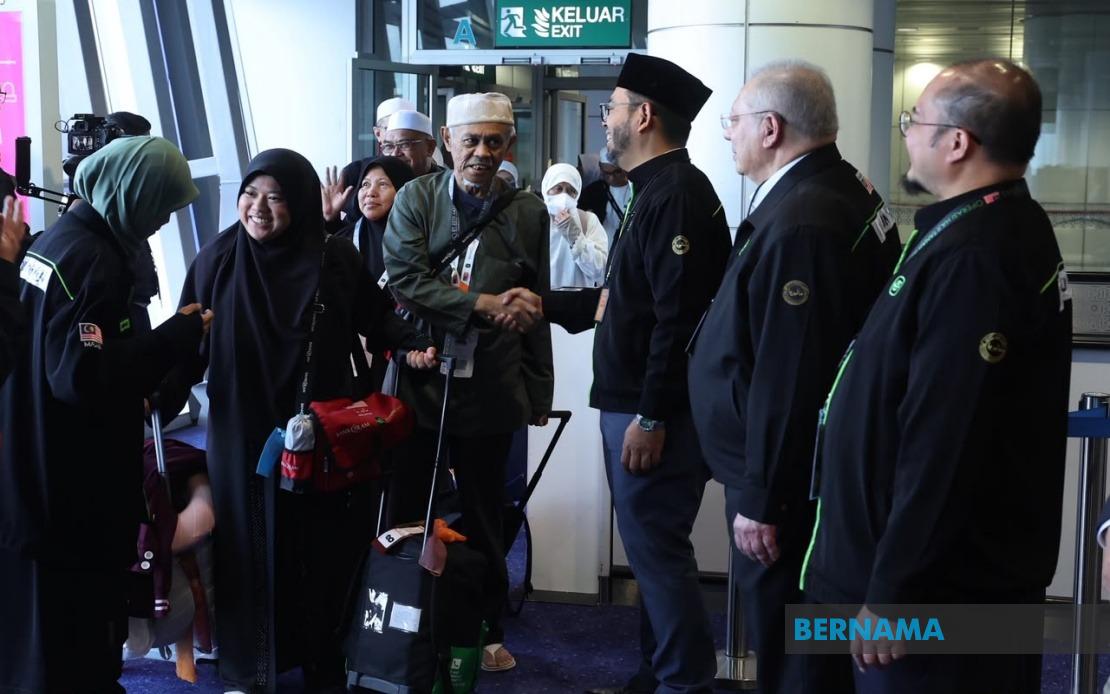
The arrival of 258 pilgrims at Kuala Lumpur International Airport on Tuesday afternoon marked the symbolic conclusion of Malaysia's haj programme for the 1447 Hijrah season, with the last Malaysia Airlines flight touching down at 12:10 pm after a journey from Madinah. The completion of what officials characterised as a seamless operation represents a significant achievement for the country's Islamic administrative apparatus, particularly given the volatile geopolitical environment surrounding the Arabian Peninsula this year.
Dr Zulkifli Hasan, the Minister in the Prime Minister's Department overseeing Religious Affairs, underscored the scale of the accomplishment by emphasising that every single pilgrim returned in good health and safety. Speaking to waiting journalists at the airport, he highlighted how the successful repatriation of all participants stood as testament to the meticulous planning and coordination between multiple government agencies, religious authorities, and private sector partners who collaborated throughout the season. The minister's remarks reflected an evident sense of relief that the operation had navigated potential pitfalls without incident.
Beyond merely completing the pilgrimage schedule, Malaysia's performance this year attracted international recognition at the highest level. The country was presented with the Labbaikum Diamond Award, representing the pinnacle of accolades from Saudi Arabia's Ministry of Haj and Umrah. This honour specifically acknowledges superior haj management and service delivery globally, positioning Malaysia among the world's most competent administrators of this sacred obligation. For a Muslim-majority nation where haj represents both a spiritual imperative and a matter of considerable national pride, such external validation carries substantial diplomatic and cultural significance.
The success stemmed partly from enhanced preparatory frameworks that differentiated this season's approach. Tabung Haji, the state-backed pilgrimage fund, invested in more rigorous pre-departure training programmes designed to instil discipline and religious consciousness among participants. These intensive courses equipped pilgrims with practical knowledge about health protocols, cultural protocols, and behavioural expectations during their time in the Holy Land. The educational investment appeared to have borne fruit, as officials credited the exemplary conduct and commitment of Malaysian pilgrims themselves as instrumental to operational excellence.
Technological innovations also played a pivotal role in streamlining administrative processes. The implementation of the MyNIISe system substantially reduced friction in visa management procedures, eliminating bottlenecks that had previously created delays or confusion. This digital infrastructure modernisation reflects Malaysia's broader push toward e-governance within religious institutions, demonstrating that modernisation and Islamic principles need not exist in tension. For Malaysian pilgrims navigating bureaucratic requirements, such efficiency improvements translate directly into reduced stress and more time for spiritual preparation.
Physical arrangements in Saudi Arabia itself underwent meaningful upgrades that enhanced the comfort and welfare of Malaysian contingents. The provision of sofa beds and improved tent accommodation addressed longstanding complaints about spartan conditions in previous years. Additionally, the introduction of round-the-clock bus services connecting mosques to residential facilities substantially eased the logistical burden of daily worship and movement. These amenities, while seemingly modest, accumulate into significant quality-of-life improvements for elderly pilgrims or those with mobility challenges, thereby increasing the accessibility of the pilgrimage experience across broader demographic groups.
The Regional context lent particular weight to Malaysia's achievement. The ongoing conflict in West Asia introduced unprecedented uncertainty into this year's haj calendar, with concerns about security, supply chain disruptions, and potential travel complications. Several other nations faced cancellations, postponements, or reduced pilgrim quotas due to safety assessments. Malaysia's ability to deploy its full contingent without compromise, whilst maintaining safety standards, demonstrated both confidence in threat assessments and the robustness of its coordination mechanisms with Saudi authorities. This performance differential positions Malaysia as a reliable partner within the Islamic world's institutional framework.
Government agencies coordinated across multiple domains to achieve this result. The Health Ministry ensured medical readiness, the Immigration Department managed border procedures, Malaysia Airlines executed transport operations, and various logistics providers managed the complex supply chains necessary to support thousands of individuals across thousands of kilometres. Deputy Minister Marhamah Rosli's presence at the welcome ceremony symbolised this whole-of-government commitment extending beyond religious affairs proper into health, immigration, and defence considerations.
Tabung Haji has already commenced retrospective evaluations and post-mortem analyses designed to extract lessons from this season's experience. Rather than resting on laurels following international recognition, the organisation is systematically documenting what functioned effectively and where refinements could further elevate performance. This continuous improvement mindset suggests that the Labbaikum Award represents not the zenith of achievement but rather a foundation upon which to build enhanced services.
Looking ahead, Malaysia has scheduled the National Haj Muzakarah—an important religious and administrative conference—for August. This forum will convene relevant stakeholders to deliberate on emerging challenges and propose structural improvements for subsequent seasons. The deliberative process reflects Malaysia's approach of treating haj administration not as a once-yearly logistical exercise but as an evolving discipline requiring ongoing intellectual investment and stakeholder engagement. Such institutionalised reflection mechanisms help ensure that improvements become embedded within organisational culture rather than representing isolated initiatives.

