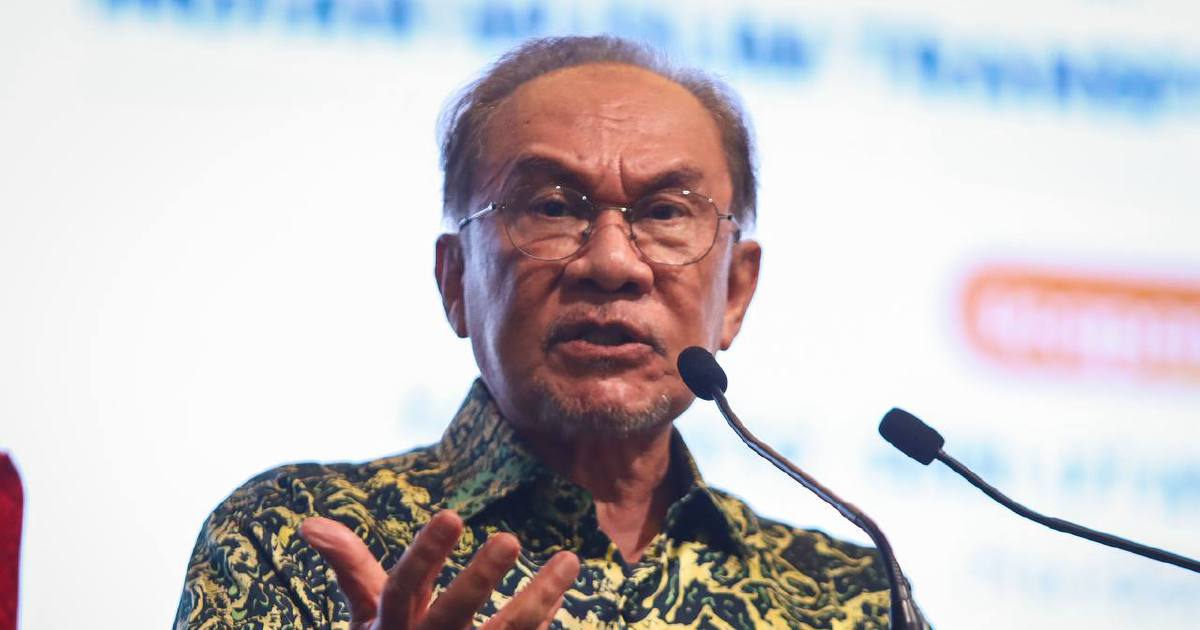
Prime Minister Datuk Seri Anwar Ibrahim has made clear that Malaysia's government will adopt a decisive stance against any refugee groups attempting to occupy public areas or create disorder in the country. Speaking directly on the matter, Anwar underscored the administration's commitment to maintaining public safety and social stability across the nation.
The statement comes amid ongoing tensions surrounding refugee management in Malaysia, where the presence of irregular migrants and asylum seekers has become an increasingly complex policy challenge. Malaysia hosts one of the largest refugee populations in Asia, with hundreds of thousands of individuals from conflict zones including Myanmar, Afghanistan, Syria, and Somalia seeking shelter within its borders. This demographic reality has created substantial pressures on public infrastructure, social services, and community cohesion across urban and suburban areas.
The prime minister's remarks reflect a broader governmental approach aimed at balancing humanitarian obligations with the practical realities of maintaining public order. Malaysia, while not a signatory to the 1951 Refugee Convention, has long managed refugee populations through its own administrative frameworks and in cooperation with the United Nations High Commissioner for Refugees. However, the sheer scale of displacement globally and regionally has placed enormous strain on these systems.
Recent incidents involving refugee gatherings in public spaces have prompted heightened scrutiny from both authorities and civil society organisations. Concerns have been raised about the conditions under which large numbers of asylum seekers and refugees live, often in overcrowded settlements or informal urban communities. Simultaneous worries about public order and resource allocation have made refugee management a politically sensitive issue across Malaysian society.
Anwar's position signals that while the government may continue its humanitarian engagement with refugee populations and international organisations, it will not tolerate situations where refugee groups take control of public squares, parks, or transportation hubs. This stance reflects a delicate equilibrium that many nations across Southeast Asia attempt to maintain—responding to international humanitarian expectations while addressing domestic concerns about public safety and infrastructure capacity.
The implications of this policy direction extend beyond Malaysia's borders. Regional nations including Thailand, Indonesia, and Bangladesh face similar pressures from displaced populations. How Malaysia manages its refugee populations and maintains public order will influence broader regional approaches to asylum management and could serve as a reference point for neighbouring countries developing their own response strategies.
From a practical perspective, the government's commitment to preventing occupation of public spaces suggests potential increases in monitoring, police presence, and enforcement activities in areas where refugee populations concentrate. This could affect daily life in various urban neighbourhoods where migrant communities have established informal settlements or gathering points. The mechanisms through which the government enforces such policies will be critical in determining whether the approach succeeds without creating humanitarian concerns or widening social divisions.
The statement also raises questions about the government's longer-term strategy for refugee management. While preventing public disruptions addresses immediate order concerns, sustainable solutions require investment in refugee housing, processing systems, livelihood support, and integration programmes. Various international organisations and local non-governmental bodies have advocated for such comprehensive approaches, arguing that merely restricting public presence without addressing underlying needs may prove counterproductive over time.
Anwar's clarity on this matter may be intended partly to address public anxiety in Malaysia about refugee impacts on employment, housing, and social services. Public opinion surveys have shown mixed sentiments toward refugee populations, with significant portions of the Malaysian public expressing concern about competition for jobs and resources. By articulating a firm stance on public order, the government appears to be reassuring citizens that these concerns are being taken seriously while signalling that the nation has not abandoned its humanitarian principles entirely.
The international humanitarian community will likely monitor how Malaysia implements this policy direction. Organisations focused on refugee rights and protection will seek assurances that enforcement efforts do not amount to suppression or harassment of vulnerable populations. Balancing these competing interests remains one of the defining challenges of modern refugee governance, particularly in middle-income countries like Malaysia that shoulder disproportionate responsibility for hosting displaced persons.
Looking forward, the success of Malaysia's refugee management approach will depend significantly on whether authorities can address the root causes driving public disorder while maintaining access to essential services for vulnerable populations. This requires cooperation between government agencies, international partners, and local communities—a coordination challenge that extends well beyond the simple declaration of policy intent.

