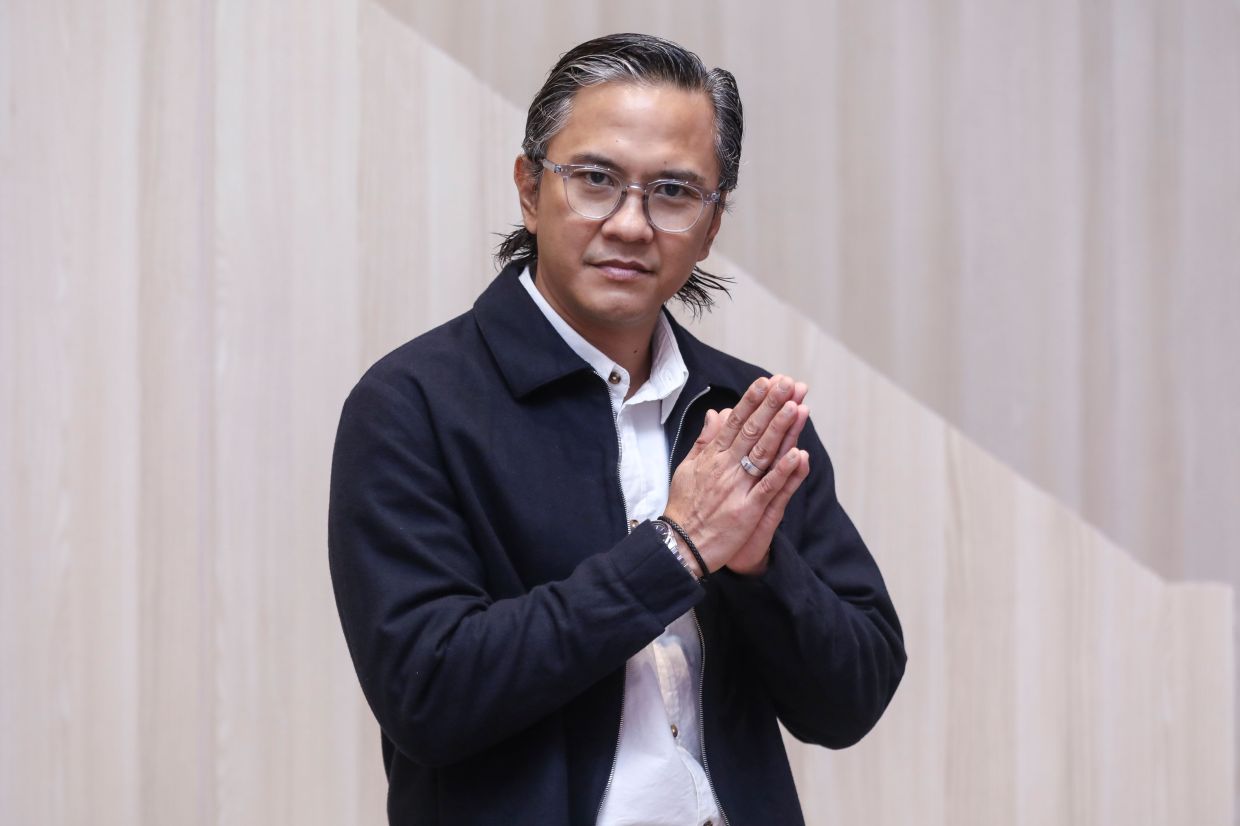
At 46 years old, actor Beto Kusyairy has reached a stage in his career where conventional markers of success have lost their appeal. No longer driven by the pursuit of fame or popularity, he now evaluates opportunities based on artistic merit and personal fulfillment. This philosophical shift has led him to be deliberately non-selective about the medium through which stories are told—whether cinema, television, radio drama, or digital platforms matter far less than the quality of the script, the calibre of collaborators, and the overall production standards. His willingness to work across formats reflects a more pragmatic approach to creative work, one that prioritises substance over the prestige traditionally associated with particular industries.
This commitment to meaningful storytelling manifested recently in his involvement with an Astro Originals series that has become a cultural touchstone in Malaysian entertainment. The production tells the story of a father navigating a child abduction case, with his character falling under suspicion despite being a devoted parent whose memory lapses regarding the incident raise police questions. While functioning as a compelling crime narrative, the series ventures into territory that Malaysian broadcasters have historically sidestepped, weaving examinations of childhood trauma, sexual abuse, and child exploitation into its narrative fabric.
The commercial and social reach of the project has exceeded even optimistic projections. Astro Shaw reported that the eight-episode series generated over 58 million video views and reached 9.5 million users across social media platforms, establishing it as one of the year's most discussed local productions. This momentum extended to Netflix, where the series maintained a position in the platform's top 10 chart for six consecutive weeks—a notable achievement for regionally produced content competing against international productions with substantially larger budgets.
What Beto found most gratifying, however, was not merely the quantitative reach but the quality of audience engagement. During the series' broadcast, he and fellow cast members maintained active dialogue with viewers on Instagram and Threads, observing how public discourse evolved. Initially, engagement centred on the whodunit mechanics; audiences theorised about plot developments and debated suspect motivations with the enthusiasm of amateur investigators. This active participation already signalled something significant about viewer investment and willingness to engage with the material.
As episodes accumulated, however, the conversation shifted into more vulnerable territory. Beto received direct messages and read social media comments from viewers who recognised their own experiences reflected on screen. Some shared stories of personal trauma connected to the themes explored in the series. This migration from surface-level entertainment consumption to genuine emotional recognition and catharsis suggests something meaningful about contemporary Malaysian society's readiness to discuss previously suppressed issues.
The actor views these disclosures not as incidental benefits but as central to the project's purpose. He interprets the courage viewers displayed in articulating difficult personal histories—even anonymously through social media—as evidence that cultural attitudes toward sensitive topics have genuinely shifted. For many of these viewers, the series apparently functioned as permission to speak about experiences they had carried silently, constrained by historical social pressures prioritising family reputation and honour over disclosure and healing.
Beto attributes this cultural evolution to generational change and evolving social consciousness. Where previous decades saw parental and community concerns about family standing deterring public discussion of abuse or harassment, contemporary Malaysia appears more inclined toward confronting these issues directly. The willingness of viewers to engage with content addressing sexual abuse and exploitation suggests a broader societal acknowledgment that silence perpetuates harm and that justice requires visibility. This represents a meaningful departure from historical practice in Southeast Asia, where such matters remained confined to private spaces.
The series creators did not explicitly set out to provoke these conversations; their initial objective was simply faithful storytelling intended to build awareness and resonate emotionally with audiences. The extent to which the production catalysed dialogue around trauma and abuse exceeded their expectations, yet it validated their instinct to approach sensitive material with seriousness and subtlety. Beto emphasises that drama functions most effectively not when it lectures viewers but when it creates space for audiences to draw their own conclusions and apply narratives to their lived experiences.
This distinction—between didactic content that preaches and storytelling that trusts viewers' interpretative capacity—reveals something crucial about Malaysian audience maturity. Rather than requiring explicit moral instruction, contemporary viewers demonstrate capacity to engage with ambiguous, challenging narratives and extract meaning relevant to their circumstances. The series' success suggests that audiences are not merely willing to consume stories addressing abuse and trauma but are actively hungry for representations that acknowledge these realities without sanitisation or evasion.
Beto hopes the project's reception encourages creative communities across Malaysian entertainment to pursue more ambitious storytelling. He observes tangible evolution already underway—production values improving, storytelling techniques advancing, genre diversity expanding across action, comedy, crime thrillers, and horror content. Yet the bar can rise further. The demonstration that audiences respond enthusiastically to well-crafted narratives engaging with serious themes should embolden filmmakers and writers to continue expanding thematic boundaries, trusting viewers' intelligence and emotional sophistication.
Reflecting on the experience, Beto invokes author Eugene Bell Jr's philosophy of aspiring to inspire, articulating his hope that the series' trajectory might influence the industry's collective ambitions. If Malaysian creators recognised that audiences possess readiness for complex storytelling addressing historically taboo subjects, the natural response would be commissioning more projects with similar integrity and courage. The series' cultural impact suggests not only that Malaysian audiences have matured but that they have been waiting for content reflecting that maturity, creating possibilities for entertainment that entertains while also honouring the complexity and dignity of human experience.

