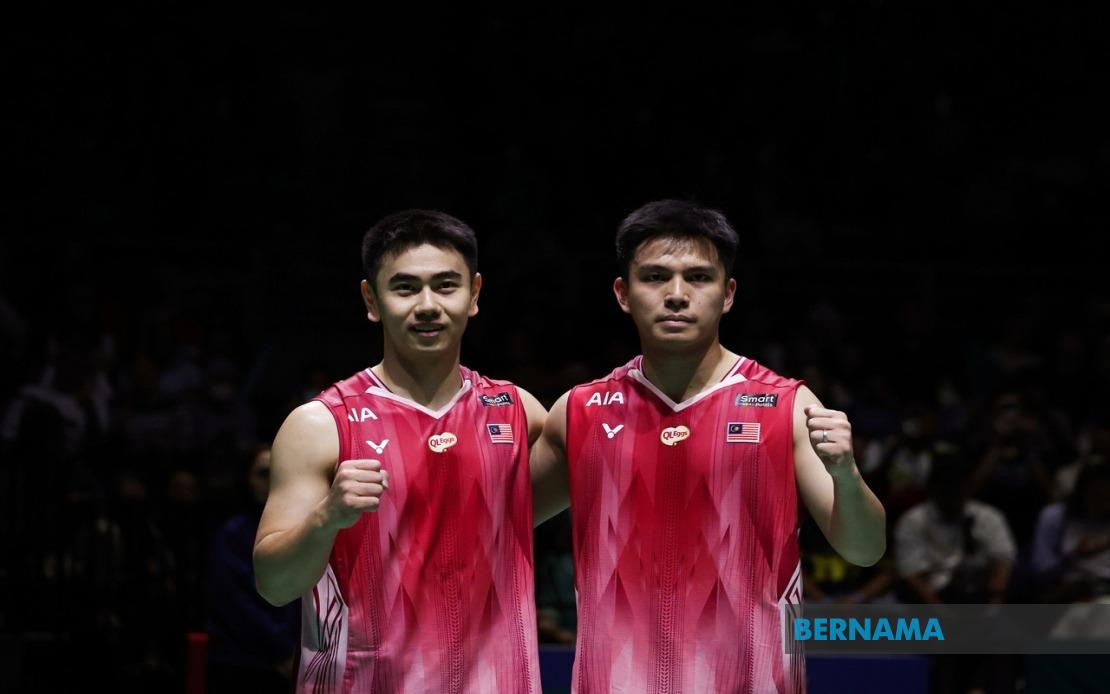
Malaysia's badminton contingent delivered a commanding performance at the Japan Open 2026 in Tokyo, with two pairs securing places in the semifinals and cementing the nation's standing as a competitive force in international badminton. The victories underscore the depth of Malaysian talent across multiple disciplines, despite competing against some of the world's highest-ranked combinations.
The most remarkable result came from unseeded mixed doubles pairing Jimmy Wong-Cheng Su Yin, who executed a textbook upset against Denmark's third-seeded Mathias Christiansen-Alexandra Boje. Over 39 minutes of engaging play, the Malaysian duo controlled the tempo and execution to claim a decisive 21-17, 21-17 victory that levelled their career record against the Scandinavian pair at one win each. For Jimmy and Su Yin, the triumph represents validation of their strategy and mental resilience, as they neutralised opponents ranked significantly higher in the tournament seedings.
The semifinal berth brings the Malaysian mixed doubles pair face-to-face with Hong Kong's seventh-seeded combination Tang Chun Man-Tse Ying Suet, a pairing they have never encountered in official competition. This represents uncharted territory and removes the advantage of tactical familiarity, forcing Jimmy and Su Yin to rely on adaptive strategies and in-match adjustments. The absence of historical data between these pairings could cut both ways, presenting opportunities for the Malaysians to impose their game without preconceived defensive patterns.
In men's doubles, Goh Sze Fei-Nur Izzuddin Rumsani navigated a more gruelling path to the semifinals, requiring the full 50 minutes and three sets to overcome the American duo Chen Zhi Yi-Presley Smith. The scoreline of 21-18, 15-21, 21-13 reflected an encounter that tested both the technical proficiency and mental fortitude of the Malaysians, particularly when they surrendered the second set. This victory extends their dominance against the American pairing to four consecutive wins, a record that demonstrates growing mastery of that matchup's dynamics. However, the extended duration and energy expenditure in this quarterfinal could have implications for their recuperation before the semifinal stage.
The road ahead for Sze Fei and Izzuddin presents a significantly steeper challenge, as they confront South Korea's top-seeded pairing Kim Won Ho-Seo Seung Jae in the next round. The two combinations have faced each other on four previous occasions with the record perfectly balanced at 2-2, indicating a competitive equilibrium. Notably, the Malaysians secured a recent victory over the Korean world number one pair at the Indonesia Open 2026, suggesting they possess both the capability and tactical understanding to neutralise the tournament favourites. This previous success provides psychological momentum and validated technical approaches that could prove decisive in Tokyo.
The emergence of multiple Malaysian pairs in the later stages of a major international tournament reflects the systematic player development and coaching infrastructure that has taken root in the badminton association. The diversity of success across mixed doubles and men's doubles categories indicates that excellence is not confined to a single discipline or generation of players. This breadth of competitiveness positions Malaysia advantageously for team-based competitions and ensures continuous representation in prestigious tournaments regardless of individual pair fluctuations.
Yet the tournament also highlighted areas of vulnerability within the Malaysian contingent. The quarterfinal exit of Kang Khai Xing-Aaron Tai, who fell to the Korean top seeds 21-13, 21-10, demonstrates the considerable gap that can exist between paired combinations within the same national ecosystem. The disparity in the scoreline suggests the Malaysian pairing lacked the tactical sophistication or technical precision required to compete at the highest level on this particular occasion. Such results, while disappointing, provide crucial diagnostic information for coaching staff to address specific weaknesses before subsequent tournaments.
The performance of Korean badminton across multiple categories at this tournament underscores Asia's increasing specialisation in the sport. Beyond Kim Won Ho-Seo Seung Jae's progression as top seeds, the Korean representation has consistently advanced through early rounds, indicating systematic excellence across their player pipeline. For Malaysia, maintaining competitive standing against such established powerhouses requires sustained investment in coaching quality, sports science support, and player welfare infrastructure.
The semifinals will provide Malaysian badminton enthusiasts with compelling viewing, particularly the encounter between Sze Fei-Izzuddin and the Korean world number ones. The balanced head-to-head record ensures that neither pairing enters as overwhelming favourites, and the recent Malaysian victory at the Indonesia Open suggests the outcome remains genuinely uncertain. Success in Tokyo would elevate Malaysia's profile in international badminton and provide crucial ranking points as the pair navigate the competitive calendar toward major championships.
Looking toward the finals stage, Malaysian success would depend on maintaining the intensity and accuracy demonstrated in quarterfinal victories while avoiding the physical and mental fatigue that sometimes accompanies multi-set encounters. The proximity of additional tournaments on the international calendar means that any injuries or exhaustion accumulated in Tokyo could reverberate through subsequent competitions. Nevertheless, the advancement of two Malaysian pairs to the semifinals represents a significant achievement that vindicated the selection decisions and preparation strategies employed by the badminton association.

