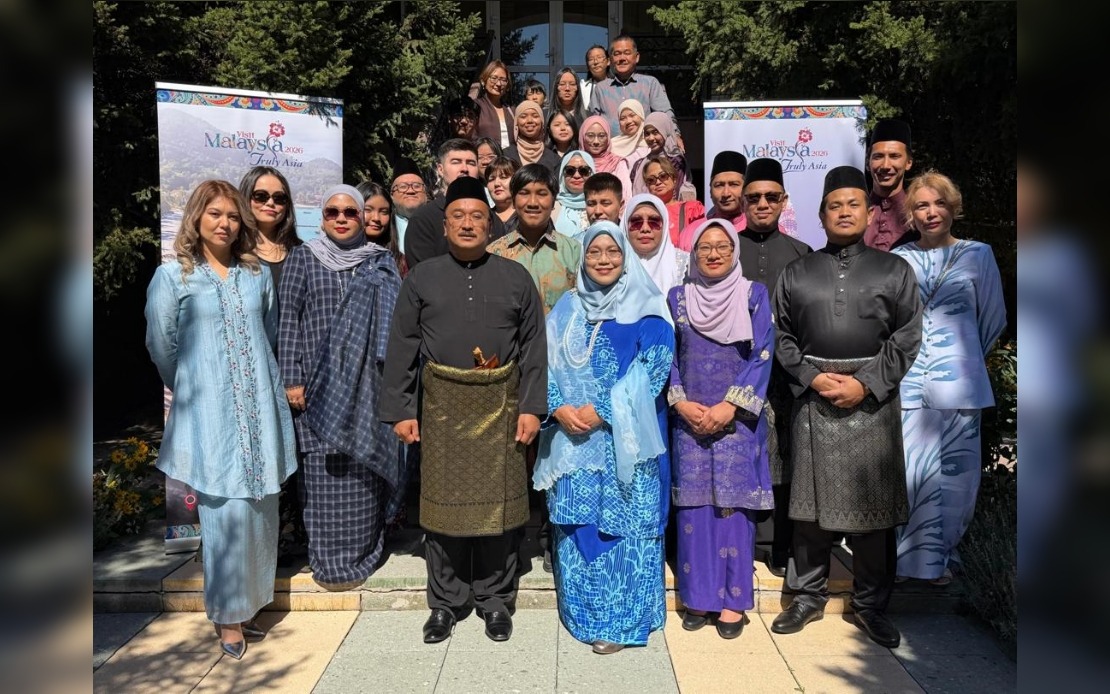
Thousands of kilometres from home, Malaysia's expatriate community in Kazakhstan demonstrated their enduring connection to their nation through a solemn flag-raising ceremony and National Day observance held at Malaysia House in Astana on Saturday. The gathering, orchestrated by the Embassy of Malaysia in Astana, served as a poignant reminder that national identity transcends geographical boundaries, bringing together Malaysians separated by vast distances to reaffirm their commitment to the values that bind their homeland together.
The ceremony commenced with the hoisting of the Jalur Gemilang, followed by the collective recitation of Negaraku and the Rukun Negara, creating a ceremonial space that echoed the simultaneous celebrations occurring across Malaysia and in diplomatic missions worldwide. The formal proceedings drew participation from embassy personnel, Malaysian students pursuing education in Kazakhstan, alumni of bilateral cooperation programmes, and other community members who have chosen to build lives in Central Asia.
Ambassador Mohd Adli Abdullah used the occasion to articulate a deeper understanding of national progress, reflecting the philosophical underpinnings of Malaysia MADANI, the overarching theme for 2026 National Day and Malaysia Day commemorations. His remarks challenged conventional metrics of development, asserting that economic indicators and infrastructure projects represent only partial measures of a nation's true advancement. Instead, he framed genuine progress through the lens of inclusive distribution, emphasising that development gains must permeate across society comprehensively rather than concentrating among select segments of the population.
The ambassador's call resonated particularly within the context of Malaysia's ongoing trajectory of economic transformation and social development. The Malaysia MADANI framework, which translates to prosperity enjoyed, encapsulates a philosophical shift in how the nation conceptualises success—moving beyond GDP growth and construction statistics toward qualitative assessments of citizen wellbeing, social cohesion, and equitable opportunity distribution. For expatriate audiences, this messaging underscores Malaysia's contemporary policy orientation and signals continuity in national values despite changing global circumstances.
Mohd Adli extended a specific appeal to the Malaysian community in Kazakhstan, urging them to embody Malaysia MADANI principles through their personal conduct and professional endeavours. His exhortation centred on five pillars: industriousness, integrity, discipline, courteous behaviour, and communal solidarity. These values, deeply rooted in Malaysian civic consciousness, assume particular importance when articulated to citizens residing abroad, as their conduct inevitably reflects upon national perceptions and Malaysia's international standing within their adopted communities.
The ambassador articulated a compelling vision of diaspora responsibility, positioning every Malaysian abroad as an informal diplomatic representative bearing obligation to strengthen their nation's image while cultivating bonds of unity among fellow citizens. This framing acknowledges the substantial soft power embedded within diaspora communities—their capacity to influence host-nation perceptions of Malaysia through everyday interactions, professional achievements, and community engagement. For a nation increasingly conscious of its regional standing and international reputation, diaspora mobilisation around national values constitutes a meaningful strategic asset.
The Saturday gathering incorporated the Malaysia Technical Cooperation Programme Alumni Get-Together 2026, a complementary event that underscored bilateral people-to-people dimensions of Malaysia-Kazakhstan relations. The MTCP, inaugurated in 1980, represents Malaysia's flagship mechanism for South-South cooperation, channelling expertise and capacity-building resources toward developing economies seeking institutional strengthening and human capital advancement. By hosting this alumni reunion, the embassy reinforced the programme's continuing relevance and the enduring professional networks it has cultivated across decades.
The MTCP's footprint in Kazakhstan demonstrates measurable impact: as of 2025, 196 Kazakh officials had benefited from various capacity-building initiatives funded through this mechanism. These figures, though seemingly modest in global terms, reflect structured knowledge transfer addressing governance, technical expertise, and institutional development—domains where Malaysia possesses comparative advantage and meaningful contribution capacity. For Kazakhstan, these partnerships facilitate access to proven governance models and technical frameworks without requiring prohibitive financial investment. For Malaysia, MTCP engagement reinforces soft power projection and establishes networks of goodwill among foreign government officials who may later occupy senior decision-making positions.
The simultaneous celebration of National Day and MTCP alumni activities illustrated how Malaysia strategically integrates patriotic observance with substantive bilateral engagement. Rather than treating diplomatic celebrations as ceremonial obligations, Malaysia House positioned Saturday's gathering as an opportunity to demonstrate living partnerships—showcasing not merely affection for homeland but tangible contributions Malaysia offers regional partners through structured cooperation mechanisms. This approach strengthens Malaysia's brand positioning within Kazakhstan's policy circles and among its diaspora simultaneously.
For Malaysian expatriates scattered across Central Asia, such structured gatherings provide essential psychological and cultural anchoring. Separation from homeland inevitably attenuates emotional connection; ceremonial observances and community assemblies function as mechanisms through which dispersed nationals recharge collective identity and reinforce bonds with both their country and fellow citizens abroad. The participation of students, professional alumni, and community members created intergenerational participation, ensuring Malaysia's national narrative transmits across age cohorts and experience levels.
The Embassy's commitment to expanding Malaysia-Kazakhstan relations comprehensively—encompassing governmental cooperation, people-to-people connections, and expertise-sharing—reflects strategic recognition that bilateral relationships thrive only when multiple relationship layers develop simultaneously. Governmental exchanges alone create fragile partnerships vulnerable to policy shifts; genuine partnership requires cultivation of sustained professional networks, mutual comprehension among civil societies, and institutionalised mechanisms for knowledge transfer. Saturday's dual-purpose gathering embodied this multifaceted approach, weaving patriotic affirmation with substantive cooperation building.
Looking forward, events such as Saturday's ceremony demonstrate Malaysia's sustained commitment to nurturing diaspora engagement while simultaneously advancing bilateral partnerships in countries hosting significant Malaysian populations. As Malaysian communities abroad continue expanding through student mobility, professional migration, and business expansion, maintaining active embassy engagement and creating platforms for collective identity affirmation becomes increasingly valuable. The convergence of National Day celebration with MTCP alumni activities in Astana exemplified how diplomatic missions can transform routine observances into opportunities for substantive relationship development, serving simultaneously the emotional needs of diaspora communities and the strategic interests of bilateral partnerships.

