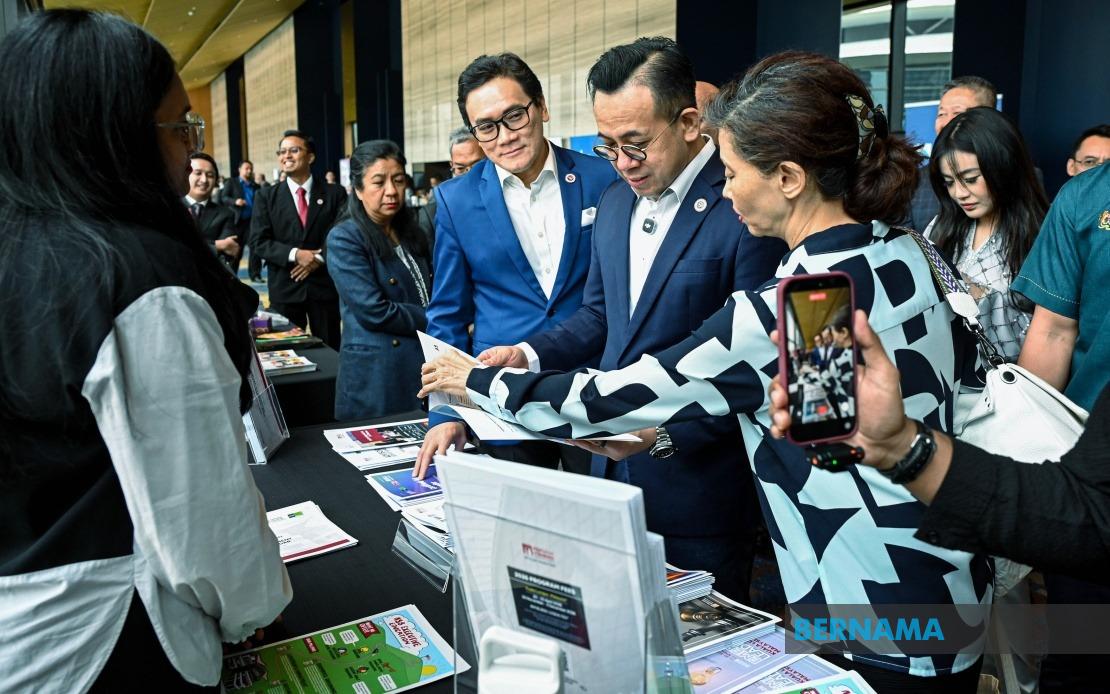
The Malaysian government is intensifying efforts to transform the country's manufacturing identity from a contract production hub into a source of original, innovation-driven brands capable of competing on the world stage. Entrepreneur and Cooperatives Development Minister Steven Sim articulated this strategic pivot during the BrandQuest 2026 programme and National Mark of Malaysian Brand Appreciation Ceremony in Kuala Lumpur, signalling a deliberate policy shift that carries significant implications for how Malaysian enterprises position themselves in an increasingly competitive Asia-Pacific economy.
Sim's message to local companies was unambiguous: the path forward demands a fundamental reorientation of business priorities. Rather than competing primarily on price, Malaysian manufacturers should build competitive advantage through demonstrable quality, robust safety standards, and meaningful innovation. This emphasis on value over volume reflects a maturation in Malaysia's industrial strategy, acknowledging that low-cost manufacturing alone cannot sustain long-term growth or command premium market positioning. The minister's remarks suggest growing frustration within government circles about the persistent reliance on contract manufacturing models that generate thin margins and leave Malaysian businesses vulnerable to competition from lower-cost producers in other Southeast Asian nations.
Central to this repositioning is the government's conscious rebranding of Malaysia's economic identity. The transition from "Made in Malaysia" to "Made by Malaysia" represents more than semantic wordplay; it denotes a wholesale shift in value chain orientation. Under the traditional model, foreign companies utilised Malaysian manufacturing capacity to produce goods designed and conceptualised elsewhere, with Malaysia capturing only the labour and facility components of value creation. The proposed "Made by Malaysia" framework instead envisions Malaysian entrepreneurs and designers driving innovation from conception through execution, retaining substantially greater economic value while building recognisable global brands rooted in Malaysian origin and expertise. This aligns with similar efforts across Southeast Asia to climb the industrial value ladder.
The government is backing this strategic vision with concrete financial support. SME Corp Malaysia has deployed RM230,000 specifically to assist micro, small and medium enterprises (PMKS) in achieving the National Mark of Malaysian Brand certification, an initiative that has already benefited approximately 40 companies during 2025 and 2026. These certifications serve multiple purposes: they establish quality benchmarks, provide government-backed credibility in domestic and international markets, and signal to consumers that products meet rigorous Malaysian standards. Importantly, the minister indicated that this funding represents an opening position rather than a ceiling; the ministry intends to reassess allocation levels periodically, suggesting willingness to increase support should uptake and success metrics justify expansion.
Beyond brand development support, the government's broader financing infrastructure demonstrates commitment to resource-intensive business transformation. Through the Power Up 10K programme, authorities have channelled RM9 billion in financing to approximately 250,000 entrepreneurs nationwide as of July 2024, with an annual target of RM15 billion. This substantial capital deployment addresses a critical constraint facing Malaysian SMEs attempting to invest in research and development, product innovation, and international market entry. The scale of this commitment—on pace to exceed RM15 billion annually—indicates that business transformation from contract manufacturer to original brand creator requires systemic financial enablement across the entrepreneurial ecosystem.
The recognition programme unveiled during the ceremony, including the Malaysian Brand Heritage Award, serves an important psychological and marketing function. By publicly honouring companies like Seasonings Specialties, Passive Fire Protection, Goodnite, Halagel, and Sydney Cake House, the government amplifies successful examples of Malaysian brand-building and creates aspirational reference points for other enterprises. These award recipients have demonstrated capacity to build competitive positioning not through price competition but through quality differentiation and sustained market presence. Their recognition provides crucial visibility and market credibility, particularly valuable when Malaysian brands attempt to penetrate markets where consumers may initially harbour unfamiliarity or scepticism.
The timing of this policy emphasis carries significance for Malaysia's economic trajectory. Regional competition has intensified considerably, with Vietnam and Thailand advancing rapidly in manufacturing capabilities while Bangladesh and Cambodia offer lower labour costs. Simultaneously, reshoring trends in developed markets and geopolitical supply chain realignment create opportunities for countries that can offer reliable, innovation-capable production combined with quality assurance and intellectual property development capacity. Malaysia possesses inherent advantages—established industrial infrastructure, skilled workforce capabilities, strong logistics positioning, and existing trade relationships—that could underpin premium brand development if business practices align appropriately.
However, the transition from contract manufacturing to original brand creation presents substantial challenges that policy support alone cannot overcome. Malaysian companies must develop stronger design and innovation capabilities, often requiring investment in human capital, research facilities, and intellectual property infrastructure. Market access for unfamiliar brands remains difficult regardless of quality; building consumer awareness and retail distribution channels internationally demands sophisticated marketing, brand management expertise, and often substantial upfront investment with uncertain returns. Small and medium enterprises, comprising Malaysia's entrepreneurial base, frequently lack the working capital buffers necessary to absorb such risks.
The minister's framing of this initiative as advancing "Malaysian businesses great" reflects recognition that national competitiveness ultimately depends on enterprise-level performance. Individual companies must achieve operational excellence, cultivate distinctive capabilities, and execute sophisticated market strategies. Government's role appropriately focuses on creating enabling conditions: financing availability, quality certification infrastructure, brand development support, and policy frameworks that reward innovation rather than encourage cost-cutting races to the bottom. This division of responsibility between government enablement and enterprise execution represents mature policy thinking.
For Malaysian manufacturers currently embedded in global supply chains, the call to transition toward original brand creation does not necessarily require abandoning existing business models overnight. Strategic approaches might include gradual diversification, developing private-label capabilities alongside contract manufacturing, or pursuing design partnerships that gradually increase Malaysian contribution to product innovation. Companies in particular sectors—food and beverages, personal care, specialty chemicals, light industrial equipment—may find brand development relatively more achievable than others with higher innovation barriers or capital requirements.
The broader Southeast Asian context amplifies importance of this positioning. Regional economies face similar pressures to climb value chains and differentiate from lower-cost competitors. Malaysia's push toward original brand creation contributes to regional narrative of industrial maturation and capability development. Success would position Malaysia as a model of successful transition, potentially supporting higher regional growth through knowledge transfer and supply chain deepening. Conversely, failure to execute this transition risks Malaysia becoming increasingly squeezed between higher-capability developed economies and lower-cost developing competitors.
Looking forward, the success of this initiative will depend on sustained commitment from both government and private sector. Policy support must extend beyond initial brand certification and financing channels to include market access initiatives, intellectual property protection, and regulatory frameworks that facilitate rather than impede innovation. Companies must resist short-term pressure toward cost competition, instead investing in capabilities, quality, and distinctive positioning that justify premium pricing. The transformation from contract manufacturer to original brand creator remains nascent; whether Malaysia's entrepreneurial ecosystem responds effectively will largely determine the country's industrial trajectory over coming decades.

