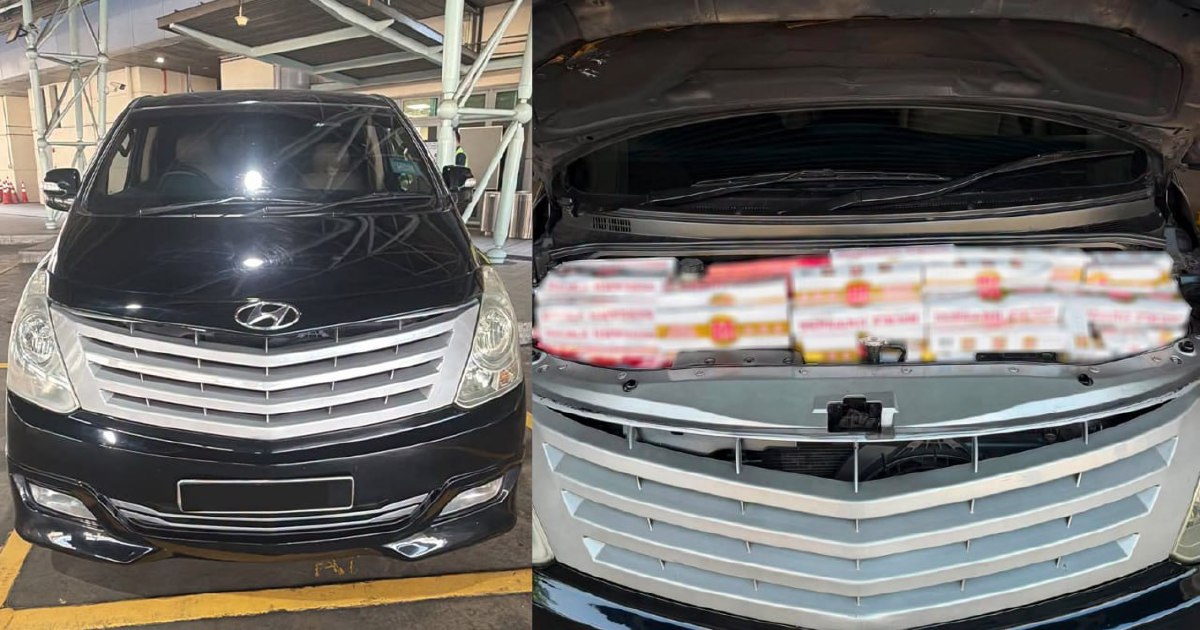
A 26-year-old Malaysian has been detained by Singapore's Immigration and Checkpoints Authority after officers uncovered an elaborate smuggling operation involving duty-unpaid cigarettes hidden within a specially modified multipurpose vehicle. The discovery, made during a routine inspection, revealed over 600 cartons and 900 individual packets of cigarettes concealed underneath the vehicle's floorboard, signalling the continued threat of contraband goods flowing across the Malaysia-Singapore border.
The seizure underscores the persistent challenge of cigarette smuggling in the region, where significant price differentials between neighbouring countries create powerful incentives for trafficking. Malaysia's considerably lower tobacco excise duties compared to Singapore make cross-border smuggling highly lucrative, with each carton representing potential profits that motivate increasingly sophisticated concealment methods. The fact that the contraband was hidden beneath the floorboard rather than in conventional storage areas suggests the smuggler was aware of typical inspection procedures and attempted to evade detection through structural concealment.
Singapore's ICA has intensified border enforcement in recent years as part of broader efforts to combat duty evasion and organised smuggling networks. The authority's discovery during what appears to be a standard checkpoint operation demonstrates the effectiveness of targeted inspections, though it also highlights that smuggling attempts continue despite heightened vigilance. The seizure represents thousands of dollars in lost tax revenue for Singapore, where cigarette taxation is among the highest globally, with duties designed to discourage consumption while generating substantial government income.
The confiscation of the multipurpose vehicle alongside the arrest indicates authorities are taking an increasingly stringent approach to organised smuggling. Beyond financial penalties, individuals caught transporting contraband face potential criminal charges that can result in imprisonment. This escalating enforcement reflects both Singapore's zero-tolerance stance on tax evasion and growing recognition that cigarette smuggling often operates as part of larger criminal networks involved in trafficking other contraband goods.
For Malaysian drivers regularly crossing into Singapore, the incident serves as a stark reminder of the serious consequences attached to participation in smuggling operations. Despite the financial temptation presented by price disparities, penalties including vehicle forfeiture, criminal records, and imprisonment can devastate personal circumstances far beyond any profit margin. The cross-border nature of the alleged offence also means the individual may face additional scrutiny from Malaysian authorities upon return.
Cigarette smuggling remains endemic across Southeast Asia, where porous borders, price differentials, and established distribution networks create perfect conditions for trafficking. Singapore's particularly strict enforcement reflects its position as a wealthy city-state with high taxation, making it both a target market for smugglers and a jurisdiction determined to protect its tax base. Malaysia, conversely, experiences significant revenue losses to smuggling operations that transport its lower-taxed cigarettes across borders to higher-tax jurisdictions, though enforcement efforts have expanded in recent years.
The method of concealment employed here—modified floorboards—represents a relatively common technique among smugglers, though it requires advance planning and vehicle modification expertise. This suggests a level of organisation beyond individual opportunism, pointing potentially toward coordinated networks rather than isolated trafficking attempts. Such networks typically involve multiple participants handling transportation, logistics, and distribution, making enforcement efforts most effective when focused on identifying and dismantling entire operations rather than pursuing individual couriers.
Regional cooperation between Singapore and Malaysia on border enforcement has improved significantly, though smuggling continues to adapt faster than enforcement mechanisms can evolve. The two countries maintain regular intelligence sharing and coordinated operations, yet the sheer volume of cross-border traffic—with thousands of vehicles transiting daily—creates inevitable gaps in coverage. Smugglers exploit these operational constraints by timing attempts strategically and rotating routes and methods to maintain unpredictability.
Beyond the immediate criminal investigation, this incident highlights broader implications for tax policy and regulatory harmonisation across Southeast Asia. The dramatic price differences between markets create seemingly irresistible opportunities for arbitrage through smuggling. Some policymakers argue that greater alignment in excise duty levels across the region could reduce smuggling incentives, though such coordination faces significant political and economic obstacles given each nation's autonomy over taxation policy.
The arrest also reflects Singapore's broader campaign against organised smuggling networks that target high-value, easy-to-transport goods like cigarettes, alcohol, and electronics. These operations generate substantial criminal proceeds while undermining legitimate commerce and government revenue. ICA's work in identifying and apprehending smugglers contributes to this enforcement effort, though the agency acknowledges that interdicting supply requires addressing demand through public health messaging and regulatory approaches that extend beyond border policing.
For Malaysian authorities, incidents like this underscore the need for cooperative intelligence gathering and coordinated enforcement at the bilateral level. The fact that a Malaysian was attempting to smuggle goods into Singapore creates enforcement opportunities for both nations, particularly in identifying upstream supply networks and downstream distribution chains. Intelligence sharing from Singapore's investigation could potentially illuminate criminal networks operating within Malaysia itself.

