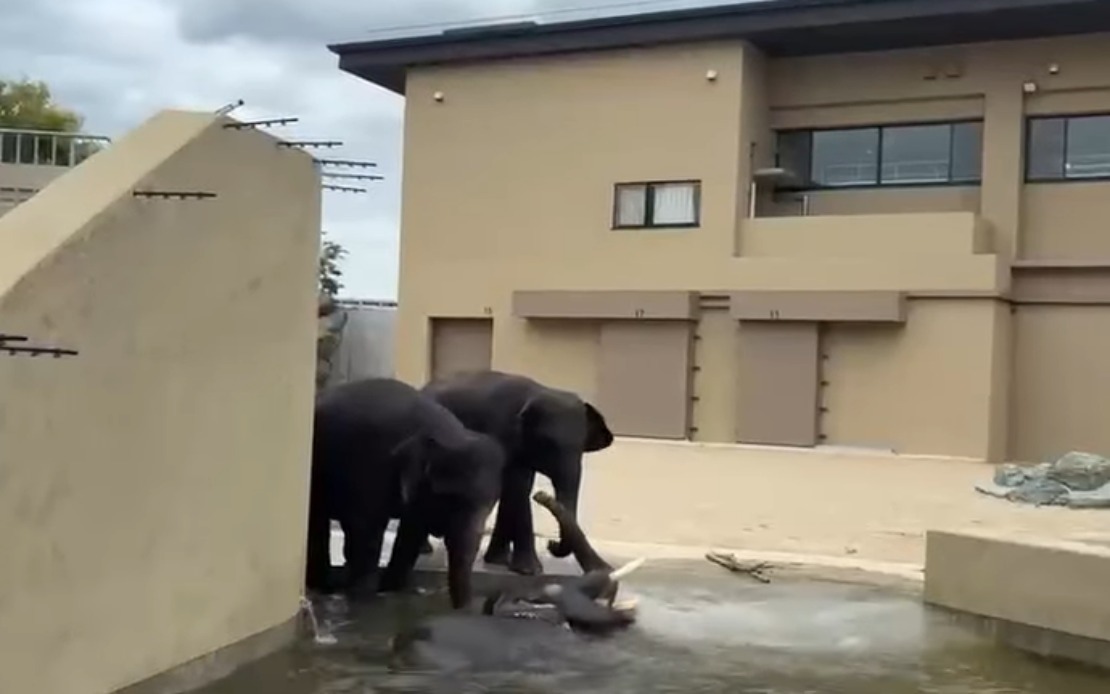
Three female Asian elephants housed at Tennoji Zoo in Osaka, Japan continue demonstrating robust health improvements, according to latest updates from Taiping Municipal Council (MPT), the Malaysian authority overseeing the animals' welfare. The trio—Dara, Amoi and Kelat, collectively known as DAK—have each registered measurable weight increases since their relocation, underscoring what officials characterise as successful integration into their new environment.
The most substantial progress comes from Kelat, who has gained 260 kilogrammes according to veterinary assessments conducted by Tennoji Zoo's animal care specialists. Dara and Amoi have similarly put on weight, recording increases of 35kg and 30kg respectively from their baseline measurements. These metrics reflect not merely numerical improvement but serve as clinical indicators of metabolic stability and adaptive adjustment to Japanese climatic and dietary conditions, a critical consideration for tropical species relocated to temperate zones.
MPT president Mohamed Akmal Dahalan has moved to clarify the precise nutritional regimen supporting these gains, addressing broader public discourse surrounding elephant welfare in captive settings. The animals receive scientifically formulated diets prepared by trained animal care personnel, with dietary composition specifically designed to match the physiological requirements of elephants. This is not incidental husbandry but represents a deliberately structured programme incorporating multiple forage types and nutritional sources.
The daily dietary structure incorporates diverse hay varieties as the primary fibre source, supplemented with bamboo shoots, fresh-cut grass, and cabbage—ingredients that replicate components of the elephants' natural foraging patterns across Southeast Asian habitats. Beyond these whole-food sources, the animals receive specially formulated elephant pellets manufactured to precise nutritional specifications. This layered approach ensures both macronutrient requirements and micronutrient adequacy are satisfied, while veterinary oversight maintains ongoing assessment of feeding efficacy and animal response.
The placement of Malaysia's three elephants in Japan operates within a formal bilateral framework established through consecutive cooperation agreements signed between Tennoji Zoo and Zoo Taiping & Night Safari, the latter represented by MPT. The initial accord was executed on May 19, 2022, with a supplementary agreement following on October 6, 2022. The arrangement spans a 25-year commitment, positioning these elephants within a long-term international conservation and welfare partnership designed to generate mutual benefits across participating institutions and broader zoological communities.
Continuing oversight mechanisms involve collaborative engagement between MPT and Malaysia's Department of Wildlife and National Parks (Perhilitan) Peninsular Malaysia, creating a dual-layer monitoring system that combines local municipal authority with national wildlife management expertise. This institutional redundancy—rather than representing bureaucratic overlap—actually strengthens welfare assurance by ensuring independent professional perspectives inform ongoing assessments of health, nutritional status, behavioural adjustment, and general management standards. Mohamed Akmal emphasised that such collaborative supervision reflects institutional commitment to maintaining international best practices.
The Malaysian authorities have signalled explicit openness toward external scrutiny and information requests regarding the elephant programme, framing transparency and accountability as core operational values. This stance addresses what has become a sensitive dimension of elephant relocation within Southeast Asia, where public awareness of animal welfare has intensified alongside broader conservation consciousness. By actively inviting review and investigation, MPT positions itself as confident in its stewardship standards while simultaneously demonstrating responsiveness to legitimate public interest in the welfare of animals representing Malaysia's natural heritage.
Mohamed Akmal's statement notably called for fact-based public discourse regarding elephant welfare, cautioning against assertions unsupported by verified evidence or professional veterinary assessment. This reflects growing tension between emotional advocacy and empirical evaluation within international wildlife management conversations. The distinction matters substantially because unsubstantiated welfare claims, while often driven by genuine concern, can paradoxically undermine conservation objectives by eroding confidence in legitimate institutional frameworks and international cooperation mechanisms that facilitate knowledge-sharing and best-practice implementation across jurisdictional boundaries.
The broader context involves Malaysia's positioning within regional and global wildlife diplomacy networks. Elephant conservation and welfare constitute high-visibility conservation issues attracting international NGO attention and public concern. How Malaysian authorities manage transnational elephant programmes directly influences perceptions of Malaysia's wildlife stewardship capabilities and its commitment to species welfare standards. The Tennoji Zoo arrangement represents an opportunity to demonstrate that tropical-nation wildlife institutions can maintain rigorous international welfare standards while facilitating scientific collaboration and comparative zoological research that ultimately benefits elephant conservation across multiple contexts.
From a Malaysian perspective, the successful adaptation of these three elephants in Japan carries implications for the country's broader zoo management practices and international reputation. Tennoji Zoo's demonstrated capacity to maintain weight gain and health metrics in relocated Asian elephants validates certain husbandry methodologies that may inform practices at Malaysian facilities. Simultaneously, the arrangement generates reciprocal learning opportunities, as Japanese institutional expertise in cool-climate animal management potentially enriches Malaysian understanding of how to manage animal welfare across varied environmental conditions—knowledge increasingly relevant as climate variability intensifies across Southeast Asia.
The 25-year duration of the cooperation agreement signals institutional confidence in programme viability and reflects both parties' commitment to sustained partnership beyond typical diplomatic or commercial timeframes. Such extended arrangements allow accumulation of longitudinal health data, behavioural observations, and reproductive outcomes that contribute meaningfully to species understanding. For Malaysia, this positions the country within a framework of serious, long-term international wildlife engagement rather than temporary or opportunistic zoo arrangements, enhancing perceptions of institutional maturity in wildlife management contexts.

