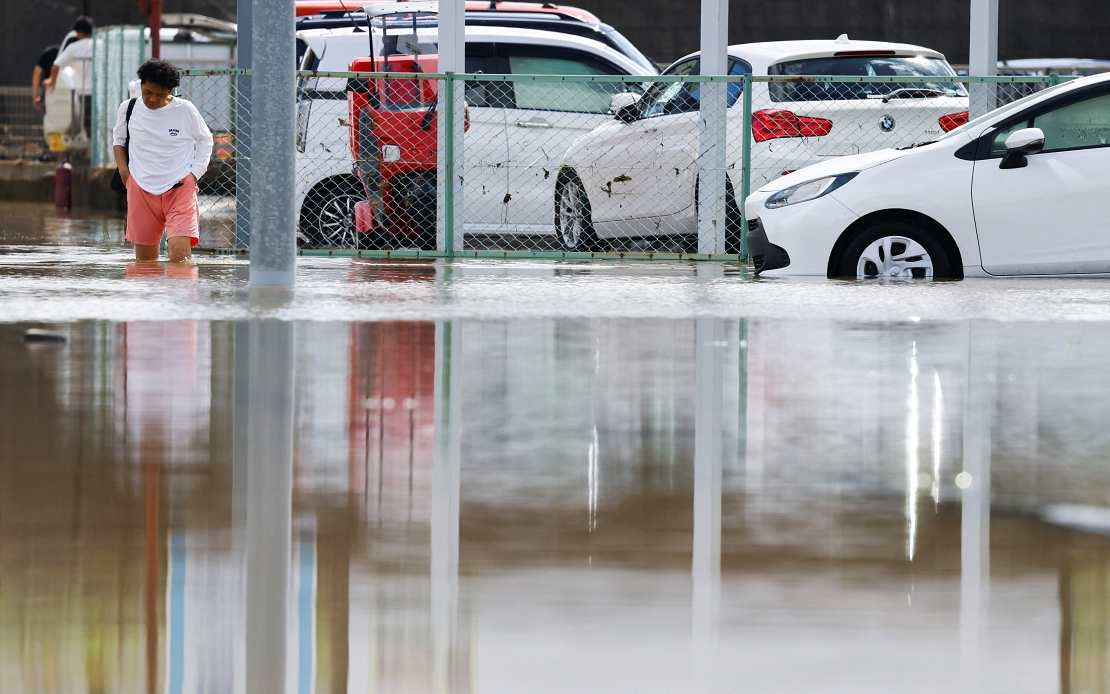
The Malaysian Embassy in Tokyo has issued an urgent advisory for citizens residing in or travelling through Japan to exercise extreme caution and refrain from making non-essential journeys, as the Kanto region continues to grapple with the destructive aftermath of severe weather events. Unprecedented levels of rainfall have battered Chiba Prefecture and surrounding areas, generating what Japanese meteorological authorities have characterised as an exceptional natural disaster with widespread consequences for both infrastructure and public safety.
The scale of disruption across the region has proven extraordinary. Road networks have sustained significant damage, while railway systems that typically serve as the backbone of the region's transport infrastructure have been forced offline or severely limited in capacity. The consequences have been particularly acute at Narita International Airport, where approximately 7,000 travellers found themselves stranded without clear passage to their destinations. The cascading effect of transport paralysis has left countless residents and visitors unable to reach their homes or continue planned journeys, creating a humanitarian challenge that continues to unfold.
According to reporting from Kyodo News, the human toll of this weather event has been substantial, with at least eight fatalities confirmed across the affected territories. The Japan Meteorological Agency responded to the severity of the situation by issuing its highest-level alert—Level 5 rain warning—for more than one-third of all municipalities within Chiba Prefecture. This classification represents the agency's most serious assessment and indicates conditions where the risk of disaster is considered extreme and imminent.
Local authorities mobilised evacuation procedures on an extraordinary scale, at one point issuing formal evacuation orders affecting more than 400,000 people across Chiba and neighbouring areas. These orders reflected genuine concern that further rainfall or flooding could claim additional lives or render entire communities inaccessible to emergency services. The magnitude of the evacuation effort demonstrates how seriously Japanese authorities have assessed the ongoing hazard.
The Malaysian Embassy's guidance to nationals encompasses several practical recommendations designed to enhance personal safety during this crisis period. Citizens have been explicitly instructed to maintain distance from flooded zones and low-lying terrain where water levels remain dangerously elevated or unpredictable. Beyond physical avoidance, the embassy emphasised the critical importance of maintaining heightened awareness of changing conditions, as weather patterns in the region remain unstable and evacuation perimeters could shift with little warning.
Monitoring official communications from Japanese authorities represents another key pillar of the embassy's advice. Evacuation notices issued by local governments carry legal weight and typically signal genuine risk; similarly, instructions from prefectural and municipal officials should be treated as authoritative guidance rather than recommendations. Real-time updates regarding transport restoration efforts and infrastructure status have proven essential for anyone attempting to navigate the affected region or plan journeys to and from Chiba.
For residents and travellers seeking authoritative information about weather developments, the Malaysian Embassy has directed people toward the Japan Meteorological Agency's English-language website at www.jma.go.jp/jma/indexe.html, where updated forecasts, warnings, and alert levels are continuously published. This resource provides granular information about rainfall predictions, wind conditions, and hazard levels across specific prefectures and municipalities, enabling individuals to make informed decisions about travel and outdoor activities.
The embassy has also established multiple channels through which Malaysians can access assistance should emergencies arise. The main embassy telephone line, +81-3-3476-3840, operates during standard business hours and can connect callers with consular staff capable of providing guidance on evacuation procedures, documentation replacement, or financial assistance for stranded citizens. For situations occurring outside regular working hours, a dedicated emergency hotline at +81-70-1471-9756 provides round-the-clock access to crisis response personnel.
Beyond telephone communication, the embassy maintains email contact points for less urgent inquiries or situations where written documentation of contact is beneficial. The addresses [email protected] and [email protected] serve as official channels for correspondence related to consular services, registration matters, or general advisory inquiries. This multi-modal approach to communication acknowledges that different situations and circumstances may make certain contact methods more appropriate or accessible than others.
For Malaysian communities throughout Japan, the current situation underscores the importance of remaining registered with the embassy and maintaining updated contact information in Malaysian government systems. During natural disasters and public emergencies, diplomatic missions rely on current registration data to account for nationals and coordinate assistance if needed. Citizens who have not previously registered their presence in Japan are encouraged to do so promptly through the embassy's online portal or by contacting the consular section directly.
The broader context of this advisory reflects increasing recognition among Southeast Asian diplomatic missions of their responsibility to provide timely guidance to citizens during natural disasters affecting their host countries. Japan experiences frequent weather-related hazards including typhoons, heavy rainfall, and flooding, particularly during summer and early autumn months. Malaysian citizens, whether residing permanently or visiting temporarily, benefit significantly from official warnings that help them understand hazards and access appropriate protective responses.
Looking ahead, residents and visitors should remain attentive to official updates from both Japanese authorities and the Malaysian Embassy, as weather conditions, transport restoration timelines, and safety assessments will likely evolve over coming days. Those with flexibility in their travel schedules are strongly advised to postpone trips to affected areas until conditions stabilise and infrastructure repairs progress further. By heeding official guidance and maintaining awareness of changing circumstances, Malaysian nationals can substantially reduce personal risk during this challenging period.

