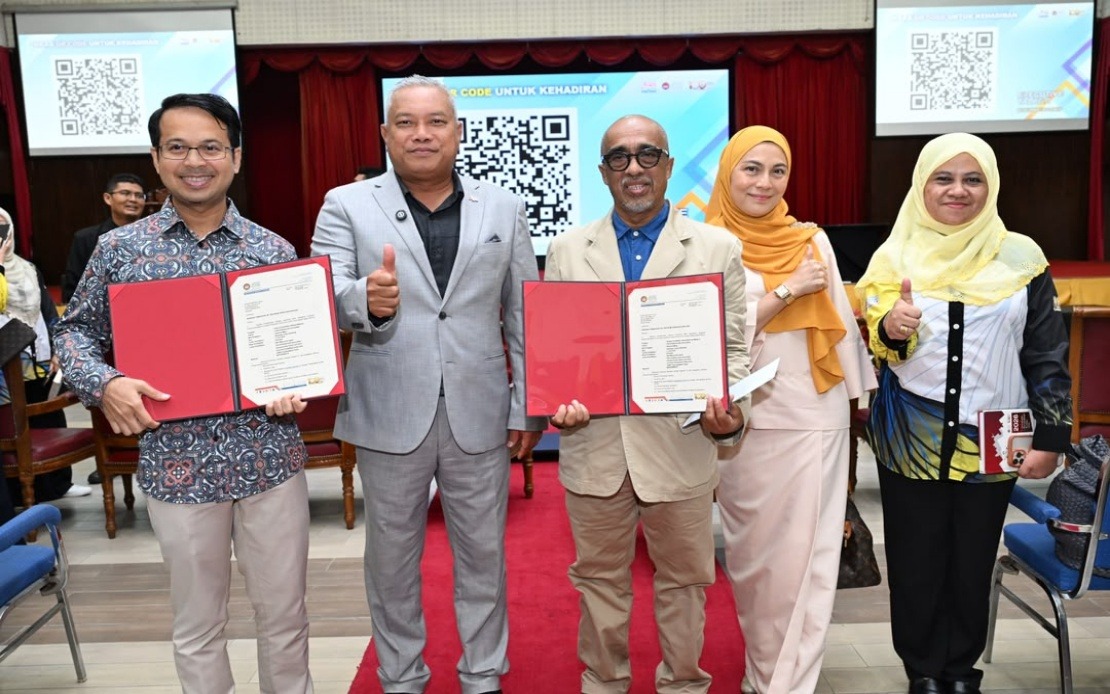
Two prominent figures in Malaysian entertainment have taken a significant step in their careers by enrolling in postgraduate studies at Universiti Pendidikan Sultan Idris in Perak. Veteran actor and director Mohd Sabri Yunus, aged 65, and television presenter Ahmad Fedtri Yahya, 45, have both received offers to pursue Master's degrees through the Accreditation of Prior Experiential Learning for Award of Qualifications, or APEL.Q, a pathway that recognises professional achievement and lived experience as alternatives to traditional academic prerequisites. Their enrolment marks a significant moment for UPSI's Faculty of Languages and Communication, as both individuals become pioneering students in their respective programmes.
The APEL.Q framework represents an increasingly important mechanism in Malaysia's higher education landscape, allowing mature professionals and accomplished individuals to access postgraduate qualifications without necessarily following conventional university pathways. For Sabri Yunus in particular, this opportunity carries special resonance. Throughout the 1980s and early 1990s, during his tenure at Dewan Bahasa dan Pustaka as an illustrator, he made two separate attempts to pursue university education. Both times, professional commitments prevented him from proceeding. Now, more than four decades later, his aspiration to engage formally with academic study has finally materialised, though this time on his own terms through a programme designed for individuals with substantial career histories.
Sabri Yunus articulated his philosophical approach to learning during the recent Executive Talk 6.0 Cybersecurity programme at UPSI's Tanjong Malim campus. Despite being unable to attend university in conventional fashion, his commitment to intellectual growth never wavered. He explained that he has consistently regarded every person he encountered throughout his career as a potential educator, viewing interactions across his decades in entertainment and cultural work as invaluable sources of knowledge and experience. This perspective aligns closely with the principles underlying APEL.Q, which acknowledges that meaningful learning occurs through professional practice and not solely within classroom walls.
Sabri Yunus will pursue a Master of Education specialising in Malay Literature, a field that directly connects to his career-long engagement with Malaysian cultural expression. Through his postgraduate research, he intends to investigate specific forms of pantun, the traditional Malay verse form that has featured prominently in his artistic work. This research direction reflects how APEL.Q can enable practitioners to deepen their expertise in areas where they have already accumulated substantial knowledge and experience, creating opportunities for rigorous academic inquiry grounded in real-world mastery.
Ahmad Fedtri Yahya will pursue a Master of Education in Malay Language, a choice he framed within a broader concern about the state of Malaysian linguistic culture. His decision stems from a conviction that language use constitutes a fundamental indicator of a society's civilisation level and intellectual development. In his remarks at UPSI, Fedtri articulated anxieties shared by many observers regarding how the younger generation's communication patterns have shifted dramatically under the influence of social media and digital technologies. He views formal postgraduate study in Malay language as a means to contribute substantively to efforts aimed at reinforcing language standards particularly among students who will shape the nation's future.
The enrolment of these two media personalities carries implications that extend well beyond their individual academic pursuits. University leaders recognise that their presence on campus creates a distinctive resource for the institution's existing student body. UPSI Vice-Chancellor Professor Datuk Dr Md Amin Md Taff highlighted how their participation offers substantial educational value to the institution's approximately 25,000 current students, most of whom are enrolled in teacher education programmes. The intersection between entertainment industry veterans and aspiring educators creates natural opportunities for mentorship, knowledge transfer, and exposure to practical applications of cultural and linguistic education.
The symbolic weight of these enrolments reflects broader strategic thinking within Malaysian higher education about cultural stewardship. The Vice-Chancellor specifically noted that both individuals' professional experiences carry direct relevance to efforts aimed at reconstructing Malaysia's cultural identity during a period of rapid social transformation. As these students interact daily with future teachers, they become informal ambassadors for the importance of cultural preservation and linguistic rigour. The exchange flows bidirectionally, as faculty and students benefit from insights gained through decades of professional work in entertainment and media.
APEL.Q represents an important evolution in how educational institutions recognise and credential professional expertise. For Malaysia specifically, where the entertainment and media industries constitute significant cultural forces, the ability to channel experienced practitioners into formal academic settings creates productive feedback loops. Professionals bring real-world understanding of how arts and language function within society, while universities provide systematic frameworks for transforming that experience into rigorous knowledge. The pathway acknowledges that credentials serve multiple purposes: validating learning regardless of its source, while also ensuring that accomplished professionals can contribute to intellectual communities.
Sabri Yunus and Fedtri Yahya's decision to pursue further studies, particularly at this stage in their careers, signals broader shifts in how education is understood within Malaysian society. Rather than viewing university enrolment as exclusively a pathway for young school-leavers, these precedents position lifelong learning as continuous professional development. For mature professionals facing evolving industries, postgraduate study offers opportunities to formalise accumulated knowledge and acquire new conceptual frameworks to understand their fields at deeper levels. The APEL.Q pathway makes this aspiration realistic for individuals whose commitments and circumstances prevented conventional university attendance in their youth.
The presence of established entertainment figures within the UPSI community may also influence how teacher education students conceptualise their future roles. Rather than viewing Malay language and literature instruction as disconnected from broader cultural industries and public discourse, future teachers encounter living examples of how professional practice in these fields continues to matter. This exposure potentially cultivates more sophisticated approaches to cultural education that acknowledge entertainment, media, and digital communication as legitimate domains where language operates meaningfully.
Looking forward, the enrolment of these two individuals may establish precedent for other accomplished Malaysian professionals seeking to formalise their expertise through postgraduate education. As APEL.Q becomes better understood and more widely utilised, universities gain access to professionals whose real-world experience enriches classroom discussions and research projects. Simultaneously, professionals gain access to systematic academic engagement with fields where they have already developed substantial competence. For Malaysia's cultural sectors specifically, this bidirectional exchange promises to strengthen connections between professional practice and formal intellectual inquiry.

