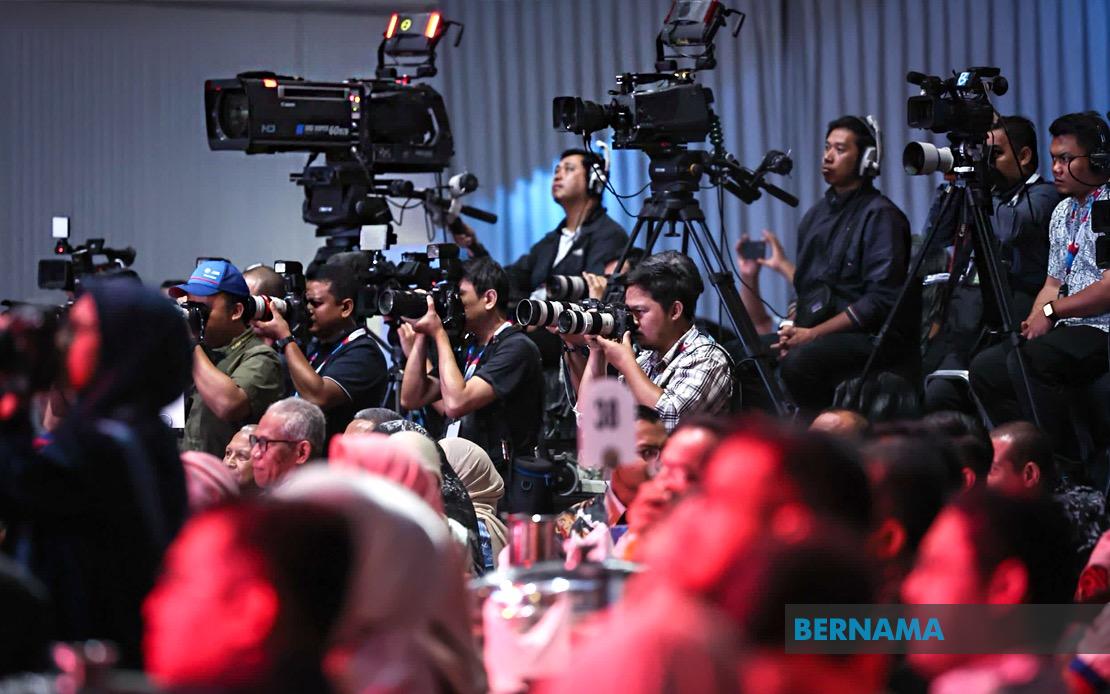
The Malaysian Media Council (MMM) has thrown its support behind Prime Minister Datuk Seri Anwar Ibrahim's guidance that complaints lodged against journalists employed by recognised media organisations should be channelled through the Council's review process before any subsequent measures are pursued. This endorsement reflects broader efforts to establish a structured, independent framework for addressing media-related grievances while safeguarding both press freedom and journalistic accountability in Malaysia.
The Prime Minister's statement represents a significant signal about how complaints against media practitioners should flow through institutional oversight rather than proceeding directly to law enforcement or the courts. According to the MMM, this approach acknowledges the Council's standing as an autonomous self-regulatory authority tasked with maintaining professional journalism standards, promoting ethical media conduct, and facilitating transparent complaint resolution. The Council framed the directive as recognition of its constitutional role within Malaysia's media ecosystem, particularly at a moment when the nation's press freedom rankings have become a focal point for international scrutiny and domestic debate.
The MMM's position hinges on a crucial distinction: the self-regulatory body explicitly does not seek to supersede judicial or law enforcement functions. Instead, it argues that disputes rooted in journalistic practice, editorial ethics, accuracy of reports, rights of reply, and concerns about unfair media treatment warrant assessment through a dedicated professional mechanism before criminal or civil proceedings commence. This separation of purposes aims to prevent journalists from facing arbitrary investigation or punishment simply because a complaint has been filed, while simultaneously ensuring that affected individuals and organisations retain legitimate pathways to demand corrections, clarifications, or remedies.
Under MMM's operational framework, complaints flow through a structured evaluation process beginning with a Secretariat assessment to determine whether a grievance falls within the Council's jurisdiction and involves matters of journalism or media practice. When appropriate, the Council refers matters to the implicated media organisation for response, clarification, or remedial action. Should preliminary resolution prove impossible, the complaint may escalate to formal review under the Council's Code of Conduct and established journalism principles. This graduated approach intends to distinguish between legitimate accountability mechanisms and what the Council characterises as potential harassment or suppression of legitimate reporting.
The MMM's articulation of this framework addresses longstanding tensions between media freedom and media responsibility, framing these not as antagonistic principles but as mutually reinforcing dimensions of a healthy press. The Council contends that accountability operates most effectively when exercised through independent, transparent, and balanced processes rather than through public pressure campaigns, threats, or punitive measures initiated reflexively upon receipt of a complaint. This perspective carries particular weight in Malaysia's contemporary media landscape, where accusations of political pressure on journalists have periodically generated controversy and raised concerns internationally.
The timing of the Prime Minister's intervention and the Council's response appears linked to Malaysia's performance in global press freedom assessments. The World Press Freedom Index has become a barometer of international perceptions regarding media independence in the country, and the MMM noted that Anwar's statement emerged partly from concerns about Malaysia's standing in these rankings. By establishing clearer protocols for complaint handling, both the government and the media self-regulatory body appear intent on demonstrating that Malaysia has institutional mechanisms capable of balancing legitimate grievances against journalists with protection from arbitrary enforcement.
For Malaysian newsrooms and media organisations, the MMM's framework offers a degree of procedural clarity previously absent from complaint handling. Rather than facing immediate legal jeopardy whenever a complaint materialises, media practitioners and their employers can expect that allegations will first undergo contextual review by professionals familiar with journalistic norms and democratic media function. This protective mechanism acknowledges that journalism inherently involves scrutiny and criticism of powerful actors, and that distinguishing between legitimate complaints and attempts to silence reporting requires specialised institutional knowledge.
However, the Council's statement also emphasises that journalists and media organisations remain fully subject to Malaysia's laws. The MMM's complaints mechanism operates alongside, not instead of, criminal statutes, civil litigation, and regulatory frameworks governing Malaysian media. This dual-track accountability architecture attempts to preserve legal protections for public interest while preventing the misuse of legal processes as an instrument of media control. The distinction hinges on ensuring that matters genuinely rooted in journalistic practice receive preliminary professional assessment, while conduct violating Malaysian law proceeds through appropriate legal channels.
The MMM has explicitly invited all stakeholders—government agencies, politicians, public institutions, civil society organisations, and individual members of the public—to utilise the Council's complaints mechanism when disputes or issues concerning media reporting arise. This call reflects an attempt to normalise professional dispute resolution and reduce reliance on public confrontation, threats, or pressure tactics. The Council suggests that cultivating a culture of resolving media disputes through structured professional processes serves Malaysia's democratic interests more effectively than alternatives involving harassment or retaliatory measures against journalists.
The Council's commitment extends to working collaboratively with the government, Parliament, media organisations, civil society actors, and the broader public to implement this approach effectively and consistently with Malaysia's democratic requirements. This multi-stakeholder framing suggests recognition that media regulation involves complex negotiations among competing institutional interests and public values. By positioning itself as a neutral arbiter and inviting broad participation in its complaints process, the MMM attempts to build legitimacy for its role beyond simply asserting regulatory authority.
For Southeast Asian observers, Malaysia's emphasis on independent media self-regulation offers a model distinct from both laissez-faire approaches to press freedom and heavy-handed government control. The MMM framework acknowledges that media accountability requires institutional mechanisms responsive to public grievances without becoming instruments of political suppression. Whether this balance proves sustainable depends partly on whether practitioners and complainants alike perceive the Council's procedures as genuinely independent and whether the Council maintains consistency in its decision-making across politically sensitive cases.
The implications for Malaysian readers and media consumers centre on the promise of accessible complaint mechanisms and transparent dispute resolution processes. However, the framework's effectiveness ultimately depends on institutional confidence—whether journalists trust that pursuing complaints will not trigger disproportionate official scrutiny, whether the public believes legitimate concerns receive serious consideration, and whether the Council can maintain credibility across politically contested terrain. The coming months will test whether this procedural architecture delivers on its promise of balanced accountability or becomes another site of contention in Malaysia's evolving relationship with press freedom.

