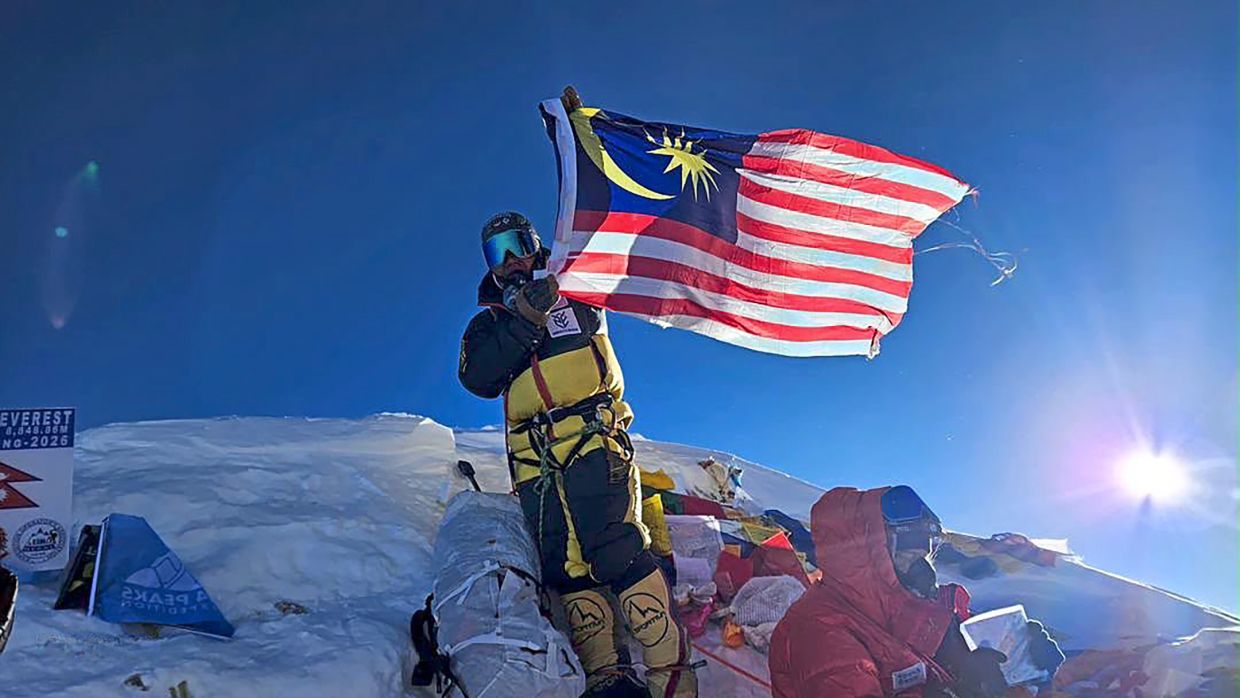
Mountaineer Mohd Khafiz Bachok, popularly known as Khafiz al Kicok, accomplished one of the world's most demanding physical feats at an age when most people consider their adventuring days behind them. On May 18, he reached the 8,848-metre summit of Mount Everest, becoming Malaysia's 30th person to stand atop the world's highest mountain since M. Magendran and M. Mohandas first achieved the milestone on May 23, 1997. The accomplishment carried particular significance because Khafiz achieved it during what mountaineering experts have characterised as one of the most unpredictable and hazardous climbing seasons in recent Everest history.
The 2024 climbing season tested even experienced mountaineers with unprecedented obstacles. A massive serac—a block of ice fractured from a glacier—blocked the notorious Khumbu Icefall, preventing the specialized team of rope-fixers known as "icefall doctors" from preparing the route. This serac collapse created a bottleneck that would shape the entire season's dynamics. For nearly two weeks, the passage to Camp 1 remained essentially impassable, forcing an enormous congregation of climbers and guides to idle at Everest Base Camp. The Nepal government had issued a record 492 climbing permits that year, flooding the mountain with unprecedented numbers as the Tibetan side remained completely closed to mountaineers. Nearly a thousand people waited anxiously at base camp, uncertain when—or if—they could proceed.
The Khumbu Icefall represents mountaineering's most unforgiving gauntlet. This constantly shifting section of the Khumbu Glacier spawns crevasses capable of engulfing entire houses. Statistically, more climbers have perished in this stretch than anywhere else on the mountain, with sudden avalanches and collapsing ice blocks presenting threats that materialise without warning. The uncertainty surrounding the serac obstruction meant that no one could accurately predict when the route would reopen, forcing climbers into a frustrating waiting game with their acclimatisation schedules thrown into chaos.
Khafiz approached this adversity with strategic pragmatism honed through years of high-altitude mountaineering. Rather than remaining idle at base camp, he and his experienced Sherpa guide Saila Mingma—who had accompanied him during his ascent of Manaslu in 2022—chose to maintain acclimatisation and physical conditioning through intermediate climbs. They tackled Island Peak, standing at 6,189 metres, a challenging climb that proved both necessary and productive. Following their descent and brief rest, they immediately undertook another preparatory ascent of Lobuche East at 6,119 metres. These strategic climbs served multiple purposes: maintaining fitness, continuing the vital process of altitude acclimatisation, and crucially, staying mentally engaged during a period of frustrating uncertainty.
When the Khumbu Icefall route finally reopened, Khafiz and Saila possessed the physical conditioning and psychological readiness to execute their summit attempt with precision. However, they understood that the bottleneck created by the earlier blockage meant that the mountain itself would now present a different kind of obstacle: human traffic jams, particularly along the critical upper sections where hundreds of climbers converge during their final push. This phenomenon, while less dramatic than avalanches or crevasses, poses genuine dangers through fatigue, oxygen depletion, and overcrowding at vulnerable sections of the route.
Their strategy reflected sophisticated mountaineering judgment. Rather than following standard timings, they deliberately started their summit push from the lower camps much earlier than typical, reaching Camp 2 on May 11 and Camp 3 four days later. By the evening of May 17, they positioned themselves at Camp 4, having carefully avoided the worst of the anticipated congestion. From Camp 4's extreme altitude, they commenced their final twelve-hour push toward the notorious Hillary Steps, the dramatic rock formation near the summit that has challenged and claimed climbers throughout Everest's recorded history. They timed their ascent meticulously, ensuring they would reach the summit as dawn broke, maximising their window of good weather and visibility.
At 5:24 am on May 18, Khafiz stood on the summit of Mount Everest. The personal significance of this achievement extended far beyond the mountain itself. At 49 years old, he demonstrated that advanced age represents no barrier to conquering Earth's highest peaks. More significantly, Khafiz's Everest ascent marked his third conquest of mountains exceeding 8,000 metres. He has previously summited Manaslu, the world's eighth-highest peak, and K2, the planet's second-highest and statistically most dangerous mountain above 8,000 metres. This achievement positioned him among Malaysia's most accomplished mountaineers, sharing the distinction of conquering three ultra-high peaks with only one other Malaysian climber, R.J. Nagarajan, who has summited Manaslu, Lhotse, and Everest.
Khafiz's mountaineering trajectory reveals a climber who has pursued increasingly ambitious objectives throughout his career. In 2016, he summited Mount Aconcagua in Argentina, South America's highest peak at 6,961 metres, which he describes as a breakthrough moment in his high-altitude climbing ambitions. His determination was underscored by his decision in June 2023 to sell his own house to finance an expedition to K2. That climb, completed successfully on July 29, 2023, represented an extraordinary commitment to his mountaineering goals. K2 demands respect that few mountains command; statistically, climbers on K2 face mortality rates disproportionately higher than any other ultra-high peak, leading many mountaineers to regard the climb as extraordinarily perilous.
Yet this pursuit of seemingly impossible goals has not been without setbacks. Khafiz has experienced acute mountain sickness multiple times during his climbing career. In 2011, while ascending Mount Damavand in Iran at 5,617 metres, he suffered from AMS that nearly forced his withdrawal. During an attempt on Mount Kilimanjaro in Africa, he developed cerebral edema—literally brain swelling caused by extreme altitude—a potentially life-threatening condition. He has also encountered outright failure, including an unsuccessful attempt on Mount Elbrus, Europe's highest peak. These experiences informed his caution regarding the Lhotse double-summit he had originally planned. Although medical advisors observed early signs of frostbite after his Everest summit, Khafiz wisely abandoned plans to immediately attempt Lhotse, recognising that his body had reached its altitude limit.
Khafiz's Everest achievement arrives during a fascinating moment in high-altitude mountaineering history. His summits coincided with Norwegian climber Kristin Harila completing an unprecedented achievement: ascending all 14 peaks exceeding 8,000 metres in just 92 days, an extraordinary timeline that contrasts starkly with legendary climber Reinhold Messner's original sixteen-year progression four decades earlier. More recently, Nirmal Puja completed the same challenge in six months and six days. These evolving records demonstrate both technological improvements and the rise of elite mountaineers operating at unprecedented levels of performance.
For Malaysian mountaineering, Khafiz's accomplishment reinforces the country's growing presence among world-class high-altitude climbers. The progression from Malaysia's first summiteers in 1997 to now 30 successful Everest ascents, alongside climbers capable of conquering three ultra-high peaks, demonstrates increasing sophistication and ambition within Malaysian climbing communities. Khafiz's success at 49 years old also challenges stereotypes about age and physical capability, suggesting that advancing years need not preclude extraordinary mountaineering achievement when coupled with experience, preparation, and determination. His mountain career, marked by both triumphs and instructive failures, exemplifies the resilience required to operate successfully at the extreme margins of human physical endurance.

