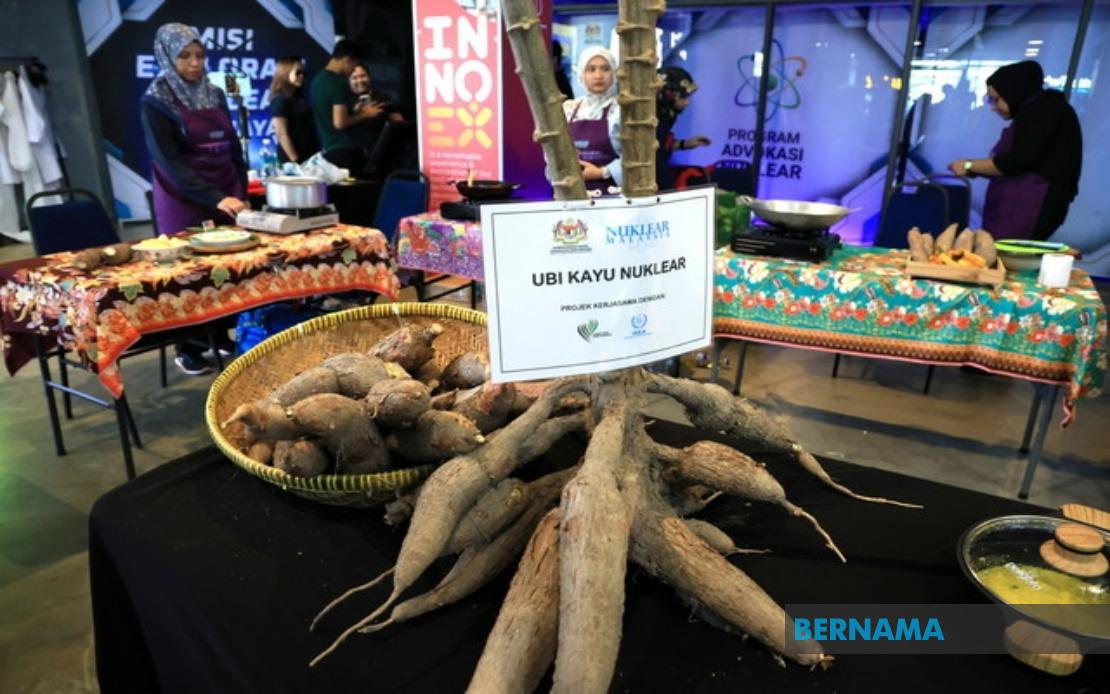
Scientists at the Malaysian Nuclear Agency have achieved a significant agricultural breakthrough by developing new cassava varieties that reach maturity in just six months—roughly half the time required for locally cultivated strains. This advancement, emerging from over five years of intensive research, promises to substantially reshape Malaysia's cassava production landscape and offers a compelling demonstration of how nuclear science can address real-world farming challenges that impact rural livelihoods and national food sufficiency.
Norazlina Noordin, a research officer with the Agrotechnology and Biosciences Division, revealed during the Nuclear Advocacy Programme held in Cyberjaya that the project has already identified multiple candidate varieties ready for the next phase. These experimental lines not only compress the growing cycle by nearly half but simultaneously deliver improved yields compared to conventionally bred control samples. The Agency projects that these varieties will transition to commercial farming within the next two years, marking a rapid pathway from laboratory success to farmer adoption—a transition that rarely occurs so quickly in agricultural research.
The initiative, which commenced in 2021, deliberately targeted the most pressing limitation facing Malaysia's cassava sector: the protracted 11 to 12-month maturation window that constrains how frequently farmers can rotate crops through their fields. By halving this timeline, farmers gain the capacity to plant cassava twice annually instead of once, fundamentally improving the economic calculus of cassava cultivation. This doubling of potential annual harvests directly translates to doubled income opportunities for smallholder producers who depend on cassava as either a primary or supplementary crop.
The research methodology relies on gamma radiation exposure applied to cassava stem cuttings prior to planting. Contrary to common misconceptions about radioactivity in food production, Noordin emphasised that gamma radiation operates similarly to medical X-rays—the energy passes through the cutting material without embedding radioactive residue. This distinction proves crucial for public acceptance and regulatory compliance, as the resulting plants contain no radioactive contaminants whatsoever, making them safe for human consumption and aligned with international food safety standards.
Once irradiated, the cuttings undergo a rigorous multi-generational screening protocol designed to isolate individuals displaying the desired characteristics of accelerated maturity and maintained or elevated productivity. This evaluation process represents one of the project's most labour-intensive components, requiring researchers to cultivate and monitor approximately 1,000 individual plants across successive growing seasons. The extended observation period serves a critical purpose: confirming that genetic improvements remain stable across generations rather than reverting to ancestral traits, a phenomenon that undermines breeding programmes lacking sufficient validation.
The complexity of this work explains why agricultural scientists typically require six to seven years of systematic observation before confidently releasing new varieties to commercial cultivation. Vegetatively propagated crops such as cassava demand particularly stringent testing protocols because their propagation method differs fundamentally from seed-based crops, necessitating careful validation that desirable traits transmit faithfully through successive cuttings. The Malaysian Nuclear Agency's commitment to this rigorous timeline reflects international best practices in crop development rather than expedient shortcuts that could introduce instability into farming systems.
The Agency has deliberately expanded its nuclear agriculture programme beyond cassava to encompass bananas, sweet potatoes, taro, kenaf, and Napier grass—each target selected based on specific agricultural challenges or economic opportunities. Sweet potatoes and taro benefit from the same early-maturity focus as cassava, whilst banana research concentrates on disease resistance and yield enhancement, acknowledging that fungal pathogens pose endemic threats to tropical banana cultivation. The kenaf initiative specifically targets industrial applications, with researchers developing varieties optimised for biomass-based fibreboard production, diversifying the technology's application beyond food crops into the renewable materials sector.
The International Atomic Energy Agency provided crucial support by supplying approximately RM100,000 in research funding distributed across the five-year investigation period, supplemented by in-kind contributions from Malaysia's Department of Agriculture including dedicated trial plots and agronomic expertise. This collaborative structure demonstrates how international scientific partnerships complement domestic institutional capacity, enabling smaller nations to access cutting-edge nuclear technology for practical development objectives rather than limiting such tools to theoretical or nuclear-power applications alone.
For Malaysia's agricultural policy framework, this development carries implications extending well beyond cassava productivity. National food security increasingly faces pressure from rising populations, climate volatility, and competing land use demands. Nuclear technology applied to crop improvement offers one evidence-based strategy for enhancing domestic production capacity without requiring proportional increases in cultivated land area—a constraint that Malaysia, with extensive competing demands on agricultural terrain, confronts acutely. By doubling the number of cassava cycles annually whilst simultaneously improving yields per cycle, the Agency's research contributes to a fundamental strengthening of Malaysia's food production resilience.
The pathway toward commercial adoption beginning within two years suggests that Malaysian farmers could transition to these fast-maturing varieties during the 2026-2027 planting seasons. Early adoption will likely concentrate among progressive producers and those operating through government-supported schemes, gradually diffusing through farming communities as performance data accumulates. The approximately 50 percent reduction in time-to-harvest directly reduces input costs per unit produced, as capital tied up in land and labour diminishes, potentially improving margins for smallholders who otherwise struggle with low profitability in commodity crop production.
The broader significance of this research extends to Southeast Asia's agricultural development trajectory. The region confronts similar challenges of feeding growing populations with limited arable land whilst adapting to climate uncertainties. Malaysia's success in developing and commercialising climate-responsive, fast-maturing cassava varieties establishes a replicable model that other nations might adopt or adapt. Regional cooperation through the International Atomic Energy Agency creates mechanisms for sharing such innovations across borders, potentially amplifying the development impact beyond Malaysia's immediate agricultural sector.
Public perception of nuclear technology in agriculture remains crucial for adoption rates and political sustainability of research funding. Noordin's emphasis on the safety and non-radioactive nature of the final product directly addresses a critical psychological barrier that some Malaysian farmers and consumers may harbour regarding nuclearly-derived crops. Clear scientific communication demystifying the technology—explaining that gamma radiation leaves no residue, much like medical diagnostic imaging—builds public confidence essential for transforming research achievements into widespread farming practice. This educational dimension of the Agency's work proves as important as the agronomic innovations themselves.
Looking forward, the Malaysian Nuclear Agency's cassava programme demonstrates how fundamental scientific research can address concrete agricultural challenges whilst generating commercial opportunities for farming communities. The transition from controlled research environments to actual farmer fields over the coming two years will provide definitive evidence regarding whether laboratory-validated performance translates into real-world farming conditions. Success at this commercialisation stage would vindicate Malaysia's investment in nuclear agricultural research and position the nation as a regional leader in climate-smart crop development—an increasingly valuable distinction as Southeast Asian agriculture adapts to mounting environmental pressures.

