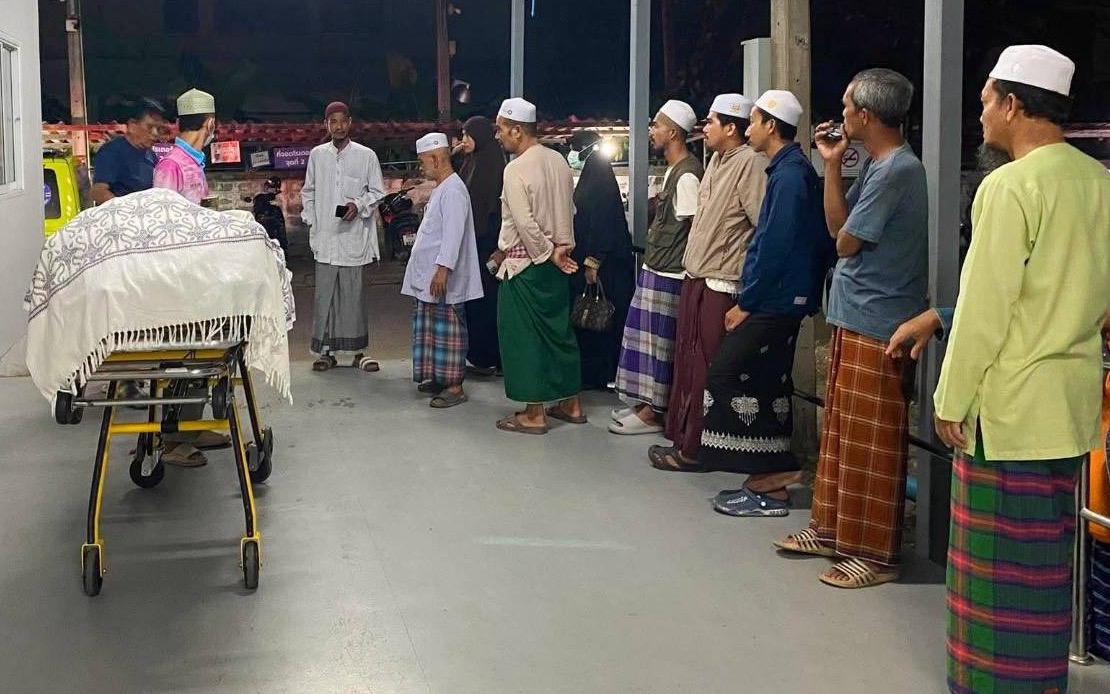
A Malaysian teenager studying the Quran died and his companion suffered serious injuries when their motorcycle crashed into an electricity pole in Thailand's Yala province on Saturday afternoon. The fatal accident occurred in the Bannang Sareng locality within Mueang Yala district, claiming the life of a 20-year-old pillion rider from Perlis who was pronounced dead at the scene due to severe head trauma. The 22-year-old motorcycle operator, hailing from Kuala Kedah in Kedah, sustained critical injuries and remains hospitalised in an unconscious state.
Investigations by Mueang Yala Police Chief Colonel Chatchai Sakdee revealed that the driver lost control of the motorcycle before colliding with a power pole. Preliminary findings suggest the loss of control preceded the impact, though authorities did not immediately disclose the underlying cause of the accident. The injured rider is currently undergoing intensive medical care at Yala Central Hospital's ICU unit, where his condition remains serious with no indication of consciousness restoration at the time of reporting.
The Malaysian Consulate in Songkhla has confirmed both young men's nationality and is coordinating with relevant authorities. However, officials stated they are still awaiting contact from family members to initiate necessary administrative procedures for the deceased and to facilitate ongoing medical decisions for the survivor. This bureaucratic process, whilst standard in cross-border incidents involving fatalities, often becomes complex given the need to coordinate between Malaysian diplomatic missions, Thai medical authorities, and grieving families spanning two countries.
Both victims were Quranic memorisation, or tahfiz, students enrolled at Pondok Padang Pusu, a traditional Islamic boarding school located in Yarang District, Pattani Province. The pair were travelling to their educational institution when the tragedy struck, highlighting the vulnerability of students commuting between residential facilities and academic commitments. Such boarding schools, which dot the Thai-Malaysian border region, attract students from across Malaysia seeking intensive Islamic religious education in a traditional pesantren environment.
The incident underscores persistent safety concerns regarding motorcycle travel in border regions where young Malaysians frequently traverse Thai roads to reach educational establishments. Unlike Malaysia's relatively robust road safety infrastructure and enforcement, riders in rural Thai provinces often encounter less regulated conditions, inconsistent traffic policing, and road conditions that may pose additional hazards during both day and night travel. For students like those at Pondok Padang Pusu, daily or weekly commutes between dormitory facilities and family homes in Malaysia necessitate prolonged exposure to these cross-border transportation risks.
Motorcycle accidents constitute a significant cause of injury and mortality throughout Southeast Asia, with Thailand consistently recording some of the region's highest rates of motorcycle-related fatalities relative to its population. Young riders, particularly those unfamiliar with specific routes or weather conditions, represent a vulnerable demographic. The Bannang Sareng area where this accident occurred is not particularly known for exceptional hazards, suggesting that factors beyond road conditions—possibly rider inexperience, fatigue, or mechanical issues—may have contributed to the loss of control.
The geographical context of this tragedy warrants attention from Malaysian authorities and educational institutions operating in Thailand. The Pattani and Yala provinces, whilst hosting numerous legitimate Islamic educational institutions, remain areas where travel safety requires careful consideration. Whilst the current incident appears to be a straightforward traffic accident unrelated to security concerns, families of students at cross-border institutions merit clear information about transportation hazards and recommended safety protocols. Educational establishments should proactively engage with students and parents regarding motorcycle safety, particularly for those commuting long distances on Thai highways.
Consular involvement in cases of Malaysian fatalities abroad illustrates the critical role diplomatic missions play in supporting bereaved families during traumatic circumstances. The Malaysian Consulate in Songkhla serves a wide geographical area encompassing southern Thailand, and such incidents demand sensitive, efficient coordination between multiple agencies. Families requiring assistance with repatriation, insurance claims, and legal matters depend on consular staff to navigate unfamiliar Thai administrative systems whilst managing grief and shock.
The survival of the motorcycle operator, despite his severe injuries, offers a possibility for recovery, though his current unconscious state suggests the injuries were profound. The outcome for this 22-year-old will depend on the quality of intensive care provided and the specific nature of his injuries. Thai hospitals in Yala province offer modern medical facilities, though families often prefer transferring patients to more specialist centres in Bangkok or Malaysia if the patient's condition permits movement.
This tragedy serves as a sobering reminder of the risks inherent in cross-border education and commuting throughout Southeast Asia. Young Malaysians pursuing religious education at Thai institutions contribute to the region's rich Islamic scholarly tradition, yet they do so with exposure to hazards that domestic education would not present. Moving forward, closer dialogue between Malaysian and Thai educational authorities, enhanced safety awareness campaigns, and potentially regulated transport arrangements could help mitigate risks for this vulnerable student population.

