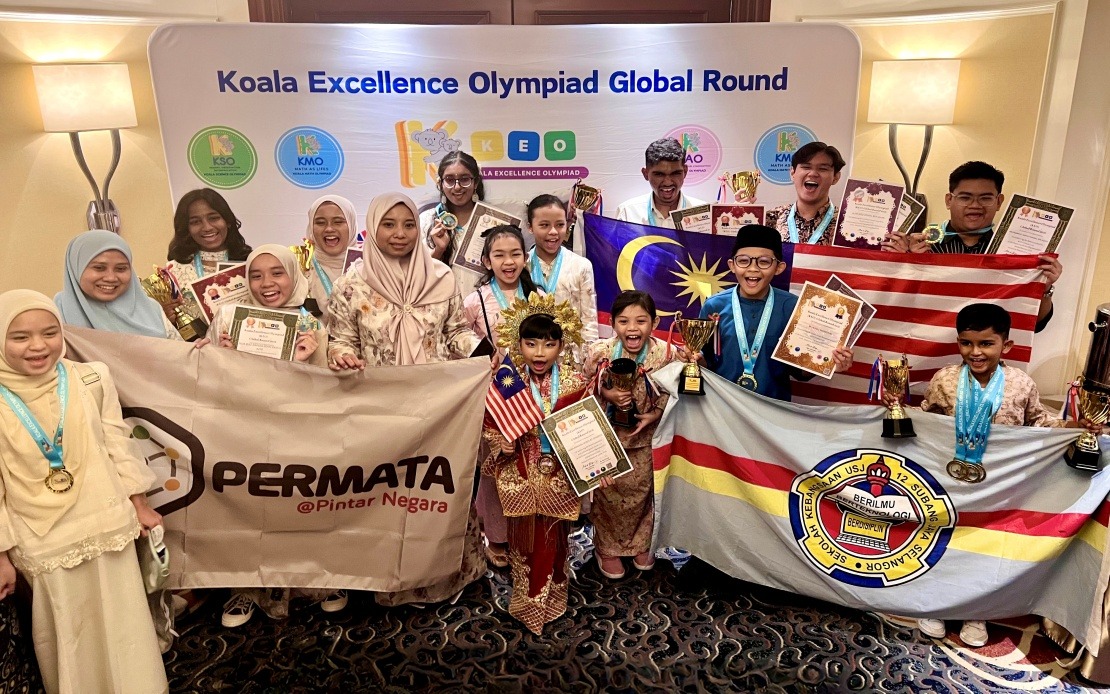
Seventeen Malaysian students have returned from Macau with a remarkable achievement, securing 22 medals at the Koala Excellence Olympiad 2026, an international academic competition that concluded on July 5. The contingent brought home five gold medals, six silver, and eleven bronze across multiple subject categories, reflecting both individual excellence and the collective strength of Malaysia's young academic talent on the global stage. This success underscores the growing competitiveness of Malaysian students in rigorous international competitions that demand innovation and critical thinking rather than rote learning.
The Malaysian Young Scientists Organisation (MYSO) coordinated the country's participation in the event, which was jointly organised by KEO and the Miss Man International Group. Aidah Misran, who leads MYSO and headed the Malaysian delegation, emphasised that the competition brought together talented students from various nations to compete across four demanding disciplines: English, Mathematics, Science, and Arts Olympiads. The breadth of subjects reflects a holistic approach to intellectual development, encouraging students to excel across both quantitative and qualitative domains.
The Malaysian contingent comprised a diverse mix of talents from eight educational institutions across the country. Four students came from Kolej PERMATA@Pintar Negara at Universiti Kebangsaan Malaysia, six from Sekolah Menengah Kebangsaan Ungku Aziz, and students from five other institutions including both primary and secondary schools. This geographic and institutional diversity suggests that excellence in academic competition is not confined to elite institutions but is distributed across the nation's education system, from federal schools to specialised colleges. The representation of students from primary and secondary levels demonstrates that Malaysia is cultivating competitive academic talent from an early age.
The standout performer at the Olympiad was Mukridz Mardzuki, a Year Six pupil from Sekolah Kebangsaan Seri Hartamas, who captured the overall championship in the Science Olympiad primary school category. This achievement is particularly noteworthy as it demonstrates that excellence at international competitions is not limited to secondary school students, but begins to crystallise even among younger learners. Mukridz's victory positions him among Malaysia's elite young scientists and reflects the quality of science education and nurturing he has received.
Additional recognition came to other Malaysian competitors who secured runner-up positions in their respective categories. Sarah Isabel Maryam Ahmad Suhael from SK Convent (2) Bukit Nanas earned the overall runner-up spot in the primary school Science Olympiad, while Alfie Rizq Danial Azlan from Sekolah Sultan Alam Shah achieved the same distinction in the secondary category. These placements indicate that Malaysia's strength in science education extends across age groups and reinforces the country's emerging reputation as a capable participant in international academic forums.
The English Olympiad also saw Malaysian success, with Ayra 'Adani Muhammad 'Aizat from Kolej PERMATA@Pintar Negara UKM earning the overall runner-up position. This achievement in an international English language competition is significant for Malaysia, where English proficiency remains a strategic priority for workforce development and regional integration. Strong performance in English at global competitions enhances Malaysia's standing as an English-speaking nation in Southeast Asia and demonstrates that the quality of language instruction is producing students capable of competing at the highest international levels.
Five Malaysian students secured third-place finishes across various categories, further extending the nation's medal haul and demonstrating depth of talent. Marvyn Zef Mark Philip achieved particular distinction by securing two third-place awards in both Science and English Olympiads, showcasing versatility across disciplines. P Prem won in Science, Muhammad Khairul Mauidz Khairul Azman in Mathematics, and AK Shashini in English. This distribution of awards across multiple subjects and multiple students indicates a well-rounded strength in Malaysia's young academic cohort rather than isolated excellence in a single field.
The Koala Excellence Olympiad itself represents a significant shift in how international academic competitions are structured and judged. Developed by Australian educational experts, the competition framework aligns with curriculum standards while deliberately emphasising critical thinking, creativity, and real-world application over memorisation-based learning. This pedagogical approach reflects global trends in education reform, where problem-solving ability and innovative thinking are valued alongside subject mastery. Malaysia's success in such a competition format is encouraging because it suggests that the nation's students are developing the higher-order thinking skills that employers and universities increasingly demand.
For Malaysian educators and policymakers, these results carry important implications. The success of students from diverse institutional backgrounds suggests that with appropriate support and exposure to international academic platforms, Malaysian schools can produce competitive talent. The strong showing in science, mathematics, and English particularly aligns with national priorities for developing a knowledge-based economy and maintaining regional competitiveness. However, the participation of only seventeen students raises questions about whether Malaysia is fully leveraging its young talent pool and whether access to such international platforms is equitable across regions and socioeconomic groups.
The achievements also reflect the role of organisations like MYSO in identifying, developing, and promoting Malaysian talent internationally. By facilitating participation in prestigious Olympiads, such organisations create pathways for outstanding students to gain recognition and build confidence on the global stage. This experience can be transformative, potentially influencing career trajectories and inspiring peers to pursue excellence in academic and scientific fields. The medals won in Macau serve not only as individual achievements but as signals to other Malaysian students that international excellence is attainable.
Looking forward, Malaysia's performance at KEO 2026 should serve as a catalyst for broader investment in gifted student programmes, science education, and English language proficiency. The diversity of participating schools suggests that excellence is not confined to traditional elite institutions, but nurturing talent requires sustained resources, quality instruction, and exposure to rigorous international benchmarks. As regional competition intensifies, particularly from neighbouring countries making significant investments in STEM education, Malaysia must continue supporting platforms that allow its young people to test themselves against global peers and develop the advanced competencies required in an increasingly knowledge-driven world.

