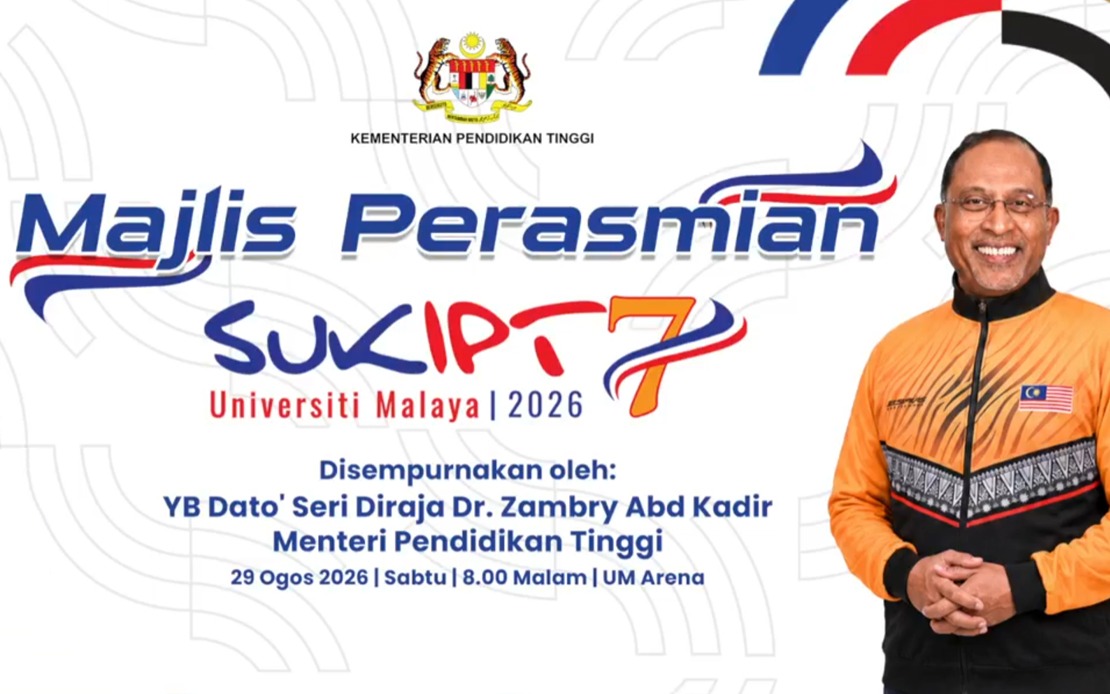
Datuk Seri Dr Zambry Abdul Kadir, Malaysia's Higher Education Minister, has underscored the strategic importance of university sports programmes in nurturing athletes capable of winning medals and setting records on the international stage. Speaking at the opening of the Higher Education Institution Games (SUKIPT) 2026 at Universiti Malaya Arena in Kuala Lumpur, Zambry pointed to recent performances by student-athletes from Malaysian public universities as compelling evidence that tertiary institutions can serve as incubators for national sporting excellence.
The Minister highlighted a string of recent achievements that demonstrate the calibre of talent emerging from Malaysia's higher education sector. Muhammad Erry Hidayat representing Universiti Putra Malaysia captured gold in men's 79-kilogramme weightlifting at the Glasgow 2026 Commonwealth Games, while his counterpart Muhammad Aniq Kasdan from Universiti Teknologi MARA secured victory in the men's 60kg category. These performances underscore how structured university sports programmes, combined with access to quality coaching and facilities, can transform student-athletes into international competitors.
Particularly noteworthy among recent achievements is Amir Daniel Abdul Majid's groundbreaking success in judo. Competing for Universiti Sains Malaysia, Amir Daniel became the first Malaysian athlete to claim a Commonwealth Games gold medal in judo, a milestone that speaks to the depth of talent development occurring within institutional frameworks. Complementing these headline victories, Amirul Daniel Abdul Rahim of Universiti Malaya contributed a bronze medal in lawn bowls, demonstrating that excellence spans multiple sports across the higher education system.
Domestically, IPT athletes have equally impressed with their record-breaking performances at the Malaysia Games (SUKMA). Omar Osman, a 400-metre runner from Politeknik Sultan Ibrahim, joined Danish Iftikhar Muhammad Rosli of Universiti Pendidikan Sultan Idris in shattering sprint records. The significance of these achievements extends beyond individual medals; they signal that Malaysian universities are systematically producing athletes whose performances meet increasingly stringent international standards. This progression from domestic success to global competitiveness creates a virtuous cycle where younger cohorts, witnessing their seniors' triumphs, become motivated to pursue athletic excellence.
Zambry articulated a vision for IPT sports that extends beyond mere participation. His description—a sports culture that "dares to challenge records and is capable of elevating Malaysia's name on the world stage"—reflects a philosophical shift towards positioning universities as performance hubs rather than recreational facilities. This perspective aligns with how leading sporting nations such as Australia and Canada leverage their higher education institutions as talent pipelines for Olympic and Commonwealth Games campaigns.
The seventh edition of SUKIPT 2026, running from August 28 to September 6 at Universiti Malaya, represents a significant platform for demonstrating this developmental infrastructure. The games attract 64 contingents comprising 20 public universities, 42 private higher education institutions, one polytechnic, and one community college, making it Southeast Asia's largest annual university sporting championship. With 8,244 athletes and officials competing across 30 sports, the scale of SUKIPT underscores how institutionalised university sports have become within Malaysia's talent development ecosystem.
To incentivise peak performance and record-breaking, organisers have introduced substantial prize structures. The championships offer 227 gold medals, with cash incentives of RM3,000 awarded to the Sportsman and Sportswoman of the Games. Team honours are valued at RM7,000, while athletes who shatter national records receive RM20,000—financial recognition that acknowledges the significance of pushing performance boundaries. These incentives, while modest compared to professional sports, signal institutional commitment to excellence and provide meaningful recognition for student-athletes balancing academic and sporting demands.
The "Creating a Legacy of Champions" theme guiding SUKIPT 2026 carries particular resonance for Malaysia's sporting ambitions. Legacy, in this context, transcends individual competitions; it encompasses the establishment of systems, standards, and cultural expectations that position excellence as normative within university environments. When universities invest in sports infrastructure, coaching expertise, and athlete support systems, they create institutional memory that persists beyond individual athletic careers, ensuring successive generations benefit from accumulated knowledge and experience.
For Southeast Asian context, Malaysia's approach to university sports differs meaningfully from regional peers. While some neighbouring countries treat university sports as subsidiary to state-sponsored academies, Malaysia has positioned higher education institutions as primary talent development conduits. This approach offers distinct advantages: it embeds athlete development within educational frameworks, ensuring participants maintain academic progression; it distributes resources across multiple institutions rather than concentrating them centrally; and it creates genuine competition that tests athletes across diverse competitive environments.
The implications for Malaysian sports policy extend beyond medals and records. The success of IPT athletes internationally has substantive economic dimensions. International sporting success generates tourism revenue through hosting events, enhances national brand positioning, and creates employment pathways for coaches, sports scientists, and administrative personnel. When universities contribute meaningfully to these outcomes, they strengthen justifications for educational investment and demonstrate to government and private sponsors the tangible return on infrastructure spending.
Challenges remain, however. Sustaining high-performance environments within universities requires ongoing investment in facilities, coaching staff, and athlete support services during periods when institutional budgets face pressure. Balancing elite athlete development with broader participation objectives—ensuring universities serve their wider student populations, not merely elite performers—demands careful programme design. Additionally, maintaining competitiveness as neighbouring Southeast Asian nations increase their sporting investments requires continuous innovation in training methodologies and strategic recruitment.
The visibility Zambry has afforded university sports, by emphasising their national significance and international impact, may catalyse increased institutional prioritisation of athletic programmes. When cabinet-level ministers publicly champion university sports, they signal to vice-chancellors that athletic excellence carries political and strategic importance. This institutional amplification can translate into resource allocation decisions, facility improvements, and enhanced recruitment efforts that compound advantages across competitive cycles.
As Malaysia positions itself within the broader Southeast Asian sporting landscape and prepares for future Olympic and Commonwealth Games cycles, the development pipeline represented by IPT athletes assumes heightened importance. The achievements catalogued by Zambry—from weightlifting golds to judo breakthroughs—demonstrate that Malaysian universities possess capacity to produce internationally competitive athletes. Sustaining and expanding this capacity, through continued institutional investment and strategic programme development, will determine whether university sports remains a marginal contributor or becomes central to Malaysia's pursuit of sporting prominence in coming decades.

