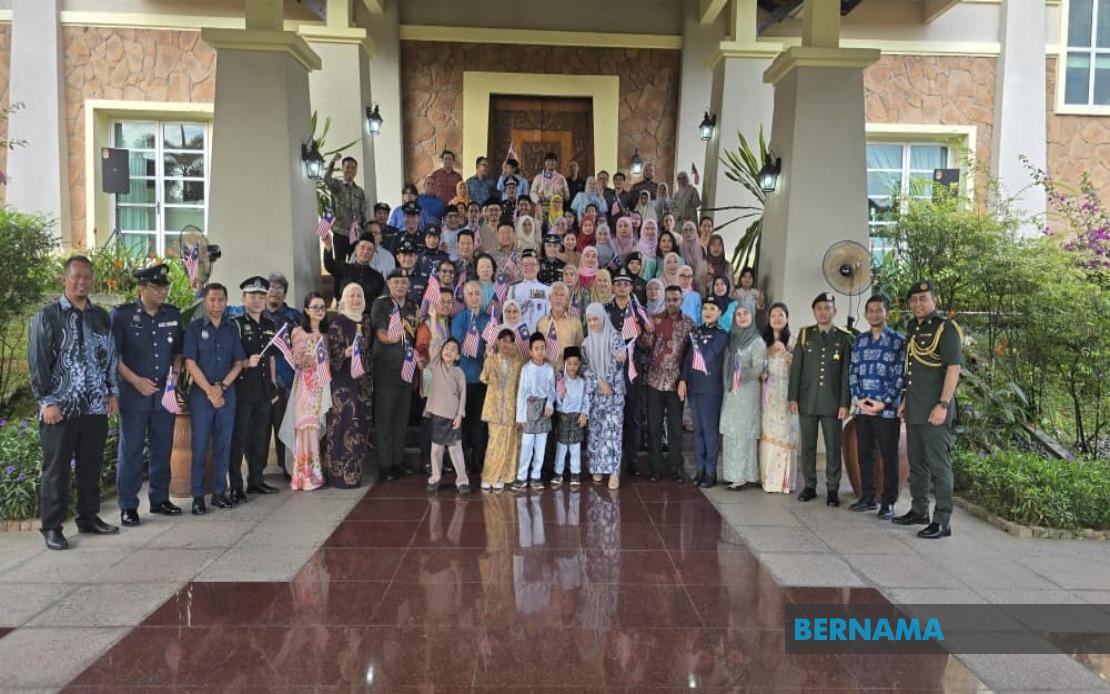
The Malaysian High Commissioner to Singapore has emphasised the crucial diplomatic and cultural role played by Malaysians residing in the island nation, positioning them as key connectors between Kuala Lumpur and Singapore. Speaking during the Malaysian High Commission's 2026 National Day parade at Rumah Malaysia, Datin Paduka Anizan Siti Hajjar Adnin underscored how the more than 300,000 Malaysians living and working in Singapore, alongside the tens of thousands who traverse the Causeway and Second Link daily for employment and commerce, collectively serve as bridges sustaining the historically complex relationship between the two neighbours.
The High Commissioner's remarks carry particular significance given the depth of interconnection between Malaysia and Singapore. Beyond the conventional metrics of bilateral diplomacy, the two nations share intricate bonds forged through decades of shared history, geographic proximity, economic interdependence, and deeply interwoven family networks. These connections mean that individual Malaysians scattered across Singapore's workforce and communities often become informal representatives of Malaysian values and professionalism, shaping how Singaporeans perceive and engage with Malaysia at the grassroots level.
Anizan stressed that Malaysians abroad bear a responsibility to exemplify their nation's highest standards of integrity, professional excellence, courtesy, and mutual respect. This emphasis on individual conduct reflects a recognition that Malaysia's soft power—its ability to influence and attract through cultural appeal and moral authority—depends heavily on how Malaysians present themselves in foreign jurisdictions. Whether as executives in multinational corporations, healthcare professionals, educators, or service workers, Malaysians in Singapore have opportunities daily to reinforce positive perceptions of their homeland through their work ethic and interpersonal behaviour.
The High Commissioner further urged younger Malaysians residing in Singapore to maintain active engagement with their cultural heritage despite living abroad. This appeal addresses a genuine tension faced by expatriate communities: the gradual erosion of cultural identity across generations in cosmopolitan environments. By encouraging appreciation for Malaysian traditions and, specifically, the preservation of Malay as the national language, Anizan sought to ensure that Malaysian identity remains vibrant among the diaspora, preventing the dilution of bonds that tie Malaysians abroad to their country of origin.
For Malaysia-Singapore relations, the presence of a substantial and successful Malaysian community in Singapore carries strategic value. Unlike formal diplomatic channels, which can sometimes become strained by bilateral disputes over water agreements, airspace, or maritime boundaries, people-to-people connections provide resilience and continuity. When official relations experience friction—as they periodically do—these underlying networks of family ties, business partnerships, and professional relationships help prevent tensions from escalating into broader conflicts. The thousands who commute daily across the border represent economic integration that makes cooperation mutually beneficial and politically difficult to undermine.
The National Day parade itself, held annually by the Malaysian High Commission, serves as a visible assertion of Malaysian identity and unity within Singapore's multicultural society. By hosting such ceremonies, the diplomatic mission reinforces Malaysia's presence in Singapore and provides a platform for Malaysians to celebrate national identity collectively. The participation of over 70 High Commission staff members and their families in the 2026 parade demonstrates institutional commitment to these nation-building activities, sending a message both to the Malaysian community and to Singapore's authorities about Malaysia's pride in its heritage.
The High Commissioner's vision of Malaysia—confident in its identity, open to international engagement, yet anchored in core values—reflects broader contemporary debates within Malaysia about balancing globalisation with cultural preservation. For Malaysians in Singapore, this framework offers guidance: they need not choose between professional ambition and cultural rootedness, but rather integrate these dimensions. This philosophical stance has implications for how Malaysia positions itself regionally as Southeast Asia becomes increasingly interconnected through migration, commerce, and digital networks.
The role of expatriate communities in strengthening bilateral ties extends beyond ceremonial occasions. Malaysians working in Singapore's financial sector, research institutions, healthcare systems, and technology industries contribute directly to knowledge transfer and economic linkages between the two economies. Their professional networks often facilitate business collaborations, investment flows, and technological innovation that benefit both nations. Recognition of this contribution by the High Commissioner validates these workers' contributions to both their adopted country and their homeland.
Looking forward, the challenge for Malaysian authorities lies in maintaining engagement with the diaspora while they navigate competing allegiances and identities. As Singapore continues attracting skilled workers from across the region, Malaysia must ensure that its expatriate community retains meaningful connections to home through accessible cultural programming, community initiatives, and recognition of their role in bilateral relations. The High Commission's activities, supported by events like the National Day parade, provide essential infrastructure for this ongoing engagement and identity maintenance among Malaysians abroad.

