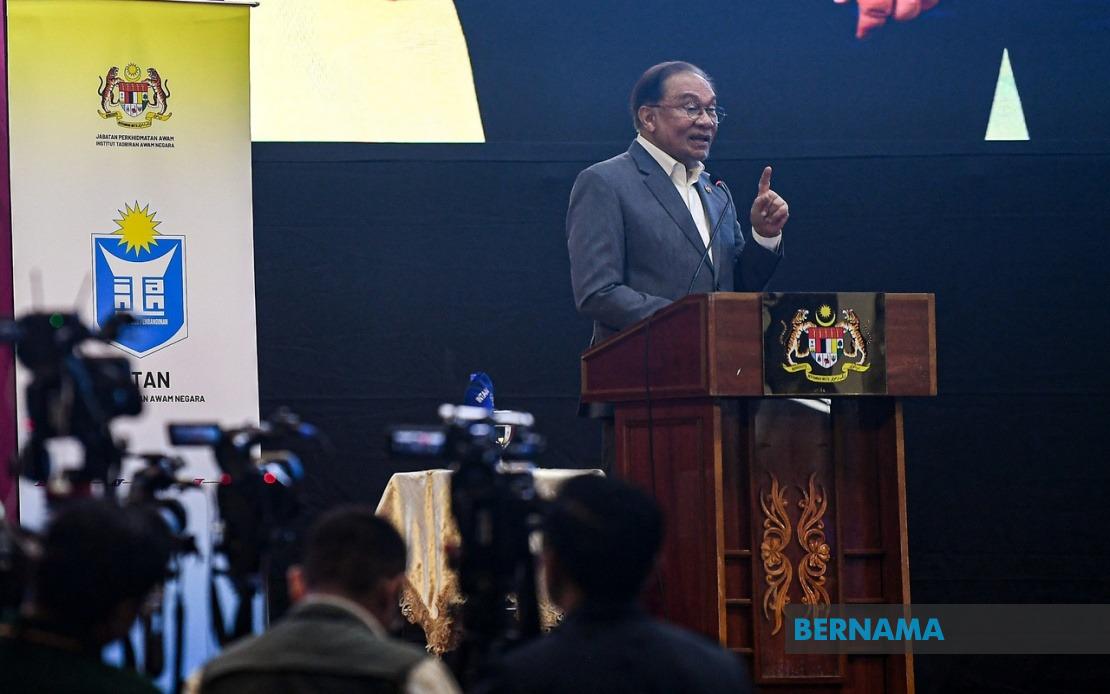
Prime Minister Datuk Seri Anwar Ibrahim has called on Malaysians to liberate themselves from the psychological legacy of colonialism that continues to privilege Western systems, languages and cultural frameworks as benchmarks for progress and development. Speaking at Universiti Islam Selangor during an engagement with civil servants from the Central Zone, Anwar challenged the mindset that treats external models as automatically superior to homegrown approaches, warning that this dependency undermines genuine national independence.
Anwar framed the challenge as extending beyond the formal achievement of independence in 1957. While previous generations fought for political sovereignty, he argued, the current generation bears responsibility for ensuring that Malaysia's trajectory reflects authentic Malaysian values rather than borrowed templates. True independence, he suggested, requires more than administrative autonomy—it demands cultural and intellectual self-determination rooted in the nation's own strengths and identity.
The Prime Minister identified a persistent pattern among Malaysians, including those born well after independence, who unconsciously adopt Western frameworks across multiple domains of life. He described individuals who, despite their Malaysian heritage, believe education must be conducted in English, that cultural standards should follow Western norms, and that economic and political systems ought to replicate those developed in the West. This internalized hierarchy, Anwar implied, represents a failure to fully complete the independence project.
Anwar's remarks carry particular resonance in Malaysia's ongoing debate about national identity and language policy. The education system has long been contested ground, with English-medium instruction advocated by segments viewing it as essential for global competitiveness, while others argue it marginalizes Bahasa Malaysia and reflects post-colonial dependency. By invoking this concern publicly, the Prime Minister signals his government's investment in reasserting Malay-language education and indigenous intellectual frameworks.
The comments also reflect broader regional anxieties across Southeast Asia regarding cultural sovereignty in an increasingly globalised world. Nations throughout the region grapple with balancing international standards and English-language proficiency against the preservation and promotion of local languages, values and institutional models. Malaysia's specific challenge involves navigating these tensions while managing a multicultural society where different communities hold varying perspectives on language, education and cultural identity.
Anwar's framing sidesteps potential tensions by emphasizing national unity around authenticity rather than requiring cultural uniformity. He addresses not specific communities but rather a psychological orientation—the reflexive assumption that external models represent advancement. This approach potentially allows diverse Malaysians to embrace local identity frameworks while accommodating legitimate arguments for English competency and international engagement.
The gathering included Chief Secretary to the Government Tan Sri Shamsul Azri Abu Bakar and Director-General of the Public Service Tan Sri Wan Ahmad Dahlan Abdul Aziz, indicating the government's intention to embed these principles within the civil service. This positioning suggests that public sector institutions will be expected to champion indigenous approaches to governance, administration and service delivery rather than unthinkingly importing foreign models.
For Malaysia's public sector and development apparatus, Anwar's intervention carries institutional implications. Rather than accepting that best practices necessarily originate from Western institutions and frameworks, government agencies may be encouraged to develop distinctly Malaysian approaches informed by local context, values and understanding. This could reshape how policies are formulated, evaluated and implemented across federal and state governments.
The message also addresses Malaysian academia and professional communities who have often looked abroad for validation and intellectual authority. Universities, research institutions and professional bodies may interpret this statement as encouragement to develop intellectual traditions rooted in Malaysian experience and contributions rather than primarily importing foreign curricula and methodologies.
However, Anwar's position exists in productive tension with Malaysia's own internationalization agenda and competitive positioning in global markets. The nation requires English proficiency and engagement with international standards to participate effectively in global commerce, science and diplomacy. His challenge, therefore, is to articulate how Malaysians can embrace genuine international engagement while resisting unconscious subordination to Western frameworks—a distinction not always easy to maintain in practice.
The timing of these remarks reflects government efforts to strengthen national cohesion around shared Malaysian identity during a period of political realignment. By invoking independence and national self-determination, Anwar taps into foundational national narratives while positioning his administration as guardian of Malaysia's authentic interests against external dependency and internal fragmentation.
Ultimately, Anwar's exhortation represents an invitation for Malaysians to approach development and governance with greater critical distance and creative confidence. Rather than either wholesale rejection or uncritical embrace of external models, the position suggests selective engagement—learning from international experience while ensuring that Malaysian institutions, policies and aspirations reflect Malaysian values and address Malaysian realities and opportunities.

