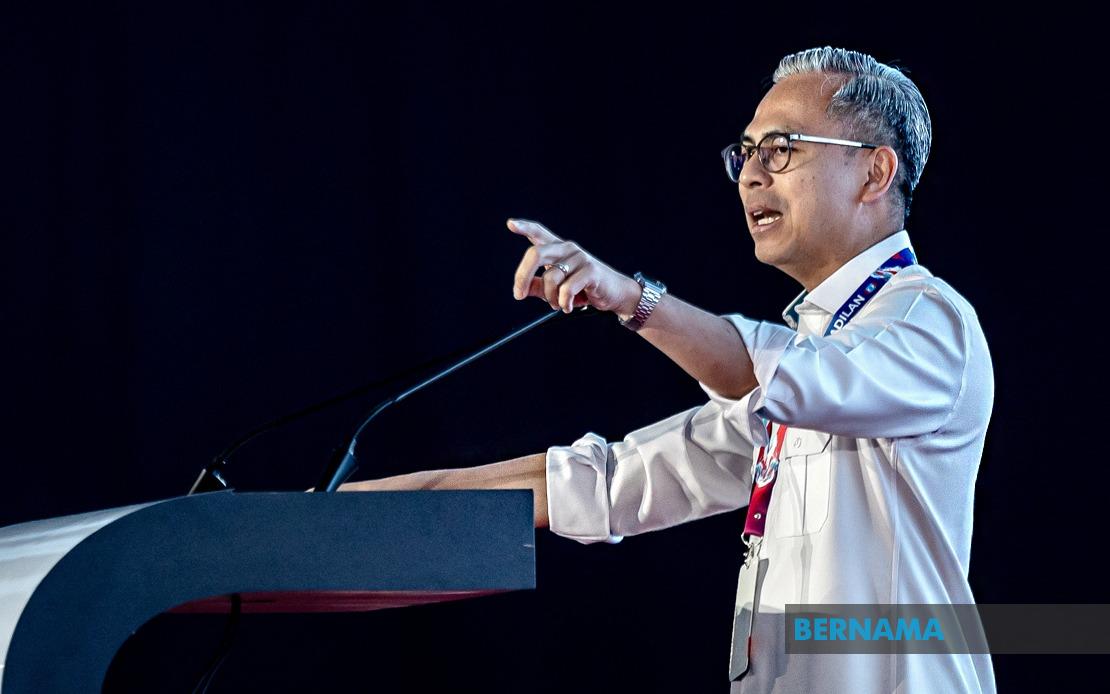
Malaysians are developing a more discerning appreciation for the Jalur Gemilang's design specifications, according to Communications Minister Datuk Seri Fahmi Fadzil, who observed the shift during a community visit in Melaka. The minister noted that citizens are now more attentive to the flag's details—particularly its number of stripes and the arrangement of colours—demonstrating heightened consciousness around proper flag etiquette and national symbolism, especially as the country approaches its annual National Month celebrations.
Fahmi's observation comes at a time when issues surrounding improper flag displays have occasionally sparked public discourse. Rather than viewing such scrutiny negatively, the minister framed the trend as evidence of a positive cultural shift, whereby Malaysians are internalising the importance of according the Jalur Gemilang the respect it deserves as the nation's most prominent emblem. This awareness appears to have translated into tangible behaviour change, with citizens taking on informal policing roles within their communities, gently correcting one another when flag protocols are not observed.
The minister highlighted that since this heightened awareness has taken root, formal complaints about flag misuse or improper display have not accumulated. Instead, he characterised the new dynamic as one where public consciousness serves as a self-regulating mechanism. When encountering the Jalur Gemilang in public spaces or on private property, many Malaysians now instinctively count the stripes and verify that the final stripe is white, embedding flag familiarity into everyday observation rather than treating it as a peripheral concern.
While acknowledging an incident involving an allegedly incomplete Jalur Gemilang displayed in Batu Buruk, Terengganu, Fahmi deferred detailed comment, preferring to allow investigating authorities to pursue the matter. This measured approach reflects the government's attempt to balance accountability with avoiding unnecessary escalation of isolated incidents that might overshadow the broader narrative of improving public conduct.
A noteworthy trend Fahmi identified involves vehicle owners increasingly opting for magnetic Jalur Gemilang stickers rather than traditional physical flags. This pragmatic shift addresses a common concern among motorists worried about potential damage to vehicle paintwork and body panels from sustained flag exposure. The adoption of magnetic alternatives represents a creative solution that allows citizens to express patriotism while maintaining their vehicles' aesthetic condition, suggesting that practical considerations need not conflict with national sentiment.
With National Day and Malaysia Day celebrations approaching, government machinery has shifted into high gear to ensure seamless execution across multiple fronts. Fahmi reported that preparations encompassing contingent deployments, educational performances orchestrated by the Ministry of Education, and logistical arrangements in Putrajaya were tracking according to schedule. Coordination among various stakeholders has intensified, with a full National Day coordination meeting scheduled and complementary virtual discussions planned to address Malaysia Day specifics.
The capital will host two significant Merdeka Eve events reflecting the breadth of national commemoration efforts. A gathering at Merdeka Stadium, organised under the Ministry of National Unity's purview, will feature a keynote address from Prime Minister Datuk Seri Anwar Ibrahim, positioning the celebration within the broader framework of government vision. Simultaneously, Kuala Lumpur City Hall will orchestrate festivities at Dataran Merdeka, ensuring that multiple venue options allow widespread public participation across the city.
Beyond ceremonial duties, Fahmi's community engagement during the Melaka visit underscored the government's commitment to assessing welfare needs among vulnerable populations. The minister visited two elderly stroke patients—R. Sathia Devi, 70, residing at Pangsapuri Kiara in Batu Berendam, and Abu Zarin Nordin, 64, at Kampung Tun Razak in Bukit Katil—to evaluate their circumstances and identify specific support mechanisms required. These encounters serve as ground-level fact-finding missions that inform policy implementation and resource allocation.
The assistance framework Fahmi outlined for stroke patients encompasses multiple dimensions: nutritional support through milk supplies, coordinated intervention from the Social Welfare Department, and rehabilitation services. Furthermore, the minister indicated willingness to explore alternative therapeutic approaches, including acupuncture, suggesting a holistic approach to patient care that extends beyond conventional medical channels. This comprehensive stance acknowledges that vulnerable populations often require multifaceted support addressing both immediate necessities and longer-term wellness considerations.
For Malaysian readers, these developments carry implications extending beyond ceremonial flag awareness or celebratory arrangements. The observed cultural shift toward greater national symbol consciousness reflects an underlying trend of refined civic consciousness, whereby citizens increasingly internalise standards of national conduct without requiring top-down enforcement. The practical innovations around flag display—particularly the magnetic sticker trend—demonstrate how patriotic expression can evolve to accommodate modern realities and individual circumstances, a flexibility that may strengthen rather than dilute national sentiment.
The government's simultaneous focus on welfare assessment and national celebration preparations illustrates an attempted integration of patriotic commemoration with tangible governance. By connecting ceremonial observance with concrete welfare interventions, authorities seek to present celebrations as meaningful beyond symbolic gestures, embedding them within broader developmental and social support frameworks that touch ordinary Malaysians' daily lives.

