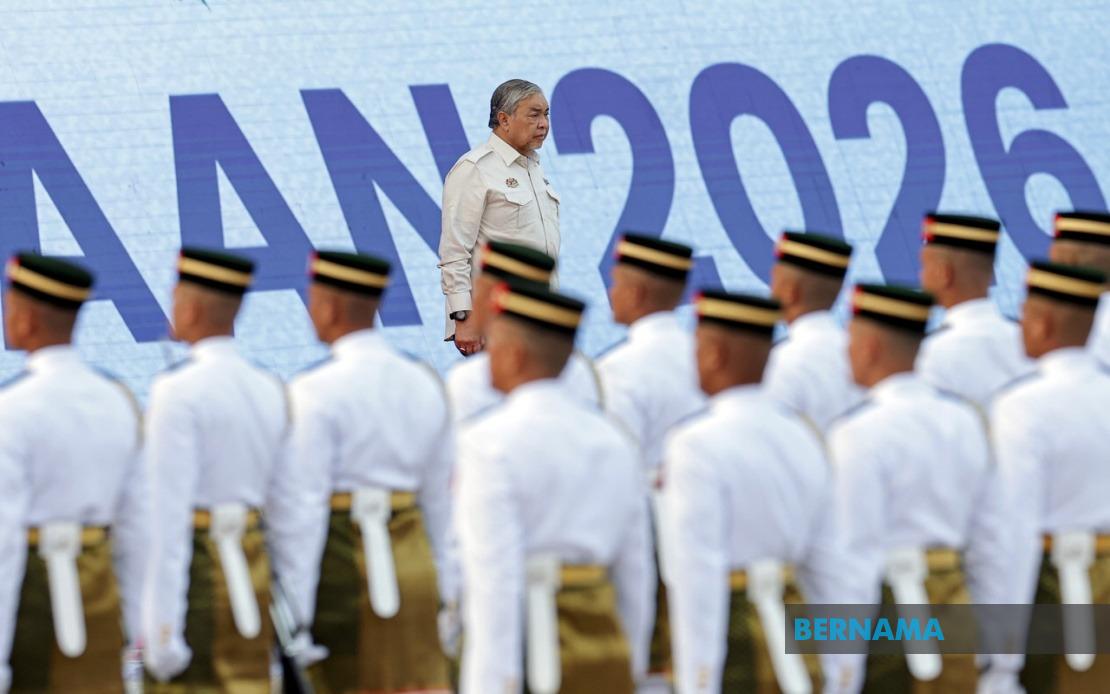
The 2026 National Day celebration at Dataran Putrajaya delivered a demonstrable surge in public engagement, according to Deputy Prime Minister Datuk Seri Dr Ahmad Zahid Hamidi, who characterised the festivities as surpassing previous years' observances in scale and enthusiasm. Speaking to media immediately following the proceedings on 31 August, Ahmad Zahid attributed the marked improvement to an observable intensification of patriotic fervour among Malaysian citizens, suggesting the commemoration served as a barometer for national sentiment.
The gathering represented one of the capital's largest assemblies for the annual constitutional milestone, with official estimates placing attendance at just over 100,000 people who converged on the administrative hub from daybreak onwards. The sheer volume of participants underscored genuine appetite for collective national observance, a phenomenon that carries significance given Malaysia's multi-ethnic and multi-religious composition, where unity celebrations require sustained consensus-building.
The parade component of the festivities demonstrated organisational ambition, deploying 10,819 active participants distributed across 76 contingents and 22 marching bands throughout the ceremonial route. This logistical undertaking reflected months of coordination between federal agencies, state representatives, and civic organisations, each contributing symbolic representation to the broader narrative of national cohesion. The scale of parade participation typically mirrors the degree of grassroots investment in the occasion's messaging.
The programme adopted the thematic framework "Malaysia MADANI: Kesejahteraan Dinikmati"—translating to "Malaysia MADANI: Prosperity Enjoyed"—anchoring the celebration to the federal government's development philosophy. This naming choice deliberately positioned the festivities as more than ceremonial formality, instead functioning as a public reaffirmation of the administration's commitment to inclusive economic advancement. The MADANI concept, introduced by Prime Minister Datuk Seri Anwar Ibrahim's government, emphasises prosperity that reaches across demographic and geographic segments of society.
The participation of His Majesty Sultan Ibrahim and Her Majesty Raja Zarith Sofiah lent constitutional weight to the proceedings, as the presence of the reigning monarchs traditionally elevates a national occasion beyond the political calendar into the domain of institutional permanence. Their attendance, coupled with that of Prime Minister Anwar Ibrahim and the assembled Cabinet ministers, created a unified display of governmental support spanning executive and ceremonial branches of state.
Ahmad Zahid's personal engagement with attendees—mingling with crowds who had begun assembling before dawn to secure vantage points—reflected a deliberate effort to embed political leadership within the grassroots experience rather than observing from administrative distance. Such accessibility serves multiple functions: it permits direct measurement of public sentiment, generates positive media imagery, and implicitly validates citizens' investment of time and energy in state-sponsored commemoration.
The observation of Merdeka Day carries particular resonance in Malaysia's contemporary political environment, where unity narratives compete with persistent social divisions rooted in ethnicity, religion, and regional disparity. Annual National Day celebrations function as ritualistic reinforcement of the social contract underpinning the federation's constitutional arrangement, particularly in years following political turbulence or economic uncertainty. The 2026 iteration's scale suggests public receptiveness to unity messaging despite ongoing policy disagreements.
The numerical growth in attendance—though Ahmad Zahid did not explicitly compare figures to previous years—potentially reflects post-pandemic normalisation of large public gatherings, improved urban accessibility to Dataran Putrajaya, or enhanced promotional efforts by state agencies. Distinguishing between these drivers requires contextual analysis, as differing explanations carry distinct implications for understanding genuine patriotic revival versus logistical enhancement.
For Malaysia's regional standing, credible demonstrations of internal unity carry diplomatic weight. Southeast Asian neighbours observe these occasions as indicators of domestic stability, with large, orderly public assemblies suggesting governmental legitimacy and social cohesion. In the context of ASEAN's emphasis on collective identity and non-interference in internal affairs, Malaysia's ability to mobilise visible national consensus strengthens its voice within regional forums and reinforces its claims to developmental progress.
The Deputy Prime Minister's characterisation of patriotism as "growing" merits careful scrutiny, as patriotic sentiment manifests unevenly across demographic categories. Older generations, whose formative years coincided with post-independence nation-building, typically demonstrate stronger identification with Merdeka symbolism than younger cohorts navigating globalised identity formation. Large public attendance may reflect festive atmosphere and public holiday opportunity rather than deepened ideological commitment to national symbols, though both interpretations remain compatible with Ahmad Zahid's framing.
Looking forward, the question becomes whether the 2026 celebration's momentum can sustain through subsequent years, or whether it represents a temporary convergence of favourable circumstances. Sustaining patriotic engagement requires consistent governmental delivery of the "prosperity" promised in the Malaysia MADANI thematic framework, particularly regarding employment, housing, and educational access that shape lived experience for majority demographics.

