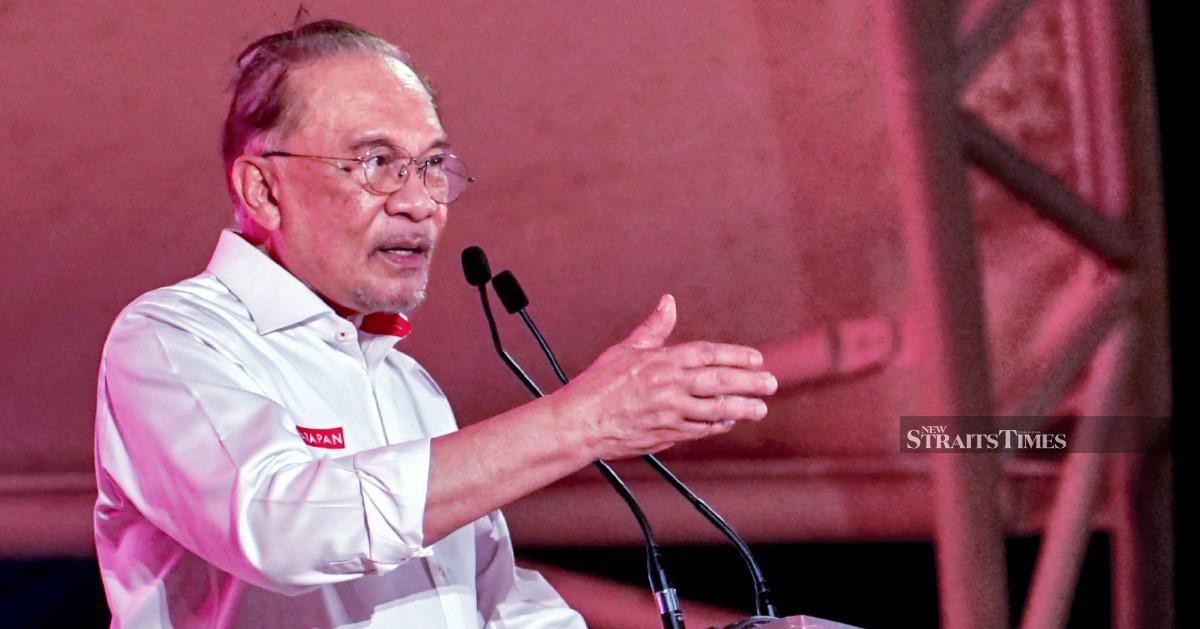
Prime Minister and Finance Minister Datuk Seri Anwar Ibrahim interpreted Malaysia's 5.8 per cent economic expansion in the second quarter of 2026 as validation of the government's strategic economic direction, attributing the outperformance to initiatives embedded within the Madani Economic Framework. The growth figure exceeded analyst expectations and represents a continuation of the steady expansion trajectory that has characterised Malaysia's recent macroeconomic performance despite persistent headwinds in the global trading environment.
The Madani Economic Framework, introduced as the government's overarching blueprint for sustainable and inclusive growth, encompasses structural reforms across multiple sectors including digital transformation, investment climate enhancement, and labour market modernisation. By tying the latest growth figures to this framework, Anwar's administration seeks to build domestic confidence in its long-term economic direction while demonstrating that policy coherence can translate into tangible GDP expansion. This narrative becomes particularly significant given the scepticism that frequently surrounds newly launched economic programmes in developing markets.
The 5.8 per cent growth performance places Malaysia among the faster-expanding Southeast Asian economies in the current cycle, though interpretations vary regarding what drives this expansion. Domestic consumption appears to have remained resilient, suggesting that household incomes and confidence have not deteriorated substantially despite inflation pressures experienced across the region. Manufacturing and services sectors, which together constitute the backbone of Malaysia's diversified economy, appear to have maintained reasonable momentum through the quarter.
However, Anwar's accompanying emphasis that reforms must accelerate rather than plateau carries a cautionary undertone. The stronger headline growth figure could mask persistent structural inefficiencies that, if left unaddressed, might constrain Malaysia's medium-term competitiveness. The Prime Minister's dual messaging—celebrating current performance while stressing unfinished reform work—reflects the complexity of Malaysia's economic position: sufficiently robust to avoid crisis, yet facing competitive pressures from within the region that demand continuous productivity enhancement.
Investors and policymakers across Malaysia are increasingly aware that relying solely on domestic demand or commodity-price-driven exports offers insufficient insulation against shifting global economic patterns. The government's insistence on continued reform suggests recognition that factors such as bureaucratic efficiency, skills alignment with emerging industries, and fiscal sustainability remain central to long-term competitiveness. Malaysia competes not only with established regional peers like Thailand and Indonesia but also with increasingly sophisticated competitors such as Vietnam, where manufacturing is attracting substantial foreign direct investment.
For Malaysian businesses and entrepreneurs, Anwar's framing has practical implications. Sustained growth provides confidence for investment and hiring decisions, yet the accompanying call for structural improvement signals that competitive pressures will intensify. Companies operating in regulated sectors or those dependent on government procurement may find that efficiency standards and innovation expectations are rising, reflecting the administration's intention to move beyond mere headline growth toward productivity-driven expansion.
The Madani Framework encompasses several specific pillars that influence business and consumer behaviour. Digital economy initiatives aim to expand e-commerce and technology adoption across smaller enterprises, recognising that Malaysia's digital penetration, while respectable, lags some global standards. Green economy components reflect growing recognition that environmental sustainability and economic growth need not conflict, a positioning that increasingly attracts multinational investment in sustainable sectors. Financial services modernisation, including fintech regulation and Islamic finance innovation, represents another avenue through which Malaysia seeks differentiation within Southeast Asia's competitive landscape.
International analysts have noted that Malaysia's ability to sustain 5-6 per cent annual growth requires not only cyclical factors but structural improvements in areas such as education-employment alignment, public-sector productivity, and public-private partnership frameworks. The second-quarter performance, encouraging as it appears on the surface, does not automatically confirm that these deeper improvements are tracking as envisioned. Anwar's insistence on continued reform acknowledges this reality, suggesting that policymakers view current growth as a platform for deeper change rather than a destination.
Regionally, Malaysia's growth trajectory influences perceptions of ASEAN's collective economic health. Southeast Asia's largest economies—Indonesia, Thailand, the Philippines, and Malaysia—collectively signal where regional expansion is headed. Malaysia's 5.8 per cent expansion, if sustained, contributes to a narrative of regional resilience, potentially supporting foreign investor appetite for Southeast Asian assets more broadly. Conversely, if growth falters despite the Madani Framework, it would raise questions about the region's structural competitiveness in a more protectionist global environment.
Looking forward, the government's stated commitment to continuous reform will be tested through implementation rather than rhetoric. The second quarter's positive results provide political space for difficult decisions on subsidy rationalisation, public-sector efficiency, and competitive market opening—changes that typically face domestic resistance. Whether Anwar's administration can convert the current macroeconomic tailwind into momentum for genuine structural transformation will ultimately determine whether the 5.8 per cent growth represents a sustainable trend or a cyclical peak.

