The Malaysian accountancy profession stands at a pivotal crossroads, where rapid technological disruption demands a fundamental shift in how practitioners operate without sacrificing the ethical foundations that have defined their work for generations. This balancing act between innovation and tradition will prove critical to Malaysia's economic standing in an increasingly competitive global marketplace, according to leadership at the Malaysian Institute of Accountants (MIA). The profession's ability to navigate this transition while maintaining stakeholder confidence could determine whether Malaysia retains its status as a trusted financial centre in Southeast Asia, particularly as investors and regulators worldwide grow more scrutinous of financial disclosures and corporate governance.
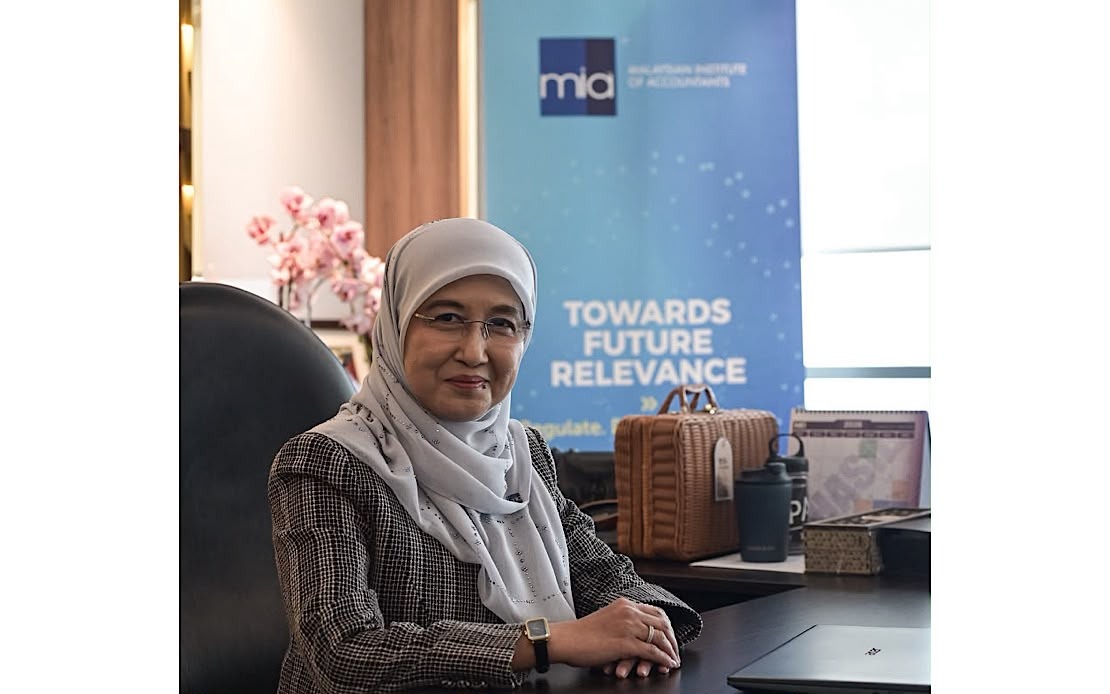
Datuk Saniza Said, who recently became MIA's first woman president in December 2025, articulated a vision of accountants evolving far beyond their traditional role as number-crunchers. Today's practitioners increasingly serve as strategic advisers, navigating complex business decisions and safeguarding the interests of multiple stakeholders through rigorous professional scepticism and sound judgment. This expanded remit reflects how businesses now view accounting not as a compliance obligation but as a source of competitive advantage. Yet this transformation only succeeds if the public maintains confidence in the profession's integrity, transparency and commitment to the broader interest. "We need to promote ethical principles, transparency, accountability and integrity. We must build stakeholders' trust in the accountancy profession as part of the commitment to public interest," Saniza told Bernama, emphasising that trust remains the bedrock upon which all other professional functions rest.
The pressures driving this evolution stem partly from technological disruption that, if left unaddressed, could render many accountants irrelevant within a decade. Saniza acknowledged that professionals who resist upskilling and transformation risk being left behind as artificial intelligence, automation and data analytics reshape the sector's landscape. However, she pushed back against the fatalistic narrative that technology will eliminate the profession entirely. Instead, she proposed a more nuanced view where machines handle routine bookkeeping and compliance tasks, freeing human accountants to apply the professional judgment, ethical reasoning and contextual understanding that machines cannot replicate. This distinction matters enormously for the profession's future workforce pipeline and for Malaysia's broader economic competitiveness, as the country competes with neighbouring jurisdictions to attract and retain accounting talent.
G. Shanmugam, MIA's chief executive officer, expanded on this technological transformation, describing the accountancy profession as approaching a critical tipping point driven by artificial intelligence, data analytics and automation. He envisioned a future where routine accounting tasks are increasingly delegated to software and algorithms, allowing professionals to concentrate on higher-value activities such as business strategy, risk management and advisory services. This transition, while potentially unsettling for some practitioners, actually positions accounting as a more intellectually engaging career path capable of attracting younger talent. The shift from transactional work to analytical and strategic roles creates opportunities for fresh graduates to progress more rapidly into positions of greater responsibility and influence, potentially addressing workforce development challenges that many professional service firms currently face across the region.
Central to this evolution is the emerging expectation that accountants function as trusted business advisers capable of providing foresight and strategic guidance to management and stakeholders. Rather than merely reporting what has already occurred, modern accountants are increasingly expected to anticipate future challenges and opportunities, identify emerging risks and advise organisations on forward-looking strategies. This represents a profound shift in professional identity and capability requirements. Shanmugam stressed that developing foresight capabilities—the ability to say "tell me what I don't know" and guide organisations toward future preparedness—has become crucial. This demand for predictive insight makes skills such as data analytics and predictive analytics indispensable for practitioners seeking to remain competitive and relevant, particularly in an era where business environments shift with unprecedented speed.
Sustainability has emerged as another critical frontier where accountants must develop new expertise and capabilities. The recent launches of MIA's Sustainability Blueprint for the Accountancy Profession and Sustainability Roadmap signal the institution's recognition that environmental, social and governance (ESG) considerations now permeate investment decisions, regulatory requirements and stakeholder expectations. As organisations worldwide grapple with sustainability reporting requirements and investor demands for ESG assurance, accountants possess the technical skills and professional credibility to guide this transition. Building these competencies now positions Malaysia's accountancy profession to capture opportunities in what will likely become a dominant feature of financial reporting and corporate governance in coming decades. The ability to provide assurance on sustainability information could create entirely new service lines for Malaysian accounting firms competing in regional and global markets.
MIA's infrastructure for professional development reflects this strategic orientation. The institute conducts approximately one thousand Continuing Professional Development programmes annually, supplemented by conferences, online learning platforms and networking initiatives designed to keep practitioners abreast of emerging trends and technologies. With current membership standing at around 42,000 and growing between 1.5 and 2.0 per cent annually, MIA operates at significant scale as a professional body. However, maintaining relevance in a rapidly changing landscape requires substantial investment in education and capability-building. Shanmugam's emphasis on upskilling members to remain future-ready, particularly in technological and artificial intelligence contexts, underscores how professional institutions must continually evolve their value proposition to justify membership and maintain influence within their sectors.
The Malaysian context adds particular urgency to this professional transformation. As a developing economy seeking to climb the value chain and establish itself as a regional financial hub, Malaysia benefits enormously from having world-class professional services. Investors assessing Malaysia as a destination for capital require confidence that the country's accountants and auditors operate to the highest international standards and maintain uncompromising ethical standards. Financial misconduct and fraud continue to evolve in sophistication, making the role of professional accountants as gatekeepers and assurance providers more important, not less. The reputation damage inflicted by accounting failures or corporate malfeasance can extend far beyond individual companies, affecting investor confidence in Malaysian markets generally and the country's standing in regional financial networks.
Saniza's vision for MIA—a profession that is trusted, future-ready and globally respected while embracing innovation without compromising core values—reflects sophisticated understanding of how professional institutions create lasting value. Rather than viewing technological change as an existential threat to be resisted, the institute's leadership frames it as an opportunity for professionalisation and elevation. This perspective contrasts sharply with reactive approaches common in some jurisdictions, where professional bodies resist change until circumstances force painful transitions. By proactively building AI, data analytics and sustainability capabilities into the profession's skill base now, Malaysia positions its accountants to lead rather than follow in the digital transformation of financial services.
The implications extend beyond individual accountants or firms to touch Malaysia's broader competitive positioning in Southeast Asia. Countries that successfully transition their professions toward higher-value advisory and assurance roles while maintaining stringent ethical standards gain advantages in attracting sophisticated international business and investment. Conversely, jurisdictions where professional standards slip or where practitioners lack cutting-edge capabilities gradually lose credibility and market share. For Malaysia, with its ambitions to strengthen its position as an international financial centre, the health and vitality of the accountancy profession matters considerably. The success of MIA's transformation agenda will influence whether Malaysian accountants and audit firms compete effectively in regional and global markets, and whether the country can attract and retain professional talent in a world where skilled practitioners have abundant employment options across multiple jurisdictions.

