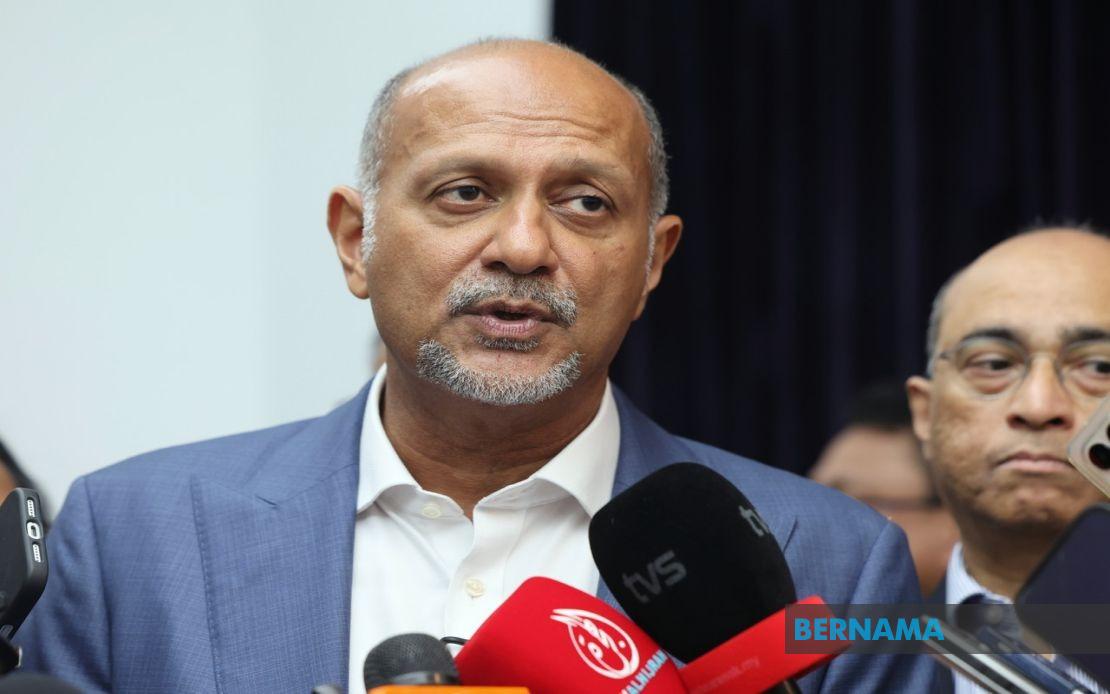
Malaysia's ambition to transform into an artificial intelligence powerhouse by the end of the decade will require far more than top-down government mandates. Digital Minister Gobind Singh Deo outlined this reality on July 28 in Cyberjaya, emphasising that success depends on cultivating genuine partnerships across private enterprise, academic institutions, civil society, and related sectors. The necessity for such a broad coalition reflects a fundamental shift in how the country approaches technological transformation, moving away from siloed decision-making toward an integrated ecosystem where diverse stakeholders contribute complementary strengths.
Prime Minister Datuk Seri Anwar Ibrahim formalised this strategic pivot by officially launching AI Malaysia Bhd, a dedicated national entity operating under the Ministry of Digital. The establishment represents a significant institutional advancement, building upon the National AI Office (NAIO) that was created in December 2024. Rather than replacing NAIO, AI Malaysia Bhd functions as an evolution of that initial foundation, providing the formal structure and operational capacity required to drive Malaysia's transformation into a genuine AI-driven economy over the coming years.
Gobind explained that AI Malaysia serves as the physical and conceptual hub where Malaysia's disparate capabilities in artificial intelligence can converge. The platform consolidates expertise, financial resources, and the participation of key stakeholders under one operational umbrella, enabling the holistic development of the nation's AI capabilities. This consolidation is critical because artificial intelligence advancement does not occur in isolation; it requires continuous dialogue between those implementing AI in manufacturing, those researching advanced algorithms, those setting policy frameworks, and those considering the societal implications of rapid technological change.
The collaborative framework addresses a persistent challenge in Malaysia's technology governance: the fragmentation of discussion around emerging technologies. While Malaysian policymakers and industry leaders have frequently debated artificial intelligence, those conversations often remained disconnected from implementation realities on the ground. By establishing a common space where stakeholders can identify and tackle sector-specific challenges collectively, AI Malaysia creates mechanism for translating policy aspirations into tangible progress. A bank facing AI security risks, a healthcare provider seeking to deploy diagnostic AI, and a manufacturing firm considering automation can all participate in shaping the ecosystem that serves their needs.
The establishment of AI Malaysia builds on work initiated during the 13th Malaysia Plan, when Prime Minister Anwar first announced the 2030 AI Nation vision to Parliament. However, the journey from declaration to implementation proved sufficiently complex to require two years of preparatory engagement involving representatives from across Malaysia's economy. This extended consultation period, managed by NAIO, ensured that the formal structure now being rolled out reflects genuine input from multiple sectors rather than imposing external assumptions about Malaysia's AI requirements and capabilities.
Gobind positioned AI Malaysia as an institution with specialized expertise tasked with charting the country's AI direction, developing supportive policies, and monitoring the effectiveness of existing strategies. This represents recognition that artificial intelligence policy requires continuous calibration; the technology evolves so rapidly that static regulatory frameworks quickly become obsolete. An institution dedicated to monitoring implementation outcomes and adjusting course accordingly can help Malaysia avoid the common pitfall of announcing ambitious technological goals only to find that underlying policy and institutional support lags reality.
The new entity will anchor its work within two major strategic documents that frame Malaysia's technological ambitions. The Malaysia Digital Economy Master Plan 2030 (MD 2030) articulates the broader vision for digital transformation, setting a target for the digital economy to contribute at least 30 percent of gross domestic product by the end of the decade. This figure matters because it establishes that AI adoption is not merely a technological curiosity but a critical driver of economic growth and competitiveness. Malaysia must position itself among the countries where artificial intelligence enhances productivity and creates value rather than a nation that passively adopts AI tools developed elsewhere.
Complementing the broader digital economy framework is the Malaysia AI Plan 2026-2030, a document specifically focused on the AI Nation development agenda. This plan organises the country's AI ambitions into three distinct dimensions: government, people, and economy. The government dimension encompasses how public institutions can leverage AI to deliver more efficient and responsive services to citizens. The people dimension addresses workforce skills, education, and ensuring that the benefits of AI advancement reach ordinary Malaysians rather than concentrating wealth among technology oligopolies. The economy dimension focuses on how Malaysian enterprises, particularly small and medium-sized firms that form the backbone of the economy, can harness AI to compete globally.
The implications for Malaysia are substantial. As a middle-income country navigating the transition toward high-income status, Malaysia risks falling into a technological dependency trap where it remains primarily a consumer of AI systems designed elsewhere. By establishing institutions and frameworks that actively develop indigenous AI capabilities, the country positions itself to participate more fully in the economic value chains that artificial intelligence is reshaping. Southeast Asian competitors from Singapore to Vietnam are pursuing similar ambitions, making Malaysia's execution speed and effectiveness critical to maintaining regional technological relevance.
For Malaysian businesses, the creation of AI Malaysia signals that government is serious about facilitating rather than merely regulating artificial intelligence development. Companies considering significant investments in AI infrastructure gain reassurance that policy direction will evolve thoughtfully rather than shifting capriciously. Educational institutions can better align curriculum development with industry needs when they have structured channels to understand where the economy is heading. Investors evaluating Malaysia as a location for AI-related operations can reference concrete institutional commitments rather than relying on rhetorical promises.
The success of this whole-of-nation approach ultimately depends on whether distinct sectors view AI Malaysia as genuinely serving their interests or merely as another bureaucratic apparatus. This requires that government representatives working within the institution remain genuinely responsive to the concerns and ideas emerging from private companies, universities, and other stakeholders. If AI Malaysia becomes captured by narrow interests or proceeds according to predetermined agendas rather than evolving consensus, the collaborative framework collapses and Malaysia reverts to the fragmented, government-centric approach that Gobind identified as insufficient. The institution's effectiveness over the next two to three years will reveal whether Malaysia can execute this collaborative model or whether deeper structural barriers limit the nation's ability to mobilise its full potential.

