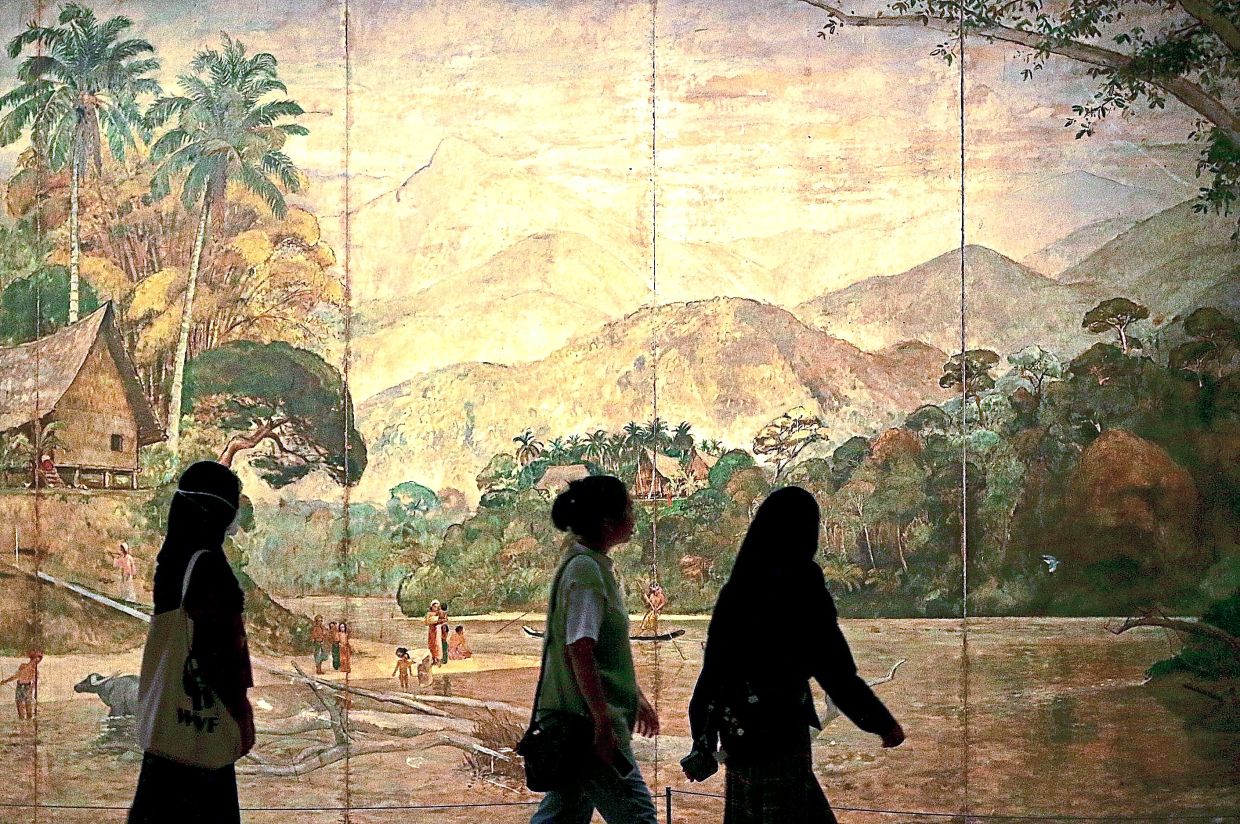
Malaysia's artistic and cultural treasures face a relentless environmental adversary that operates silently and invisibly—one measured not in years but in gradual molecular damage. The nation's tropical climate, characterised by high humidity and intense solar radiation, presents unique and formidable challenges to the preservation of paintings, textiles, and other heritage objects housed in galleries and museums across the region. Unlike temperate countries where conservation protocols have been refined over centuries, Malaysia and other Southeast Asian nations must contend with environmental stressors that accelerate deterioration in ways not fully anticipated by traditional Western conservation models.
Tan Hui Koon, senior chief curator of the Collection and Conservation section at the National Art Gallery, emphasises that the humid tropical environment functions as a persistent threat to material integrity. The challenge extends beyond simple exposure; it involves complex chemical and physical interactions between the artwork's composition and atmospheric conditions. Speaking recently at the gallery, Tan explained that just as human skin requires protection from ultraviolet radiation, artworks demand equally rigorous safeguards. The solution involves deploying museum-standard glass that effectively filters ultraviolet light, preventing photochemical degradation that would otherwise discolour and weaken paint layers and varnishes over time.
The mechanics of deterioration in tropical climates operate through moisture absorption in organic materials. Textiles, canvas, and wood—fundamental to countless artworks—readily draw in atmospheric moisture during humid periods, then release it during drier spells. This cyclical expansion and contraction, repeated thousands of times across seasons and years, gradually weakens the structural bonds that hold paintings together. Paint layers crack and flake, canvas becomes brittle, and wooden frames warp. Unlike acute damage from accidents or mishandling, this process remains almost imperceptible until substantial harm has already occurred, making prevention rather than cure the only truly effective strategy.
Tan articulates a fundamental principle that undergirds modern conservation philosophy: once material is lost, restoration cannot fully recover the original state. The objective instead becomes stabilising what remains and maintaining the artwork in a condition suitable for public appreciation and scholarly study. This distinction between restoration and conservation reflects a mature understanding that preservation is ultimately about managing inevitable decline rather than achieving perfect perpetuation. The preventive approach encompasses environmental controls—maintaining stable temperature and humidity levels, filtering damaging light wavelengths, and ensuring appropriate storage conditions—alongside meticulous handling protocols and staff training.
The urgency of developing locally-rooted conservation expertise has prompted the National Art Gallery to host the seventh Asia-Pacific Tropical Climate Conservation Art Research Network conference from December 7–9 in Kuala Lumpur and Ipoh. This gathering represents a significant institutional commitment to advancing the field across the region. The conference brings together specialists from Malaysia, Thailand, Singapore, Australia, and the Philippines—nations sharing similar climatic challenges and cultural heritage preservation imperatives. Their collaborative focus examines how Western paintings and other artworks, often created in temperate environments, respond and adapt to tropical conditions over decades and centuries.
Beyond the main conference sessions, participants will undertake field visits to heritage sites in Lenggong, coordinated through partnerships with the Islamic Arts Museum Malaysia, the Department of National Heritage, and People of Remarkable Talents. These site visits ground the academic discussions in tangible reality, allowing conservators to observe how centuries-old artworks and structures have endured Malaysia's climate and what lessons their survival offers. The Lenggong valley, with its archaeological and cultural significance, provides an invaluable outdoor laboratory for understanding long-term preservation in tropical conditions.
This year's conference programme reflects a deliberate pivot toward privileging local knowledge and cross-generational learning rather than simply importing Western conservation models wholesale. Disaster response methods—increasingly critical as climate change amplifies extreme weather events—receive particular attention, alongside conservation approaches calibrated to each country's specific geographical, cultural, and institutional contexts. The recognition that effective conservation must be contextualised rather than universalised represents a maturation of the field in Southeast Asia, acknowledging that tropical conservation differs fundamentally from preservation in Europe or North America.
The agenda encompasses emerging technologies and methodologies including artificial intelligence applications, advanced materials research, and climate change adaptation strategies. Participants will also address ethical dimensions of conservation—questions about what values guide restoration decisions and how conservators balance scientific intervention with artistic integrity. Equally important, the conference emphasises resource-sharing mechanisms among institutions, recognising that many regional galleries and museums operate with limited budgets and expertise. Creating networks for exchanging knowledge, techniques, and equipment multiplies the collective capacity to protect heritage across borders.
Tan underscores the network's role in developing Malaysia's next generation of conservators through structured knowledge transfer and mentorship. Conservation work inherently bridges multiple disciplines—chemistry, art history, physics, materials science, and practical craftsmanship converge in each restoration project. By facilitating intergenerational exchange, the network ensures that experienced conservators transmit not merely technical skills but also the judgment and intuition developed through decades of practice. This human element remains irreplaceable despite technological advances.
Since its establishment in 2008, the Asia-Pacific Tropical Climate Conservation Art Research Network has tracked the evolution of conservation practice in Malaysia and the broader region. The seventh conference provides an opportunity to assess progress across fifteen years of collaborative research and to identify emerging priorities. For Malaysia specifically, strengthening these international networks holds potential to position the nation's conservation expertise and artistic heritage more prominently on the global stage, enhancing both cultural diplomacy and institutional prestige. As climate change accelerates and environmental conditions continue shifting, such regional cooperation and locally-grounded expertise become increasingly vital to safeguarding the artistic legacy that defines Malaysian cultural identity.

