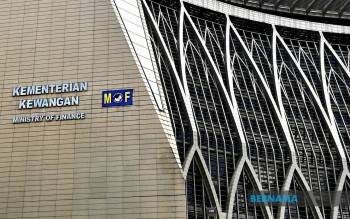
Malaysia's Buy Now, Pay Later sector has achieved significant scale, with the Ministry of Finance confirming that active BNPL account holders reached eight million during the first quarter of 2026. This expansion reflects the growing acceptance of flexible payment solutions among Malaysian consumers, though it also signals the need for heightened regulatory attention as the market matures and consumer exposure increases.
The sector's outstanding balance climbed to RM5.3 billion in the same quarter, demonstrating both the breadth of BNPL adoption and the substantial credit exposure now embedded in household finances. While this figure underscores the popularity of installment-based shopping, particularly among younger and digitally-savvy demographics, it also highlights the importance of robust oversight to protect consumers from overleveraging and predatory lending practices.
From a prudential perspective, delinquency metrics suggest the market remains relatively healthy. The Ministry of Finance disclosed that overdue amounts totalled RM181 million in Q1 2026, equivalent to 3.4 per cent of total outstanding BNPL balances. This default rate, while not negligible, indicates that most borrowers are managing their obligations. However, policymakers will likely monitor these figures closely as economic conditions fluctuate and household debt burdens potentially increase.
When contexualised within the broader credit landscape, BNPL lending remains modest in scale. The sector accounts for approximately 0.3 per cent of total household debt as of end-2025, suggesting that despite rapid growth, BNPL has not yet become a dominant source of consumer borrowing. Traditional bank lending, hire-purchase schemes, and credit card debt continue to dwarf the BNPL market, though the trajectory warrants attention from financial regulators and consumer advocates alike.
The introduction of formal licensing requirements represents a watershed moment for Malaysia's BNPL industry. Previously operating in a largely unregulated space, BNPL providers now face mandatory compliance with standards set by the Consumer Credit Commission, or Suruhanjaya Kredit Pengguna (SKP). This regulatory shift reflects growing international recognition that BNPL platforms, despite their fintech veneer, function as credit providers and therefore warrant supervision comparable to traditional lenders.
The SKP has established both authorisation standards and conduct standards that function as gatekeeping mechanisms. Authorisation standards define the minimum regulatory, governance, and consumer protection thresholds that providers must satisfy to obtain a licence. These requirements are designed to filter out operators lacking adequate systems, experienced management, or commitment to responsible lending practices. Conduct standards, by contrast, specify how licensed providers must behave towards consumers, covering areas such as transparency, complaints handling, and debt collection practices.
The licensing application window opened on June 1, 2026, with existing BNPL providers granted until November 30, 2026, to submit formal applications. This six-month transition period represents a grace period for incumbent operators to align their operations with new expectations. Providers that fail to apply or to meet licensing requirements after the deadline will presumably be required to cease operations, effectively creating a regulatory cliff that will reshape Malaysia's BNPL landscape.
The SKP's active engagement with BNPL providers during this application period signals regulatory commitment to a smooth transition rather than abrupt enforcement action. By working closely with industry participants, the commission aims to ensure that most established platforms can meet licensing standards, thereby maintaining market continuity whilst eliminating rogue operators and poor practitioners. This cooperative stance reflects the regulator's awareness that BNPL has become embedded in consumer behaviour and that sudden market disruption could harm the eight million active users who depend on these services.
For Malaysian consumers, the licensing regime should enhance protections in several ways. Licensed providers must demonstrate adequate capital reserves, governance structures, and dispute resolution mechanisms. Transparent pricing, clear terms and conditions, and responsible lending practices become enforceable requirements rather than voluntary commitments. Consumers gain statutory recourse should providers breach conduct standards, strengthening their position relative to unlicensed operators who operated without accountability.
The timing of this regulatory initiative reflects broader global trends in BNPL oversight. Jurisdictions from the United Kingdom to Australia have implemented or proposed licensing frameworks in recognition that BNPL platforms pose similar risks to traditional consumer credit providers, including consumer indebtedness, affordability concerns, and predatory practices. Malaysia's approach aligns the country with international best practice whilst remaining calibrated to local market conditions and regulatory capacity.
Looking forward, the licensing regime's success will depend on effective SKP enforcement and the extent to which providers genuinely internalise the new compliance expectations. Should the commission rigorously review applications, deny licences to inadequate operators, and monitor conduct standards post-issuance, the regulatory framework could significantly improve market integrity. Conversely, if licensing becomes a rubber-stamp process, the framework's protective impact may prove limited.
For investors and entrepreneurs in Malaysia's fintech ecosystem, the new requirements represent both a barrier to entry and a competitive advantage for compliant players. Startups seeking to launch BNPL platforms must now budget for regulatory compliance costs and navigate SKP expectations from inception. Established providers with strong governance and consumer-protection infrastructure may find their competitive position strengthened as smaller, less-professional competitors exit the market or fail to meet licensing standards. This consolidation dynamic could yield a more resilient, more responsible BNPL sector better positioned to serve Malaysian consumers sustainably.

