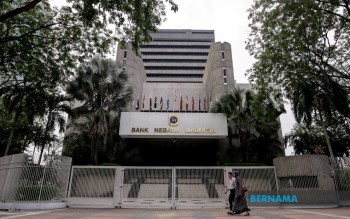
Bank Negara Malaysia is widely expected to maintain its overnight policy rate at 2.75 per cent through the end of 2026, according to consensus forecasts from multiple research institutions tracking the nation's monetary policy trajectory. The assessment reflects growing confidence in Malaysia's economic fundamentals, particularly an improving growth outlook and inflation dynamics that remain within acceptable ranges. This stability in the interest rate outlook provides clarity for businesses and consumers planning investment and spending decisions in an environment of relative macroeconomic predictability.
The constructive reassessment of Malaysia's economic position has emerged from the central bank's recent communications, which project stronger-than-anticipated economic momentum across key sectors. Export performance has notably exceeded expectations, driven substantially by sustained demand for electrical and electronic products, a sector that remains pivotal to Malaysia's manufacturing base and overseas sales. Beyond traditional manufacturing strength, improved global supply chain conditions are expected to unlock additional growth avenues, particularly in petrochemical production and oil and gas operations where scheduled facility maintenance had previously constrained output. This diversified source of economic dynamism suggests the growth recovery is not concentrated in a single sector but supported by multiple engines of expansion.
CGS International's analysis emphasises that the monetary policy stance has shifted from neutral to more constructive without requiring rate adjustments, reflecting how macroeconomic conditions have evolved favourably since the central bank's May assessment. The research house notes that concerns about supply disruptions that had characterised earlier economic uncertainty have substantially dissipated, allowing policymakers to adopt a more positive outlook. This recalibration matters significantly because it demonstrates that economic improvement has been sufficient to warrant revised expectations without forcing policy hands, suggesting organic recovery rather than externally-driven stimulus dependency.
Domestic demand continues to serve as an important stabilising force in the Malaysian economy, underpinned by healthy labour market conditions and steady wage growth that sustains consumer purchasing power. Government policy support mechanisms remain active, further bolstering domestic spending capacity at a time when global economic uncertainties could otherwise have dampened internal consumption. The combination of these domestic buffers alongside improving external conditions creates a balanced growth scenario that reduces pressure on the central bank to adjust monetary settings, either through rate cuts to stimulate activity or through tightening to cool demand.
Public Investment Bank's assessment underscores how central bank confidence in Malaysia's growth trajectory has strengthened, with the latest monetary policy statement reflecting a more upbeat tone than communications just two months earlier. The second quarter performance demonstrated resilience through a combination of sustained domestic spending and export shipments that defied softer global growth narratives. The central bank's explicit reiteration of its four to five per cent growth forecast range for 2026 signals management believes the domestic economy possesses adequate momentum to achieve its medium-term targets even as external uncertainties persist. This confident signalling has important psychological effects on business sentiment and investment planning across the corporate sector.
Inflation management has emerged as a secondary concern relative to growth dynamics, with multiple analysts describing the price pressure narrative as contained rather than alarming. Bank Negara Malaysia has acknowledged some initial transmission effects from elevated global commodity costs, yet assessment suggests these pressures will not substantially broaden into core inflation measures or become sufficiently pervasive to warrant preemptive rate increases. The distinction between cost-push inflation stemming from external sources versus demand-driven inflation originating domestically is crucial, as the former presents less persistent challenges to monetary stability while the latter would trigger more forceful policy responses.
The inflation threshold for future rate action appears exceptionally high based on analyst commentary, with researchers suggesting that rate increases would only become necessary if cost pressures demonstrate evidence of becoming entrenched in core inflation readings, show signs of becoming more widespread and durable, or begin generating financial imbalances through excessive monetary accommodation. This conditional approach to future tightening implies the central bank intends to tolerate near-term cost pressures without aggressive policy response, reflecting confidence that inflation will stabilise as supply dynamics normalise and global commodity markets settle. For Malaysian households and businesses, this stance provides reassurance that rates will not suddenly spike absent a material deterioration in inflation dynamics.
Apex Securities' characterisation of the policy tone as slightly more positive aligns with broader analyst consensus while noting that central bank flexibility remains embedded in forward guidance. The research firm identifies improving global supply conditions and stabilising commodity prices as factors contributing to the brightened outlook, suggesting that external conditions supportive of Malaysian growth have genuinely shifted rather than representing temporary cyclical improvements. However, analysts acknowledge that Bank Negara Malaysia retains willingness to adjust course should inflation signals deteriorate unexpectedly, indicating that current projections for rate stability remain conditional on economic developments aligning with baseline expectations.
For Malaysian investors, policymakers and consumers, the 2.75 per cent rate forecast through 2026 represents an important policy anchor in an uncertain global environment. The consensus outlook reflects genuine improvements in economic fundamentals rather than wishful thinking, supported by visible acceleration in manufacturing exports, resilient domestic spending and improving external demand. This extended period of monetary stability should facilitate long-term investment planning, particularly for projects requiring predictable financing costs. Businesses can approach capital expenditure decisions with greater confidence about future debt service obligations, while savers benefit from stability in real returns on fixed-income investments.
The broader significance of this monetary policy outlook extends beyond Malaysia's borders, carrying implications for regional economic dynamics. A stable Malaysian rate environment complemented by solid growth performance attracts regional investment flows and supports currency stability, benefiting cross-border trade with neighbouring Southeast Asian economies. Malaysia's economic resilience and predictable policy setting also provide a stabilising reference point for regional markets watching how major economies navigate concurrent challenges of managing growth while controlling inflation. As global uncertainties persist, Malaysia's demonstrated ability to achieve balanced macroeconomic conditions through steady policy supports confidence in the broader region's capacity for sustained economic progress.

