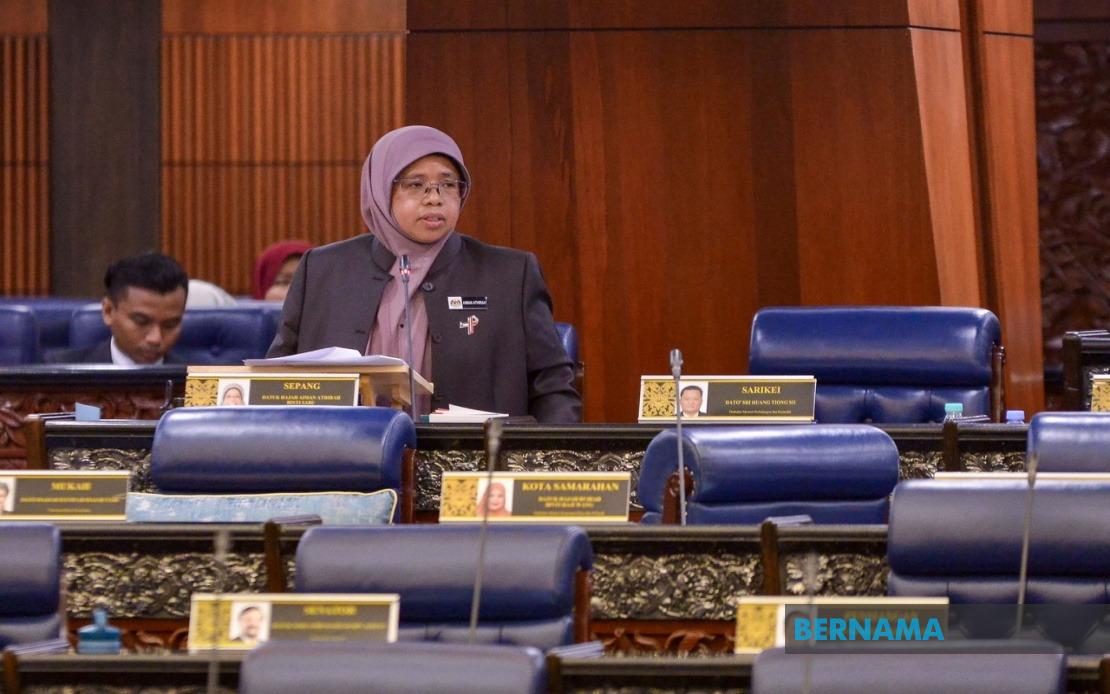
Malaysia's housing ministry is implementing a sweeping data-driven strategy designed to realign residential construction with actual market demand and household purchasing power, a shift that reflects growing recognition that supply-side mismatches remain a key driver of affordability pressures. Deputy Housing and Local Government Minister Datuk Aiman Athirah Sabu outlined the government's multifaceted approach during parliamentary proceedings, emphasising how statistical rigour rather than speculative development patterns can guide investment decisions and prevent wasteful project overruns. The initiative represents a departure from historical practice, when housing development often proceeded on assumptions about future population needs that diverged significantly from real demographic and economic trajectories.
At the core of this approach lies integration of multiple government databases to create a comprehensive picture of housing requirements across different income bands and geographic regions. The Department of Statistics Malaysia (DOSM), the National Property Information Centre (NAPIC), and the Malaysian Urban Observatory (MUO) now feed disaggregated housing data into planning cycles, allowing officials to calibrate supply decisions at the state and district level rather than imposing broad, one-size-fits-all targets. This granular methodology addresses a persistent problem in Malaysian property markets: developments erected far from employment centres or tailored to income segments with limited purchasing power accumulate vacancy rates and price premiums that render them inaccessible to their ostensible beneficiaries. By anchoring decisions to household income surveys and demographic profiles, planners can theoretically determine not only how many homes are needed but their appropriate type, size, and pricing tier.
The National Affordable Housing Council, chaired by the Prime Minister, functions as the coordinating body tasked with harmonising federal-state policy divergences and removing institutional bottlenecks that previously hampered affordable housing rollouts. Such a high-level steering committee underscores the political salience of housing across Malaysia's federal structure, where state governments retain substantial authority over land release and zoning decisions. Without presidential-level backing and interdepartmental coordination, data insights risk accumulating in ministry silos without translating into actionable development permits or financing mechanisms. The council's establishment thus signals intent to operationalise analysis rather than treating housing strategy as purely rhetorical exercise.
A strikingly ambitious facet of the strategy concerns the revival of dormant and troubled residential projects. Since December 2022, a dedicated Special Task Force has worked to resuscitate delayed, sick, and abandoned housing developments. By May 2026, this intervention had successfully restored momentum to 1,615 projects encompassing 190,422 housing units with a combined gross development value of RM150.8 billion. These are not trivial figures; they suggest that a substantial stock of capital and completed infrastructure was languishing due to developer financial distress, regulatory entanglement, or misalignment between built product and market absorption rates. Reviving such projects not only adds to effective housing supply without requiring fresh land conversion but also recovers sunk investments and restores confidence among purchasers who had invested in units that seemed permanently stalled.
The government is also reworking its affordability benchmarks through the forthcoming National Housing Policy 2026-2035, which pivots toward dynamic pricing models anchored to local median household income distributions rather than static national thresholds. This is a methodologically sound approach, as housing affordability is meaningless abstracted from regional wage and employment structures. A three-bedroom unit priced at RM300,000 may represent reasonable value in Kedah but consume an unaffordable share of household income in higher-wage zones like Selangor or Kuala Lumpur. By recalibrating affordable housing definitions using state and district-level income data from the 2024 Household Income and Basic Amenities Survey, the ministry acknowledges that cookie-cutter definitions obscure spatial inequality and misallocate subsidy.
Beyond construction and pricing, the government has implemented the Housing Credit Guarantee Scheme (SJKP), which provides a governmental guarantee covering up to 120 per cent of a property's value, with the excess 20 per cent earmarked for renovation, furnishing, and ancillary expenses. This recognises that first-time homebuyers often underestimate total outlay once they account for renovations needed to render a unit habitable to their preferences. By expanding the guarantee envelope beyond the property's nominal price, the scheme reduces the friction and financial stress that many young households face when navigating the transition from renting to ownership. Such financing innovation complements supply-side interventions, acknowledging that affordability encompasses not merely headline prices but the holistic cost and accessibility of homeownership pathways.
For Malaysian readers and regional observers, this suite of initiatives reflects a maturing policy acknowledgement that housing markets function best when incentives are aligned and information asymmetries minimised. Rather than attempting to suppress price growth through price caps or construction freezes—measures that typically trigger supply shortages and create informal markets—the Malaysian approach emphasises supply-side corrections informed by demand signals. This philosophy resonates with international best practice and suggests potential application in other Southeast Asian economies grappling with similar affordability crises, from Thailand to Indonesia.
The scale of revival activity, meanwhile, indicates that Malaysia's housing sector had accumulated substantial structural imbalances prior to 2022. The fact that 1,615 projects and nearly 200,000 units required intervention underscores how easily misaligned incentives can trap resources in incompletely executed ventures. Developers facing liquidity crunches or demand shortfalls may lack capacity to resume work independently, yet those projects remain economically viable if operational barriers can be addressed. The government's task force appears to have succeeded by providing targeted assistance—whether financing support, regulatory expediting, or market repositioning—to unlock gridlocked supply.
Yet challenges remain embedded in execution. Data-driven planning requires sustained institutional capacity, regular updating of statistical inputs, and mechanisms to translate analytical findings into development permits and infrastructure investment decisions. State governments may resist federal coordination if it constrains their discretion over land or zoning. Developers accustomed to speculative models may resist demand-based caps on unit counts or pricing. And the scheme's success ultimately depends on whether revived projects actually reach completion and occupancy, not merely whether intervention commenced.
In the longer term, Malaysia's housing strategy illustrates how comprehensive data infrastructure, when coupled with political will and interdepartmental coordination, can shift development patterns from supply-side speculation toward demand-responsive construction. The National Housing Policy 2026-2035 and the SJKP expansion will reveal whether this framework can persistently maintain affordability gains or whether structural pressures—migration, urbanisation, asset price expectations—eventually overwhelm policy interventions. For now, the government's willingness to acknowledge mismatches and implement data-grounded corrections represents a notable step forward in rationalising one of Malaysia's most politically sensitive sectors.

