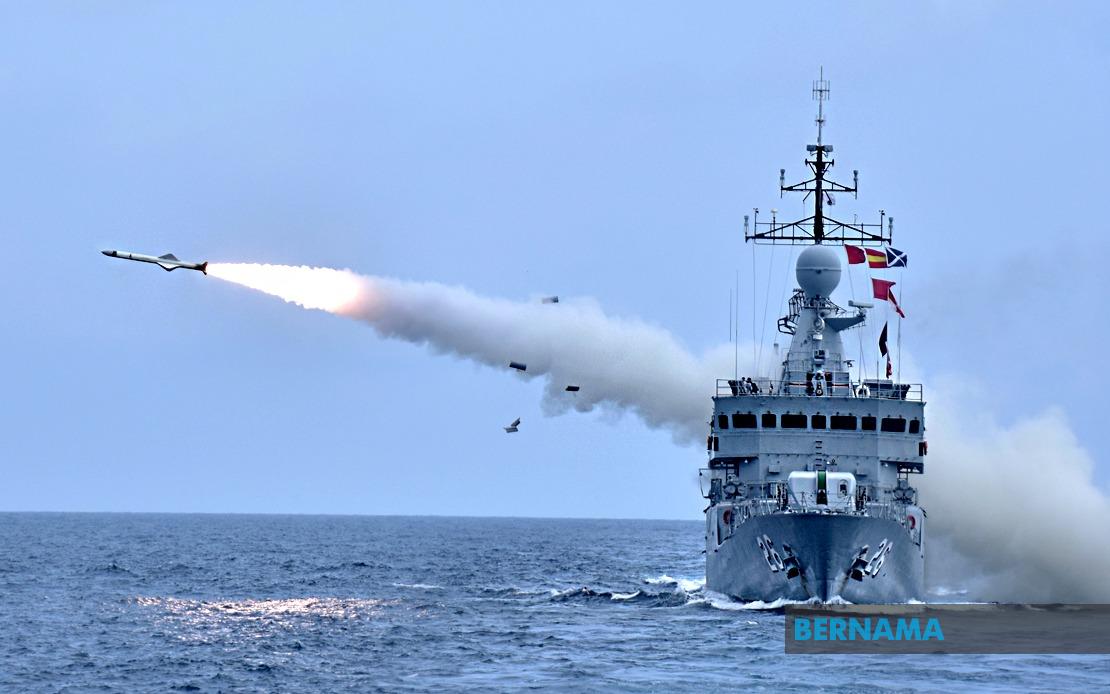
Malaysia's growing defence budget reflects a strategic shift beyond conventional regional security calculations, according to Defence Minister Datuk Seri Mohamed Khaled Nordin, who outlined how contemporary security challenges are reshaping the government's approach to military spending and national preparedness. The minister's statement came after Prime Minister Datuk Seri Anwar Ibrahim, also serving as Finance Minister, indicated that additional defence allocations potentially ranging from hundreds of millions to billions of ringgit would be necessary to equip the armed forces with adequate capabilities for an increasingly unpredictable security environment.
The threat matrix facing Malaysia has expanded considerably beyond the traditional focus on maritime disputes and regional military posturing. Cyber warfare, electromagnetic attacks, and coordinated disinformation campaigns now constitute significant vulnerabilities that demand sophisticated defensive infrastructure and expertise. These asymmetric threats operate across digital networks rather than conventional military domains, requiring defence planners to fundamentally rethink force composition, training, and operational doctrine. The integration of cybersecurity considerations into broader defence strategy represents a generational shift in how Malaysia conceptualises national security, moving beyond hardware-centric approaches to encompass the protection of critical digital infrastructure and information ecosystems.
Within the South China Sea and surrounding regions, the strategic landscape has grown considerably more complex as major power competition intensifies. Mohamed Khaled acknowledged that heightened military activity and expanded force presence from various actors create cascading effects throughout the region, establishing conditions where one nation's capability enhancements naturally prompt responsive measures from others. This action-reaction cycle generates compounding layers of uncertainty, particularly within confined geographic spaces where military assets operate in close proximity. For Malaysia, positioned at the intersection of major power interests, this dynamic amplifies the necessity for credible defence capabilities that can deter miscalculation whilst maintaining the flexibility to adapt to rapidly evolving circumstances.
The minister explicitly rejected the notion that Malaysia has identified any specific country as a direct threat, instead characterising the security imperative as a response to systemic shifts in the regional balance of power. This carefully calibrated framing serves multiple purposes: it acknowledges genuine security pressures without antagonising any particular actor, emphasises Malaysia's commitment to non-alignment principles, and positions defence spending as a prudent precaution rather than provocative escalation. The statement reflects the diplomatic tightrope that Malaysian policymakers must navigate, balancing the requirement for adequate self-defence against the imperative to maintain constructive relationships across the region's complex web of bilateral and multilateral partnerships.
Recent developments in the southern Philippines, particularly military activities in areas proximate to Sabah, have introduced additional complexity into Malaysia's threat assessment. Mohamed Khaled indicated that whilst Malaysia respects the Philippines' autonomy in determining its own defence arrangements and strategic partnerships, any significant escalation in that theatre carries broader implications for stability throughout the South China Sea. This concern reflects the interconnected nature of regional security, where local incidents can trigger chain reactions that affect distant actors. The Philippines' own military modernisation and evolving security partnerships consequently warrant close attention from Malaysian strategic planners, notwithstanding the importance of maintaining open diplomatic channels and preventing misunderstandings from metastasising into substantive disputes.
Malaysia's approach to defence spending deliberately distances itself from zero-sum great power competition by emphasising that military modernisation aims at protecting national sovereignty and interests rather than confronting any particular nation. The planned gradual increase in defence expenditure to 1.5 per cent of Gross Domestic Product by 2030 represents a long-standing element of defence planning rather than a reactive measure to immediate provocations. This timeline affords Malaysia the opportunity to methodically upgrade capabilities whilst demonstrating restraint and consistency to regional partners. The modernisation process encompasses critical areas including Pulau Layang-Layang, where enhanced defence posture serves primarily to safeguard Malaysia's territorial claims and maritime interests within the broader South China Sea context.
The government's dual-track approach emphasises simultaneous advancement on both military capability and diplomatic engagement. Whilst strengthening defence readiness, Malaysia concurrently advocates for regional stability mechanisms, dialogue frameworks, and de-escalation protocols that can constrain competitive dynamics before they produce destabilising consequences. This strategy acknowledges the reality that military power alone cannot ensure peace, and that sustained diplomatic effort remains essential for managing overlapping claims and competing interests across the region. The commitment to maintaining ASEAN centrality in regional security frameworks reflects Malaysia's conviction that collective action amongst Southeast Asian nations provides greater resilience against destabilisation than bilateral arrangements alone.
The Code of Conduct negotiations in the South China Sea assume particular importance within this strategic framework. Mohamed Khaled emphasised that codifying behavioural norms and establishing predictable rules of engagement would substantially reduce the likelihood of accidental escalation arising from miscalculation or misunderstanding. Progress towards a comprehensive Code of Conduct would create institutional scaffolding capable of managing underlying disagreements without permitting them to generate military confrontation. Malaysia's advocacy for this process reflects recognition that formal agreements, whilst imperfect, provide superior alternatives to reliance on strategic ambiguity or tacit understanding amongst parties with divergent interests.
ASEAN's role as a framework for dialogue assumes heightened significance given the bloc's geographically central position within broader Indo-Pacific strategic competitions. Mohamed Khaled's emphasis on ASEAN centrality and the importance of maintaining space for diplomatic engagement reflects Malaysia's conviction that the regional organisation can preserve its relevance and agency only by resisting pressure to choose sides in great power rivalries. This position carries implications for how Malaysia calibrates its defence spending and military partnerships, necessitating careful attention to maintain relationships with multiple actors whilst avoiding perception of alignment with any particular coalition. The strategy demands sophisticated diplomatic management and credible military capabilities that reinforce rather than undermine Malaysia's non-aligned positioning.
The psychological and informational dimensions of contemporary security threats deserve particular emphasis in understanding Malaysia's strategic rationale for expanded defence spending. Disinformation campaigns, often originating from state and non-state actors, can undermine public confidence in institutions, distort threat perceptions, and manipulate political decision-making. Building institutional resilience against these attacks requires investments in media literacy, information security, fact-checking infrastructure, and public education programmes that extend far beyond traditional defence ministry portfolios. Malaysia's acknowledgement of these emerging threats signals recognition that national security in the twenty-first century encompasses not merely physical protection of territory and assets but also cognitive security and the integrity of the information environment upon which democratic processes depend.
The financial dimensions of Malaysia's defence budget require careful consideration within the context of competing budgetary priorities and macroeconomic constraints. Allocating additional resources to defence necessarily involves trade-offs with spending on healthcare, education, infrastructure, and social programmes. The government's proposed trajectory towards 1.5 per cent of GDP allocation represents a measured increase that attempts to balance security imperatives against fiscal sustainability and the population's expectations regarding provision of public goods. This calibration reflects an effort to pursue credible deterrence without imposing unsustainable burdens on the national budget or constraining other essential government functions.
Looking forward, Malaysia's defence spending strategy will require continuous reassessment as the security environment evolves and new threats emerge. The integration of cyber capabilities, artificial intelligence, unmanned systems, and space-based reconnaissance into modern defence architectures demands sustained investment in research, development, and personnel training. Malaysian defence planners must simultaneously prepare for conventional military contingencies whilst building organisational capacity to anticipate and respond to emerging threat categories. The government's articulation of its defence rationale, emphasising legitimate national interests and non-provocative intentions, serves an important signalling function that may help prevent misinterpretation of Malaysia's military modernisation as evidence of aggressive intent.
Regional stability ultimately depends upon all parties exercising strategic restraint, resisting the temptation to pursue marginal military advantages that could trigger destabilising response cycles, and maintaining diplomatic channels that permit resolution of disagreements without recourse to armed conflict. Malaysia's defence spending decisions must be understood within this broader context: as investments in credible self-defence capabilities that enhance deterrence and reduce vulnerability, whilst simultaneously supporting through word and deed the multilateral frameworks and diplomatic processes that offer the most promising path towards sustained regional peace and prosperity.

