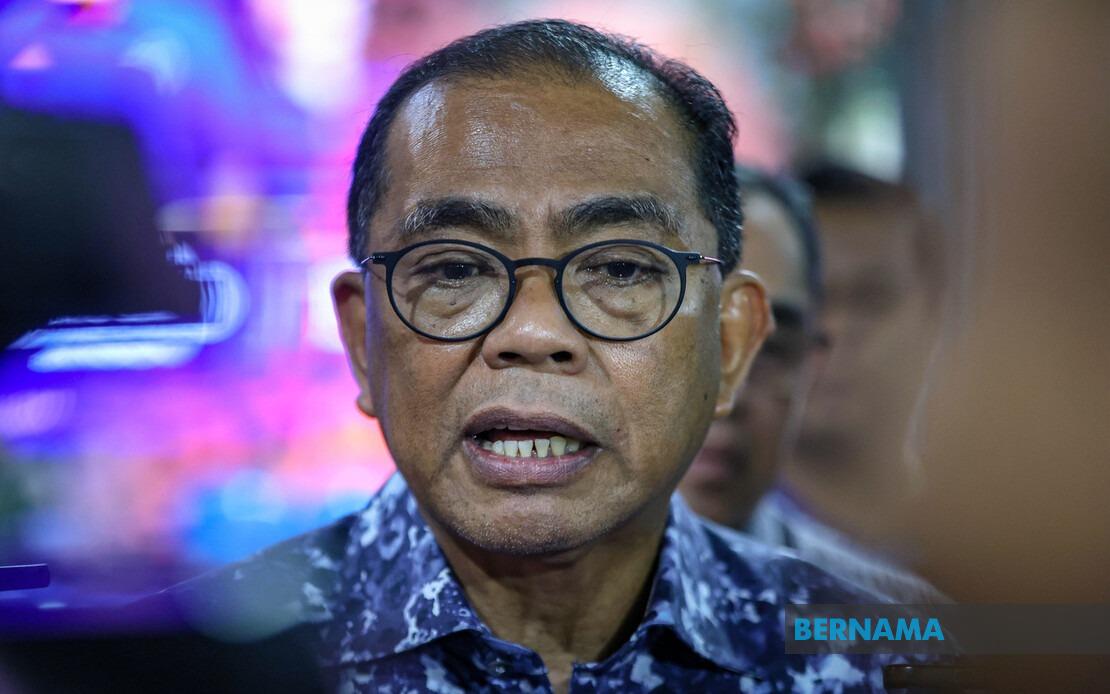
The Malaysian Defence Ministry is mounting a concerted push to overhaul key aspects of how the armed forces are organised and how personnel advance through the ranks, with Defence Minister Datuk Seri Mohamed Khaled Nordin emphasising that the reforms are essential to maintaining military effectiveness in an era of rapid technological change. Speaking in Pasir Gudang on Thursday evening, Mohamed Khaled outlined three interconnected priorities that MINDEF has submitted to government and the Public Service Department for review: restructuring the organisational hierarchy, revamping career progression pathways, and adjusting compensation packages for service members.
The underlying logic is straightforward but consequential. Under the current system, many officers demonstrate the competence and performance required for advancement but find themselves blocked by the simple arithmetic of limited positions available at each rank. This structural constraint has become increasingly problematic as the military seeks to attract and retain quality talent in competition with private sector opportunities and international defence forces. Mohamed Khaled framed the proposed changes as ensuring that the relationship between rank, job classification, responsibility level, and the strategic functions performed by MAF personnel align logically with organisational reality.
WHAT distinguishes military service from most civilian employment is the unusual nature of professional development required. Armed forces personnel regularly undertake extended training courses spanning nine months to two years, an investment in capability building that far exceeds typical corporate training. Yet the existing remuneration framework does not fully account for this reality. MINDEF has therefore advocated for consideration of special allowances that recognise both the intensity of military preparation and the unique demands of defence work. Such provisions would acknowledge that military service involves obligations and constraints—deployment readiness, geographic posting limitations, potential hazard exposure—that differ markedly from standard public service roles.
The government has signalled receptiveness to these arguments. Prime Minister Datuk Seri Anwar Ibrahim announced yesterday that the cabinet has agreed in principle to streamline and accelerate promotion mechanisms for both the Malaysian Armed Forces and Royal Malaysia Police, bringing their advancement systems into closer alignment with procedures used elsewhere in the civil service. The announcement represents a significant policy shift, though details remain forthcoming. Officials have indicated that the full mechanism and implementation framework will be unveiled during the Ambang Merdeka celebrations at Stadium Merdeka in Kuala Lumpur on August 30.
Crucially, MINDEF has made clear that any expedited promotions will not represent a departure from merit-based advancement. Rather, the proposed changes aim to accelerate the evaluation and decision-making process itself, ensuring that officers meeting performance, competency, and integrity benchmarks can progress without unnecessary delay. The reforms would still require that candidates satisfy established assessment criteria and that organisational needs factor into promotion decisions. This insistence on maintaining meritocratic standards reflects sensitivity to ensuring that military leadership quality remains uncompromised by bureaucratic or political considerations.
The policy momentum underlying these proposals originates from MINDEF's broader strategic framing established through the Defence White Paper launched in 2022. That document positioned talent management and staffing modernisation as integral to enabling the armed forces to operate effectively with newly acquired defence assets and evolving military technology. As Malaysia invests in contemporary equipment, weapons systems, and operational capabilities, the personnel stewarding those assets must themselves be appropriately motivated, developed, and compensated. Without parallel attention to human resource management, even substantial procurement investments risk underperformance.
The remuneration dimension adds particular urgency. MINDEF submitted detailed proposals regarding improvements to the Public Service Remuneration System—the SSPA framework governing military compensation—to the Public Service Department as long ago as March of last year. The extended timeframe for departmental consideration suggests that integrating military allowances into civilian remuneration systems presents genuine technical and budgetary complexity. Yet MINDEF has persisted in advocating for action, indicating that recruitment and retention pressures have likely intensified.
For Malaysian defence policy, these initiatives carry implications extending beyond internal military administration. They signal an official acknowledgment that Singapore and other regional defence forces command substantial professional advantages in recruitment and retention precisely because they have invested in competitive remuneration and clear advancement pathways. Malaysia's ability to maintain force readiness and capability depends partly on attracting capable personnel who might otherwise seek overseas opportunities or exit military service for higher-paying private employment. The structural reforms thus reflect not merely administrative tinkering but rather efforts to position the MAF competitively within Southeast Asia's security environment.
The government has additionally pledged to increase defence ministry budgetary allocation under Budget 2027, framing this commitment as essential to strengthening military capabilities and protecting the welfare of security personnel. This financial commitment complements the structural and procedural reforms, creating a multifaceted approach to military modernisation. Adequate funding for equipment, training, and personnel welfare together form an integrated strategy rather than separate initiatives.
The timing of these announcements matters. Malaysia faces a complex regional security environment characterised by maritime disputes, terrorism threats, and geopolitical competition. Sustaining military effectiveness amid these pressures depends fundamentally on having sufficiently motivated, professionally developed personnel commanding modern equipment. The Defence Ministry's advocacy for career and compensation reforms thus reflects not ideological commitment to particular management philosophy but rather pragmatic recognition that military capabilities depend on people as much as platforms.
Regional observers will likely monitor whether Malaysia successfully implements these reforms and whether they succeed in addressing recruitment and retention challenges. Success could establish a model for other Southeast Asian defence forces grappling with similar pressures. Conversely, should implementation stall or produce disappointing results, it would signal limitations in Malaysia's ability to undertake substantial institutional reform, with broader implications for military modernisation efforts.

