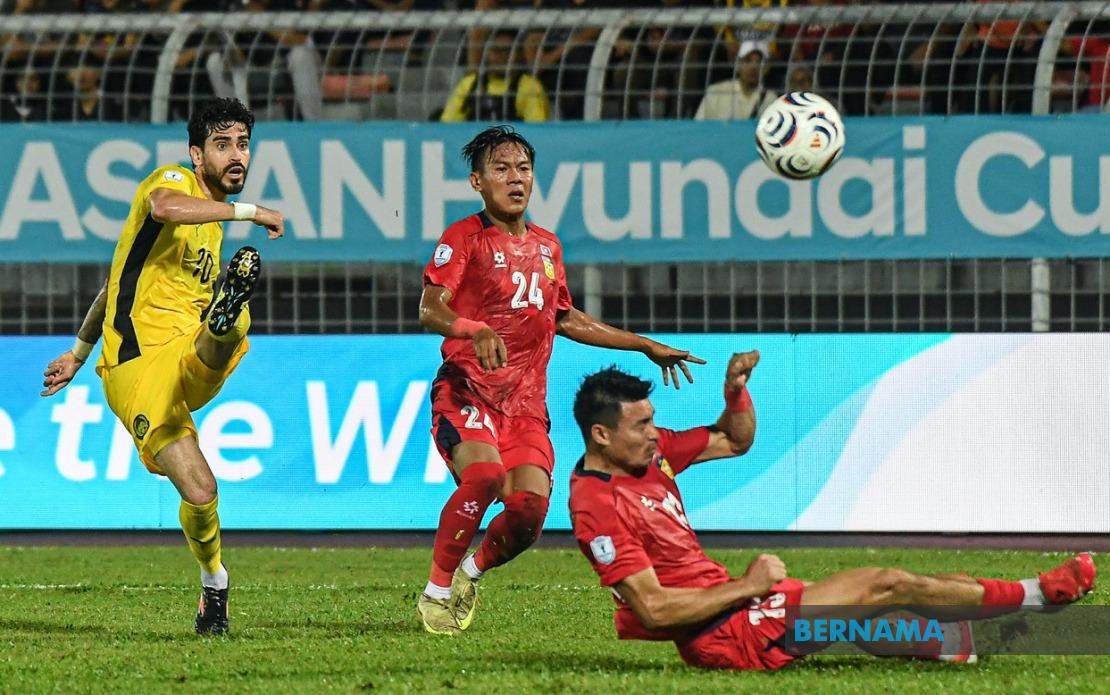
Malaysia's emphatic 4-0 triumph over Laos at the Kuala Lumpur Football Stadium has handed interim head coach Tan Cheng Hoe's squad renewed self-belief as they prepare to confront one of Southeast Asia's most formidable football powerhouses. The comfortable victory in the second Group B fixture of the 2026 ASEAN Cup has positioned Malaysia to carry momentum into their forthcoming clash against Thailand, the tournament's most decorated side, who will host the match at Rajamangala Stadium in Bangkok this Saturday.
Tan Cheng Hoe expressed satisfaction with both the result and the manner in which his players executed their game plan, emphasising that the three points serve multiple purposes beyond simply accumulating points in the standings. The coach highlighted that such victories provide psychological scaffolding for younger and less experienced players, while simultaneously allowing the coaching staff to observe tactical patterns and combinations that may prove valuable in subsequent matches. He acknowledged, however, that the task ahead represents a considerable escalation in difficulty, given Thailand's track record of success in regional competitions and their familiar surroundings at home.
The opening forty-five minutes against Laos presented unexpected resistance, forcing Malaysia to display patience and tactical discipline against opponents who set up defensively and offered little attacking ambition. The breakthrough arrived at a crucial juncture when captain Paulo Josue converted his opportunity late in the first half, a goal that fundamentally shifted the psychological balance of the encounter. This pivotal moment appeared to release tension within the Malaysian ranks, subsequently enabling a more fluid and confident second-half performance that produced three additional goals and a convincing scoreline.
Man-of-the-match G Pavithran, the young winger who registered two assists during the encounter, credited the guidance and experience of senior teammates for accelerating his development and enabling him to perform at this elevated level. Pavithran's contribution exemplified how dominant performances against weaker opponents can serve developmental purposes, allowing younger talents to gain international exposure and build the sort of match fitness and confidence that becomes essential during more demanding encounters. The player expressed hope that his colleagues would capitalise on this favorable position and secure advancement to the semi-finals through another triumphant result against Thailand.
From Laos's perspective, head coach Vladica Grujic identified missed opportunities in the first half as the decisive factor determining the match's outcome. The 63-year-old Serbian tactician lamented his players' inability to convert two promising chances when the game remained competitive, suggesting that successful conversion might have substantially altered the trajectory of proceedings. Grujic also recognised Malaysia's superior athleticism and positional awareness, particularly the movement of Malaysian players into dangerous spaces behind Laotian defensive lines, which created sustained pressure and ultimately proved too demanding for his side to contain effectively.
The victory has catapulted Malaysia to the Group B summit with six accumulated points, a position that reflects the outcomes from the opening two rounds of fixtures. Thailand and Myanmar currently occupy the intermediate tier with three points each, while the Philippines and Laos remain pointless after their respective opening matches. This configuration suggests that the Malaysia-Thailand encounter carries considerable implications for group dynamics, as a Malaysian triumph would effectively diminish Thailand's qualification prospects while substantially strengthening Malaysia's chances of progressing to the knockout stages.
Tan Cheng Hoe's preparation strategy now focuses on addressing defensive vulnerabilities and tactical adjustments necessary to contain Thailand's offensive players, who operate at a higher technical and physical standard than Laotian counterparts. The two-day interval between fixtures provides limited time for comprehensive tactical reorganisation, yet sufficient opportunity for focused work on set-piece routines, defensive shape, and counter-attacking principles. The coach recognises that Malaysia's previous success against lower-ranked opposition cannot be mechanically replicated against Thailand, whose established international experience and home-ground advantage constitute formidable obstacles.
Thailand's status as a seven-time ASEAN Cup champion underscores their continental dominance and the considerable challenge confronting Malaysia's ambitious squad. The Rajamangala Stadium venue, Bangkok's premier football facility, provides Thai players with accustomed surroundings and supporter advantage, additional factors that complicate Malaysia's tactical equation. Yet Malaysia's current position atop the Group B standings suggests genuine competitive capability, and a convincing performance against Laos indicates that Tan Cheng Hoe has successfully cultivated sufficient tactical coherence and player understanding to compete effectively at this regional level.
The Malaysia-Thailand fixture represents more than merely a group-stage encounter; it functions as a barometer of Malaysian football's trajectory and competitive health. Success against Thailand would validate Tan Cheng Hoe's coaching approach and potentially position Malaysia as serious contenders for the tournament title, while also demonstrating that the national team possesses the technical and mental resources to compete with Southeast Asia's established elite. Conversely, defeat would reset expectations and underscore the ongoing developmental requirements necessary for Malaysia to consistently challenge Thailand's established regional supremacy, though the team's current momentum and defensive solidity suggests they possess adequate tools to mount a credible challenge.

