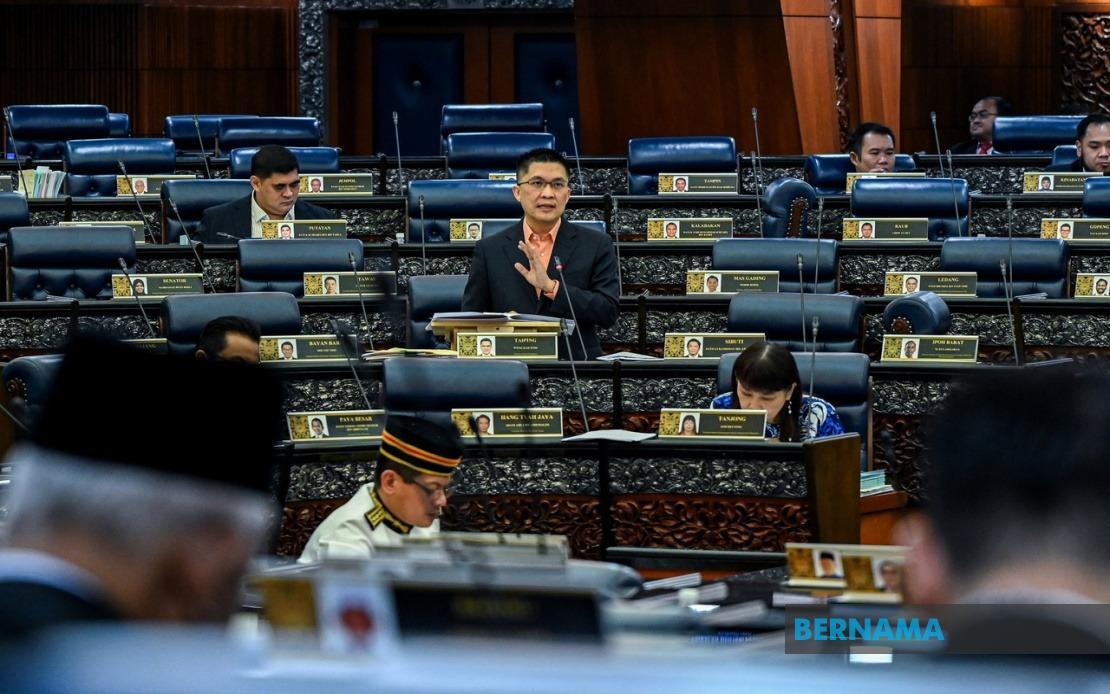
Malaysia's education system faces a critical moment as the Ministry of Education charts an ambitious course to eliminate digital inequality across the country through the Malaysia Education Blueprint (RPM) 2026-2035. Deputy Education Minister Wong Kah Woh has outlined a comprehensive strategy that recognises the persistent technology gap between urban centres and remote communities, a challenge that has long hampered educational outcomes for students in less developed regions. The initiative represents a significant commitment to ensuring that geographical location no longer determines a student's access to quality digital learning resources.
At the heart of the ministry's approach lies a straightforward but demanding target: equipping every school in Malaysia with high-speed internet connectivity, employing technologies tailored to local circumstances rather than imposing a one-size-fits-all solution. This flexibility acknowledges the diverse infrastructure realities across the country, from well-developed urban areas to isolated rural settlements where traditional broadband deployment may prove impractical or economically unfeasible. By allowing different technological approaches, the ministry recognises that fibre optics, satellite internet, wireless solutions, and other innovations each have a role to play in creating comprehensive national coverage.
The Digital Educational Learning Initiative Malaysia platform, commonly known as DELIMa, serves as the technological backbone for this vision. The system functions as a centralised repository of educational content, making learning materials accessible to teachers and students regardless of their location. By concentrating resources on a single platform, the ministry can ensure consistency in content quality while allowing educators flexibility in how they deploy materials within their classrooms. The platform addresses a fundamental challenge in education systems across developing nations: the uneven distribution of knowledge resources and the tendency for better-funded urban institutions to accumulate teaching materials while rural schools struggle with outdated or sparse resources.
Competency benchmarking forms another pillar of the strategy. The ministry has established a Digital Competency Score framework with the ambitious goal of ensuring all students achieve at least intermediate proficiency in digital skills. This metric moves beyond mere access to the internet, recognising that technology is only beneficial when users possess the knowledge and confidence to employ it effectively. Students who leave school without digital literacy face significant disadvantages in higher education and employment markets increasingly dominated by technology-driven sectors. The framework provides measurable targets that schools can work towards while giving policymakers concrete data to assess progress.
Equitable device distribution represents a third commitment that distinguishes this plan from previous initiatives. Wong emphasised that digital devices and educational resources will be distributed fairly across all schools, with particular attention to narrowing the persistent access gaps that disadvantage rural communities. In many Southeast Asian nations, this remains a theoretical promise rather than achieved reality, with budget constraints forcing trade-offs between infrastructure investments in developed and underdeveloped areas. Malaysia's explicit commitment to equitable distribution suggests recognition that digital inequality can become a self-reinforcing cycle, where better-resourced schools attract superior talent and achieve better outcomes, widening the gap further.
The measurable progress already achieved under the previous Malaysian Education Development Plan demonstrates the feasibility of closing educational disparities. Between 2013 and 2024, the achievement gap in Sijil Pelajaran Malaysia examination scores between urban and rural students contracted by over 26 per cent, a substantial improvement that validates targeted intervention strategies. Equally significant were reductions in gender-based inequities, with the gap in SPM certificate eligibility declining by more than half, suggesting that structured programmes addressing specific demographic challenges can deliver concrete results. Perhaps most remarkably, socioeconomic status differences narrowed by nearly 58 per cent, indicating that strategic resource allocation can mitigate the effects of family income disparities on educational outcomes.
These statistics hold particular resonance for Malaysian policymakers given the country's economic structure and regional role. As Southeast Asia's third-largest economy, Malaysia positions itself as a technology leader and developed nation aspirant. Educational inequality undermines these ambitions, as it wastes human potential and creates social divisions. The performance improvements documented suggest that Malaysia possesses the institutional capacity and political will to execute systemic change, provided resources are allocated strategically and implementation receives sustained attention.
The Digital Education Policy framework provides the governance structure supporting these initiatives. Rather than treating digital transformation as an isolated technical project, the ministry has embedded it within broader education policy, ensuring alignment with pedagogical objectives, teacher development, curriculum design, and assessment practices. This holistic approach recognises that technology becomes genuinely transformative only when integrated thoughtfully into educational systems rather than appended as an afterthought.
Teacher well-being has emerged as an unexpected but crucial focus area. The ministry has introduced seven measures since 2023 designed to reduce teacher workload and administrative burden, including streamlining record-keeping processes that drain professional energy without educational benefit. This acknowledgment that teacher welfare directly impacts system performance reflects growing evidence that educator burnout compromises instructional quality. Digital tools should theoretically reduce administrative burden by automating routine tasks, yet paradoxically often generate new expectations and workload. The ministry's explicit commitment to preventing this dynamic suggests strategic thinking about implementation.
The infrastructure development priority, particularly the upgrading of deteriorated schools based on community needs assessment, addresses a reality often overlooked in education discussions. Many rural and disadvantaged urban schools operate from buildings inadequate for twenty-first century learning, lacking basic facilities that would support technology integration. Crumbling infrastructure signals low institutional priority and generates logistical challenges for teachers and students. Targeted renovation campaigns demonstrate that digital equity cannot be achieved through software and connectivity alone; physical learning environments require simultaneous investment.
For regional context, Malaysia's approach positions it distinctly within Southeast Asia's varying development trajectories. While wealthy city-states have achieved near-universal digital access, larger nations with more dispersed populations struggle with last-mile connectivity challenges similar to Malaysia's. The specific strategies outlined—platform consolidation, flexible technology deployment, competency frameworks, and equitable distribution mechanisms—offer a model that neighbouring countries grappling with similar challenges might study and adapt.
The RPM 2026-2035 represents more than infrastructure policy; it reflects an evolution in how Malaysia conceptualises educational equity. Rather than treating rural disadvantage as inevitable, the blueprint positions digital access as a fundamental right worthy of sustained investment and institutional commitment. Success will depend on adequate funding allocation, consistent political priority across electoral cycles, genuine coordination across government agencies, and continuous adjustment based on implementation experience. The documented achievements under the previous plan suggest these conditions are achievable, though complacency remains the greatest threat to sustained progress.

