The inaugural Minister's Cup debate competition, launched alongside the 7th International Sustainable Energy Summit (ISES) 2026 in Kuala Lumpur, has given university students a significant platform to engage with critical questions about Malaysia's energy direction. The event brought together 20 undergraduate debaters from Malaysian institutions to grapple with a central policy challenge facing the nation: whether Malaysia should pursue renewable energy exports to neighbouring countries whilst simultaneously ensuring adequate domestic electricity supply. This competition represents an important step in involving the younger generation in shaping the national energy conversation at a time when Southeast Asia faces mounting pressure to transition away from fossil fuels.
The debate's central motion, framed in both English and Malay, directly confronts Malaysia's potential dual role as a renewable energy producer and consumer. The question of whether to expand electricity exports based on renewable sources to regional neighbours while protecting domestic requirements touches on fundamental economic, environmental, and strategic considerations. For Malaysia and other regional economies, this tension between exporting green energy and maintaining energy security domestically has become increasingly urgent as regional demand climbs and climate commitments tighten. The framing of this debate topic suggests that Malaysian policymakers are seriously considering renewable energy exports as part of a broader economic strategy, positioning the nation as a potential regional energy exporter rather than merely an importer.
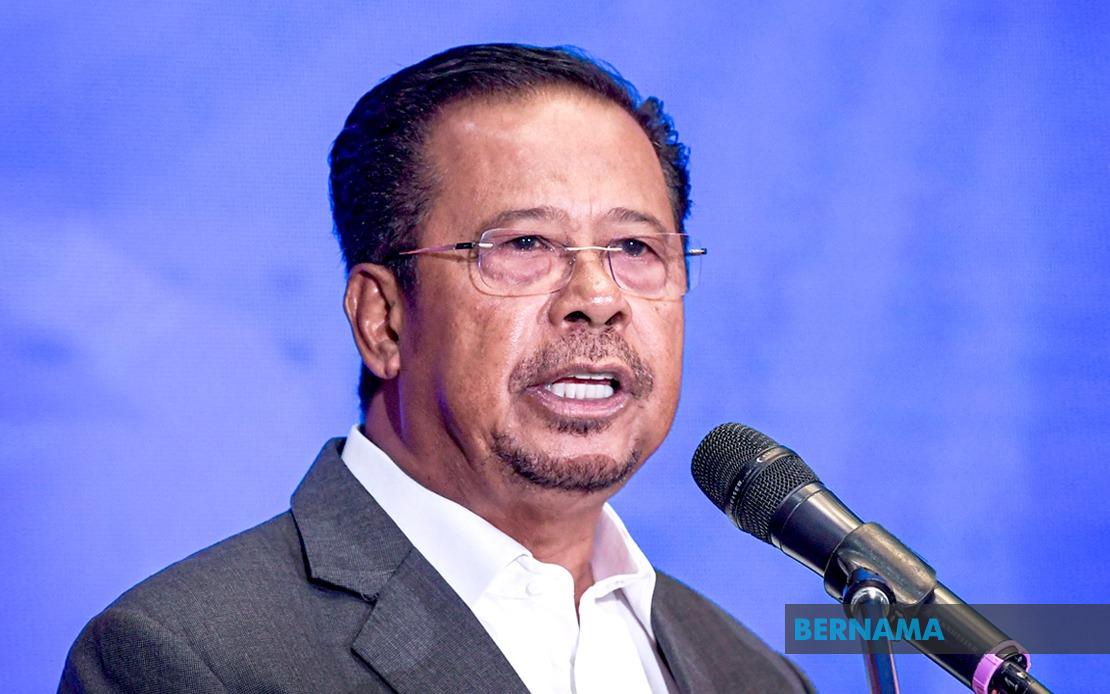
Deputy Minister of Energy Transition and Water Transformation Datuk Seri Abdul Rahman Mohamad, who also chairs the Malaysia Energy Literacy Programme (MELP) steering committee, presented awards to the winning Government team and recognised the best individual debater. The presence of Tan Sri Dr Wan Ahmad Dahlan Abdul Aziz, who serves as both Chief Secretary to the Government and chairman of the Sustainable Energy Development Authority Malaysia (SEDA), underscored the high-level governmental interest in promoting informed public discourse around energy policy. This ministerial participation signifies that the government views energy literacy among young Malaysians not as a peripheral concern but as integral to the country's transition toward sustainable energy systems.
The Malaysia Energy Literacy Programme itself represents a structured national effort to deepen public understanding of how energy is produced, distributed, and consumed. Established as a comprehensive initiative, MELP seeks to equip ordinary Malaysians with verified, accurate information about energy systems, enabling them to make informed decisions about their own consumption patterns and to engage critically with government energy policy. Rather than relying on propaganda or one-sided messaging, the programme emphasises trustworthy, fact-based information—a notable approach in an era marked by energy misinformation and polarised debates about renewable transitions. By making the Minister's Cup debate a flagship MELP 2026 programme, SEDA has effectively used competitive argumentation as a pedagogical tool for energy literacy development.
SEDA Strategic Communications director Izzad Zalman Abdul Kader highlighted the importance of engaging young people through debate platforms to strengthen their understanding of energy policy and foster critical thinking skills. He explained that debates serve a dual purpose: they provide young people with deeper comprehension of contemporary issues whilst simultaneously enabling them to articulate challenges to government policies or present alternative viewpoints. This openness to student critique and alternative perspectives suggests a maturation in how Malaysian government agencies approach public discourse—moving away from top-down messaging toward dialogue-based approaches. For a region where energy transitions remain contentious, creating spaces where young people can rigorously examine policy proposals fosters both democratic engagement and more robust decision-making.
Muhammad Uwais Mohd Hazril Munir @ Umar, a 20-year-old law student at Universiti Malaya who claimed the Best Debater award, articulated how debate makes complex technical issues like renewable energy more comprehensible to broader audiences. He noted that debate's distinctive value lies in its presentation of multiple perspectives, allowing audiences to weigh competing arguments and form nuanced positions. This observation underscores a fundamental challenge in energy policy communication: renewable energy systems involve intricate technical, economic, and environmental dimensions that resist simplification. Structured debate, by forcing advocates to justify their positions against rigorous questioning, can illuminate trade-offs and complexities that one-dimensional messaging obscures. For Malaysian citizens trying to understand their country's energy direction, such platforms offer more intellectual integrity than government announcements alone.
Afiq Athmar Mohamed, a 21-year-old business and economics student, emphasised how collaboration between government ministries, state agencies, and media organisations in staging such competitions energises public engagement with energy issues. He noted that these competitions raise awareness across diverse age groups about energy supply challenges whilst promoting understanding of the broader transition from non-renewable to renewable sources. His observation points to a significant gap that the Minister's Cup seeks to address: energy transition discourse in Malaysia has often remained confined to academic and policy circles, with limited penetration into broader public consciousness. By bringing university-level debate to public attention and framing energy issues as matters worthy of serious intellectual engagement, such initiatives work to normalise energy literacy as part of civic competence.
The selection of renewable energy exports as the debate motion carries particular strategic weight for Malaysia and Southeast Asia more broadly. Malaysia possesses significant renewable energy potential, particularly in solar capacity, and sits geographically at the heart of the Association of Southeast Asian Nations—a region with rapidly expanding electricity demand. Regional energy cooperation frameworks like the ASEAN Power Grid remain nascent, yet the potential for Malaysia to export renewable energy could significantly reshape regional energy geopolitics. Simultaneously, Malaysia's own electricity demand continues growing, driven by industrial expansion and rising living standards. The debate motion thus encapsulates a genuine policy dilemma that Malaysian officials are likely grappling with in practical terms.
The broader context of Malaysia's energy transition adds urgency to these discussions. The country has committed to achieving carbon neutrality by 2050 and increasing renewable energy capacity substantially in coming decades. These commitments intersect with regional climate agreements and international pressure to decarbonise energy systems. Yet Malaysia also faces economic pressures, industrial competitiveness considerations, and the need to maintain affordable electricity for consumers and businesses. Young Malaysians entering the workforce over the coming decades will inherit both the benefits and burdens of energy transition decisions made today. Engaging them in deliberative forums where they can examine trade-offs and advocate for their preferred futures seems both prudent and democratically important.
The Minister's Cup debate exemplifies how government agencies can leverage competitive intellectual platforms to advance policy understanding without resorting to propaganda or dismissing public input. Rather than viewing debate as merely educational entertainment, SEDA has positioned it as a serious mechanism for cultivating the informed citizenry that sustainable energy transitions require. This approach contrasts with energy policy approaches that treat public input as an obstacle to be managed. By investing in platforms where young people can rigorously interrogate energy policies, Malaysian institutions signal confidence in democratic deliberation and recognition that sustainable energy futures depend on popular understanding and consent.
Looking forward, the success of the inaugural Minister's Cup debate suggests that similar platforms across Southeast Asia might help elevate energy literacy more broadly. As regional nations navigate competing pressures to decarbonise whilst maintaining affordable energy supplies and promoting economic growth, informed public discourse becomes increasingly valuable. Malaysia's initiative to involve university debaters in these discussions, and to recognise outstanding contributions, sends an important signal about the kind of civic engagement the country seeks to foster. Whether future competitions expand to include secondary school students, working professionals, or other constituencies remains to be seen, but the foundation has been laid for sustained, sophisticated public conversation about energy futures.

