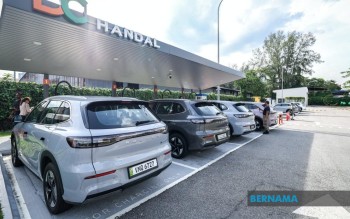
The Malaysian government has deliberately chosen not to impose price controls on public electric vehicle charging services, instead entrusting charging station operators to set their own rates based on commercial judgment. This market-liberalisation approach, outlined by the Ministry of Investment, Trade and Industry (MITI) in response to parliamentary questions, reflects a broader policy philosophy that prioritises private sector engagement over regulatory intervention in emerging infrastructure sectors.
MITI's position represents a calculated bet that competitive market forces will deliver better outcomes than government price-setting mechanisms. By allowing operators freedom in pricing strategies, the ministry reasons that businesses will be incentivised to invest capital in expanding the charging network across Malaysia. This competitive environment, proponents argue, naturally encourages efficiency and service quality improvements as operators vie for market share. The approach aligns with Malaysia's economic development strategy of leveraging private investment to accelerate the transition to electric mobility without burdening the public purse.
As of May 31, 2026, Malaysia had deployed 6,416 public EV chargers nationwide, marking significant infrastructure progress over recent years. These chargers comprise two distinct categories: 2,143 direct current fast-charging units representing 33.4 per cent of the total fleet, and 4,273 alternating current chargers accounting for 66.6 per cent. Fast chargers, which typically replenish vehicle batteries in 20-40 minutes, remain substantially underrepresented relative to their convenience value, suggesting potential investment opportunities for private operators in this lucrative segment.
Geographic distribution of charging infrastructure reveals stark disparities between Peninsular Malaysia and the East Malaysian states. Peninsular Malaysia dominates with 6,176 chargers, or 96 per cent of the national total, while Sarawak has 208 units and Sabah only 32 units. This concentration reflects population distribution and vehicle density patterns, yet raises concerns about charging accessibility for EV owners in less-developed regions. The unequal distribution suggests that market mechanisms alone may prove insufficient to incentivise operators to invest in lower-density areas where commercial returns prove marginal.
Despite the government's hands-off approach to pricing, EV charging infrastructure development remains subject to multiple layers of regulatory oversight addressing safety and technical standards. The Energy Commission, MITI itself, and local authorities enforce compliance requirements covering facility design, electrical safety, fire protection, and environmental considerations. This regulatory framework ensures that competitive pricing freedom does not come at the expense of public safety or technical adequacy. Operators must navigate complex approval processes and maintain ongoing compliance even as they retain autonomy over commercial terms.
The government has constructed a governance architecture to coordinate EV ecosystem development across multiple agencies and ministries. The National EV Task Force, chaired by MITI, and the National EV Steering Committee, chaired by the deputy prime minister who also leads energy transition policy, provide forums for resolving cross-cutting issues. These platforms enable holistic coordination on infrastructure deployment, industry growth, regulatory harmonisation, and safety standards among competing institutional interests. Such coordination mechanisms become particularly important when pricing remains unregulated, as they help ensure that infrastructure gaps do not emerge from fragmented decision-making.
MITI's commitment to ongoing collaboration with the Energy Commission and Tenaga Nasional Bhd signals that the government maintains flexibility regarding future regulatory approaches. Rather than definitively rejecting price regulation, MITI frames the current stance as exploratory, suggesting that if market competition proves inadequate to deliver equitable access or reasonable rates, regulatory intervention could eventually follow. This conditional posture reflects awareness that unregulated markets sometimes produce undesirable outcomes, particularly in infrastructure sectors characterised by natural monopoly tendencies or significant capital barriers to entry.
For Malaysian consumers and EV adoption rates, the pricing freedom creates both opportunities and risks. Competitive markets typically drive down prices over time as new entrants challenge incumbents and operators invest in efficiency gains. However, charging station operators may face margin pressures that discourage investment in less-profitable areas, potentially creating infrastructure deserts in economically disadvantaged regions. Early movers may also enjoy supranormal profits before competition intensifies, raising equity concerns if charging costs disproportionately burden lower-income households considering EV purchases.
The policy decision carries implications for Malaysia's broader clean energy transition goals and climate commitments. Affordable and accessible charging infrastructure represents a critical prerequisite for mass EV adoption, which in turn supports decarbonisation objectives. If private operators prioritise high-traffic urban corridors while neglecting regional highways and secondary cities, charging network gaps could constrain EV ownership among non-metropolitan populations. This geographic inequality could fragment the domestic EV market and complicate the government's long-term vision of nationwide electrified transportation.
Comparative international experience offers mixed lessons for Malaysia's market-based approach. Some jurisdictions including parts of the United States have successfully relied on competitive charging markets without price regulation, spurring rapid infrastructure deployment. Others, particularly in Europe, have found that selective regulation of corridor charging along major routes combined with market mechanisms elsewhere produces more balanced outcomes. Malaysia's large geographic area and uneven population distribution may require hybrid approaches that preserve market competition in dense urban areas while incentivising rural investment through targeted regulatory or subsidy mechanisms.
The government's emphasis on encouraging private sector participation reflects confidence that commercial interest will prove sufficient to drive infrastructure expansion aligned with transportation needs. This optimism hinges on several assumptions: that sufficient profitable opportunities exist to attract diverse operators, that barriers to market entry remain manageable for potential competitors, and that price competition will materialise rather than evolving toward tacit oligopolistic behaviour. Should private investment subsequently prove inadequate or unequal, MITI's coordination mechanisms provide potential pathways for course correction.
Moving forward, the success of Malaysia's unregulated EV charging market will depend substantially on how quickly private operators deploy infrastructure, particularly fast chargers in underserved regions. The government's stated intention to maintain a conducive environment for private investment while ensuring safety and regulatory compliance represents a pragmatic middle path between heavy-handed intervention and complete laissez-faire approaches. Monitoring whether this framework achieves equitable access and accelerated charging network expansion will prove essential for assessing whether market mechanisms alone suffice for Malaysia's EV transition, or whether targeted regulatory adjustments become necessary.

