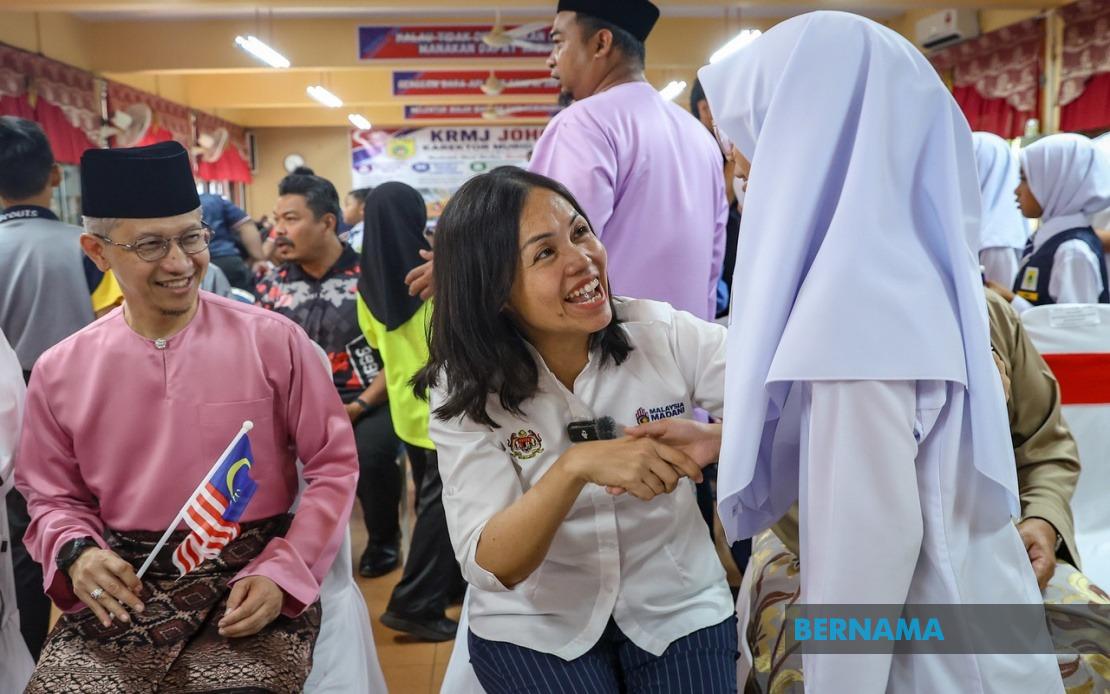
The Ministry of Communications is positioning the local film industry as a key beneficiary of the upcoming national budget, with Deputy Minister Teo Nie Ching indicating that empowering this creative sector forms a central pillar of the government's spending agenda for 2027. Speaking during an inspection visit to Kampung Baru Sengkang in Kulai, Teo revealed that the ministry has initiated discussions with the Ministry of Finance to strengthen financial backing for an industry increasingly recognised as a strategic economic driver for Malaysia.
While formal budget negotiations remain preliminary, Teo confirmed that informal consultations with the Finance Ministry have already broached the subject of expanded support mechanisms for Malaysia's film production landscape. The Deputy Minister was careful to avoid premature commitments, emphasising that concrete details will only emerge following an official meeting scheduled with the Finance Ministry in the coming week. This measured approach reflects the sensitivity around budget announcements ahead of formal parliamentary tabling, though it signals genuine government momentum behind the initiative.
The communications portfolio's emphasis on the film industry sits within a broader strategic framework that encompasses what officials describe as the orange economy—a cluster of creative and cultural industries positioned as engines of non-resource-based growth. Teo stressed that the ministry's overarching concern is not simply securing larger budget lines, but rather developing and implementing cohesive policies that create sustainable conditions for the entire creative ecosystem to flourish. This distinction matters: it suggests the government's thinking extends beyond one-off funding injections toward structural reforms that address systemic challenges facing Malaysian filmmakers and production companies.
The linkage between budget allocation and gross domestic product contribution underscores a fundamental economic calculus shaping current policy discussions. As Malaysia seeks to diversify revenue sources and reduce reliance on traditional sectors, creative industries have gained prominence in development planning across Southeast Asia. The film industry specifically offers multiplier effects that extend into tourism, employment, technology, and soft power—dimensions that transcend direct box office revenues and justify elevated policy attention. For Malaysian stakeholders in film production, whether independent filmmakers, studios, or post-production facilities, this shift in governmental framing could translate into tangible improvements in financing access, tax incentives, or infrastructure support.
Despite the optimistic tone around film industry advocacy, the ultimate outcome remains contingent on the broader fiscal environment. Teo acknowledged that any budget allocation must align with the government's overall financial capacity, a constraint that has become increasingly relevant given Malaysia's ongoing debt management priorities and competing budgetary demands across multiple sectors. The phrase carries particular weight in the Malaysian context, where public finance pressures have intensified in recent years, requiring difficult trade-offs between various policy objectives. This reality tempers expectations even among industry advocates who welcome the ministry's commitment in principle.
The timing of these discussions reflects mounting recognition within government circles that Malaysia's cultural output represents underexploited potential in an era of rising demand for diverse, non-Western content across global streaming platforms and international film festivals. Regional competitors including Thailand, Indonesia, and the Philippines have invested heavily in film infrastructure and incentive schemes, capturing international attention and generating export revenues. Malaysian filmmakers have demonstrated considerable talent and creative capacity, yet face structural disadvantages in accessing production capital and competing for international distribution compared to peers in more generously funded film industries across the region.
Teo's comments also came during an inspection of the Sri Maha Mariamman Temple construction works in the same locality, where she announced allocations under the Non-Muslim Houses of Worship fund. The temple received RM248,560 in 2025 funding following a 2024 application under this dedicated allocation scheme. This context matters because it demonstrates the ministry's broader engagement with community development and cultural preservation initiatives, reflecting a holistic approach to supporting Malaysia's diverse heritage sectors. For the Kulai MP, connecting film industry advocacy with visible community investment in religious infrastructure creates a narrative linking economic development with cultural and social stewardship.
The distribution of food baskets to twenty B40 (bottom 40 percent income bracket) households and vulnerable community groups during the same visit signals complementary social priorities, suggesting that the communications ministry's portfolio encompasses both strategic economic development and immediate social support measures. This dual focus aligns with current government messaging around inclusive growth, though it also highlights the breadth of responsibilities falling under the Communications portfolio—a reality that could affect the ministry's capacity to deliver substantive progress on film industry initiatives depending on resource allocation within the ministry itself.
Looking forward, the success of any enhanced film industry support will likely depend on how the government translates budget allocations into concrete mechanisms that reach practitioners and production companies. Malaysian film stakeholders have previously pointed to gaps between announced policies and actual implementation, underscoring the importance of clear guidelines, accessible application procedures, and transparent selection criteria for any new funding schemes. The ministry's emphasis on developing coherent policy frameworks rather than simply increasing allocations suggests some awareness of these implementation challenges, though critical details remain absent at this early stage.
Regional observers monitoring Malaysia's cultural policy direction will be watching the Budget 2027 outcome closely, particularly given increasing competition among Southeast Asian nations to establish themselves as production hubs for English-language and regional content. Indonesia's growing dominance in this space, driven by both government support and private investment, has prompted reflection in Malaysia about whether current levels of support represent sufficient commitment to sustaining a competitive film ecosystem. The communications ministry's budget push, should it materialise into meaningful allocations, could represent an important signal that the government views film production as strategically important rather than merely a peripheral cultural amenity.
For now, Malaysian filmmakers and industry participants must wait for formal budget announcements before assessing whether these preliminary discussions translate into resources that meaningfully address the sector's constraints. The Deputy Minister's willingness to champion the industry publicly, however, suggests that within government, the conversation has shifted toward viewing film as an investment in economic diversification rather than a cultural expense—a reframing that could prove consequential regardless of the specific budget figures ultimately allocated in 2027.

