When geopolitical tensions between the United States and Iran threatened to destabilise Middle Eastern shipping lanes earlier this year, Malaysia's consumers faced the prospect of soaring food costs. The Strait of Hormuz, through which much of the world's oil passes, carries supplies vital to agricultural production—from the fuel that powers farm machinery to the plastics that wrap food at supermarkets. Oil underpins fertiliser manufacturing, making crude prices directly relevant to what farmers pay to grow crops. Yet despite these headwinds, Malaysia's food inflation remained remarkably contained at 1.4% year-on-year in May 2026, a testament to how active government intervention can insulate a nation's food security even when international markets convulse.
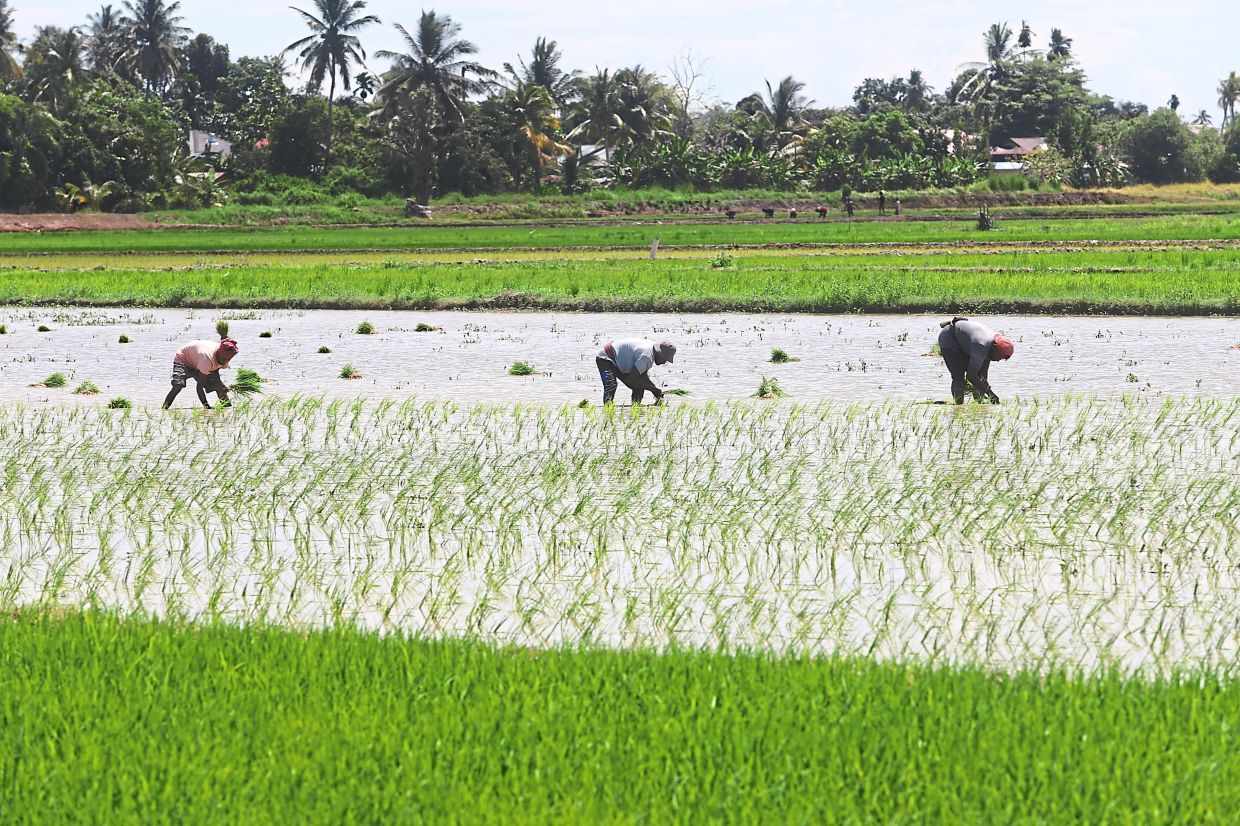
The government's response to potential supply chain disruptions was neither hasty nor reactive, but rather built upon existing agricultural support structures already in motion. In April, Malaysia's Ministry of Finance implemented a substantial increase to Budi Agri-Komoditi, the diesel subsidy scheme for agricultural machinery, raising it from RM300 to RM400 monthly—a 33% boost designed to help farmers absorb escalating fuel and transportation expenses. Simultaneously, authorities approved a near-doubling of the ploughing incentive (Insentif Pembajakan kepada Pesawah, or IPKP), lifting it from RM160 to RM300 per hectare for the 2026 planting season. Farmers in Peninsular Malaysia also received advance payments of RM200 per hectare under this scheme, providing crucial cash flow before the critical planting phase. These measures directly address the production cost squeeze that would otherwise translate into higher retail prices.
Professor Datuk Dr Nasir Shamsudin, an agricultural economist at Putra Business School and professor emeritus at Universiti Putra Malaysia's Faculty of Agriculture, emphasises that these interventions function as more than temporary palliatives. The Budi Agri-Komoditi monthly assistance cushions the impact of diesel inflation and transportation surcharges, while the expanded IPKP incentive bolsters farmer cash positions precisely when they need to prepare land for cultivation. Together, these initiatives absorb production cost pressures, sustain agricultural output levels, and protect farmer incomes—ultimately moderating the upward price pressure that would otherwise reach consumers' wallets. The effectiveness becomes visible in actual inflation data: food price growth remained subdued despite global economic uncertainty, suggesting that cost savings achieved through subsidies are indeed flowing through the supply chain rather than being absorbed by intermediaries.
Beyond these immediate relief measures, the government has committed substantial long-term resources through the 2026 Budget framework. An allocation of RM2.62 billion supports a comprehensive suite of agricultural programmes covering paddy price stability, crop cultivation incentives, fertiliser subsidies, certified seed provision, and production rewards. The fishing sector received RM160 million to provide monthly living allowances up to RM300 per fisher and catch incentives, recognising that stable protein supplies depend on keeping fishery communities economically viable. Local fruit growers cultivation has been backed with RM55 million in incentives and infrastructure development for high-value crops including pineapples, soursop, water apple, and pomelo. Though these programmes predate the US-Iran tensions, they have effectively armoured Malaysia's agricultural sector against exactly the kind of external shocks that are now materialising.
Government assurances on food stockpiles underscore the strategy's preventive foundation. Malaysia maintains sufficient chicken, eggs, fish, milk, and fresh produce supplies for at least one month, providing a buffer against short-term disruptions. More significantly, national rice reserves—including the government's strategic buffer stock—offer coverage for five to six months of consumption, a substantial security measure for a staple that underpins food security perceptions across the population. The fertiliser inventory is similarly robust, lasting approximately nine months, which allows farmers to plan cultivation without immediate panic-buying or supply rationing. These stockpiles represent not merely warehoused commodities but deliberately maintained emergency reserves designed precisely to cushion the kind of supply chain jolts that Middle Eastern instability can trigger.
Recognising that chemical fertiliser costs remain vulnerable to global market volatility, the Ministry of Agriculture and Food Security is actively promoting a shift toward more resilient and domestically-manageable alternatives. The push toward organic fertilisers, biofertilisers, and Effective Microorganisms (EM) products reduces systemic exposure to petroleum-linked price shocks while potentially improving soil health and sustainability. A RM5.5 million initiative under the 13th Malaysia Plan is converting agri-food waste into compost and organic fertilisers, building circular economy principles into the agricultural infrastructure. This approach addresses not just the immediate price crisis but the underlying vulnerability of depending on chemical inputs whose costs fluctuate with international crude prices.
Professor Nasir cautions, however, that short-term subsidies cannot indefinitely substitute for structural agricultural transformation. The full value of government support depends on how effectively savings are transmitted throughout the food supply chain and reinforced by genuine productivity gains. Over the longer term, he argues, sustainable price stability must rest primarily on raising agricultural productivity and strengthening the resilience of the food system itself. Investments in farm mechanisation, precision agriculture, climate-smart farming technologies, high-yield seed varieties, efficient irrigation infrastructure, modern post-harvest facilities, and integrated supply chain logistics can permanently reduce unit production costs and enhance competitiveness. These capital-intensive improvements promise to reduce the sector's ongoing dependence on continuous government financial assistance.
Yet Malaysia confronts a structural challenge that no amount of subsidy can fully overcome: profound dependence on food imports. The country remains a net food importer across multiple essential categories, including rice, wheat, dairy products, and meat. In 2024 alone, Malaysia's agri-food trade deficit reached RM39.34 billion, reflecting the nation's vulnerability to global price shocks and supply chain disruptions. Even sectors appearing to achieve self-sufficiency in domestic production often depend substantially on imported agricultural inputs, creating hidden exposure to international market volatility. This structural imbalance means that external price shocks—whether from Middle Eastern geopolitical tensions, climate-related production failures, or speculative commodity trading—inevitably percolate through to Malaysian consumers and producers, regardless of how robust domestic support systems might be.
The tension between short-term price stabilisation and long-term food security thus defines Malaysia's agricultural policy challenge. Current subsidies and stockpiles have successfully insulated consumers from the full impact of Middle Eastern tensions, demonstrating that active government intervention can meaningfully protect living standards. However, the underlying import dependence remains unresolved. Meaningful food security requires simultaneously maintaining immediate price stability through targeted support while investing in the agricultural productivity, technological adoption, and supply chain resilience that could gradually reduce import dependence. Prime Minister Datuk Seri Anwar Ibrahim has framed smallholders and entrepreneurs as the backbone of Malaysia's economy, justifying subsidy extensions through recognition of global economic uncertainty and rising living costs. This framing suggests awareness that food security is not merely an economic issue but a pillar of social stability and government legitimacy.

