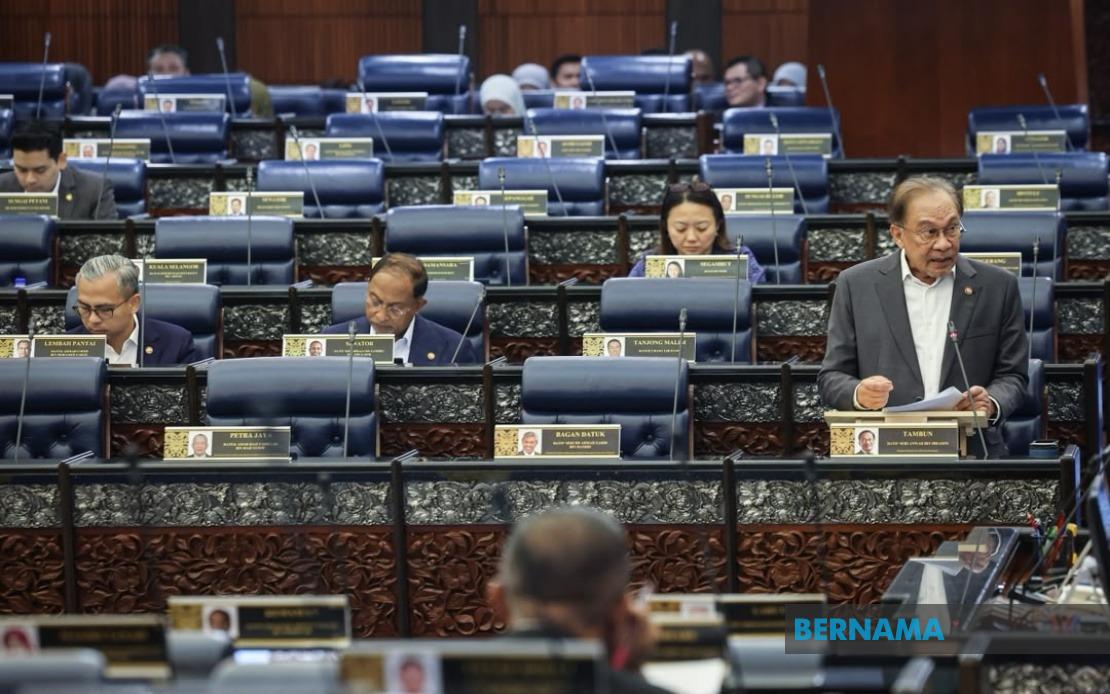
Prime Minister Datuk Seri Anwar Ibrahim mounted a robust defence of Malaysia's fuel pricing structure in Parliament on July 14, asserting that the nation's retail prices for petroleum products compare favourably against those in major global oil producers. The assertion challenges recent assertions that Malaysian fuel costs have become uncompetitive on the regional stage, a claim the premier dismissed as factually inaccurate based on current market comparisons.
Under the government's BUDI MADANI initiative, RON95 petrol continues to be offered at RM1.99 per litre, a subsidised rate that Anwar positioned as evidence of the administration's ongoing commitment to maintaining fuel accessibility for ordinary Malaysians. This pricing structure stands in marked contrast to Saudi Arabia, where comparable fuel now trades above RM2.40 per litre—a differential of more than 20 sen that underscores Malaysia's relatively advantageous position despite the kingdom's substantial oil reserves and production capacity.
The prime minister drew historical context into his remarks, recalling that when his administration initially campaigned for fuel price reductions targeting RM1.50 per litre, Saudi Arabia's prices hovered around just 50 sen. This temporal comparison illustrates how global energy markets have fundamentally shifted, with crude oil valuations and downstream product pricing substantially elevated from earlier periods. The global energy landscape has transformed considerably, making Malaysia's current pricing strategy more defensible when evaluated against international benchmarks rather than domestic historical precedent.
Beyond Saudi Arabia, Anwar highlighted that Qatar and the United Arab Emirates also maintain fuel prices exceeding Malaysia's current rate. The UAE, despite its status as a major oil producer with considerable extraction capabilities, had recently implemented price increases merely two months prior to the parliamentary exchange. This detail proves particularly instructive for Malaysian readers, suggesting that even oil-wealthy nations must navigate the economics of fuel pricing in ways that sometimes necessitate higher consumer prices than Malaysia currently maintains.
The parliamentary exchange was triggered by a supplementary question from Datuk Rosol Wahid (PN-Hulu Terengganu), who pressed the prime minister regarding alleged discrepancies between fuel prices during the administration of Datuk Seri Najib Razak and Anwar's earlier opposition-era pledges to reduce petrol costs. This line of questioning reflects a persistent political tension in Malaysian discourse, wherein successive administrations face scrutiny over whether campaign promises regarding fuel affordability have materialised in practice.
Anwar's response effectively reframed the debate from whether Malaysia has achieved the most dramatic reductions possible to whether current prices represent fair value relative to comparable economies. This rhetorical shift carries significance for understanding government communications strategy around contentious economic issues that affect the entire population. By establishing that Malaysian consumers enjoy advantages versus counterparts in wealthier oil-producing states, the administration attempts to legitimise its pricing approach against both domestic critics and international comparisons.
The sustainability of Malaysia's fuel subsidy programme remains a matter of ongoing policy concern, given the fiscal implications of maintaining artificially suppressed prices when global energy markets experience volatility. The BUDI MADANI framework represents the government's chosen mechanism for balancing affordability objectives against budgetary constraints and inflationary pressures. Understanding this policy within the broader regional context requires recognition that most Southeast Asian economies operate subsidised fuel regimes to varying degrees, though few maintain prices as consistently low as Malaysia's.
For Malaysian consumers navigating household budgeting decisions, fuel costs represent a significant component of transportation expenses and indirectly affect prices across the broader economy through logistics and delivery costs. The comparative advantage that Anwar identified—that local fuel remains cheaper than in Saudi Arabia, Qatar, and the UAE—carries tangible implications for purchasing power, particularly for those operating vehicles for commercial or livelihood purposes. This advantage becomes especially pronounced for rideshare drivers, delivery operators, and transport businesses whose operational economics depend directly on fuel expenditure efficiency.
Regional observers monitoring Malaysia's economic management will note that the government's continued emphasis on fuel subsidies reflects political prioritisation of social welfare considerations alongside macroeconomic prudence. The decision to maintain RON95 at RM1.99 rather than allowing prices to float toward international parity levels demonstrates a deliberate policy choice, one that incurs budgetary costs but yields social and political benefits through maintained cost-of-living stability. This balancing act becomes increasingly complex as global energy prices fluctuate, particularly given expectations that crude oil may experience renewed upward pressure amid geopolitical tensions and production adjustments.

