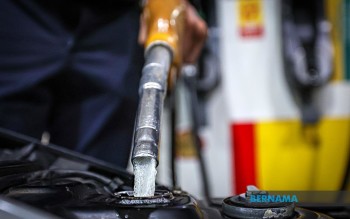
The Malaysian government faces potentially substantial fuel subsidy commitments in coming months, with estimates suggesting that RON95 petrol and diesel support could together exceed RM3.5 billion monthly should crude oil prices remain anchored around US$90 per barrel. Deputy Finance Minister Liew Chin Tong disclosed these projections during parliamentary proceedings in the Dewan Negara, revealing that RON95 subsidies alone could reach approximately RM2 billion monthly under that price scenario, while diesel support would require a further RM1.5 billion in monthly government expenditure.
These figures underscore the complex fiscal equation governing Malaysia's fuel subsidy regime, which has long served as a cornerstone of the government's cost-of-living support framework. The escalating subsidy burden reflects the nation's commitment to insulating consumers from global crude price volatility, a policy stance that carries both domestic political and economic implications. For Malaysian consumers, particularly those dependent on affordable diesel for commercial transportation and agricultural operations, fuel subsidies represent a crucial mechanism for maintaining competitiveness and livelihood stability. However, the mounting fiscal weight of these programmes raises fundamental questions about long-term budgetary sustainability.
Despite these substantial subsidy projections, Liew projected confidence in the government's overall fiscal management, asserting that Malaysia's fiscal position remains robust even accounting for higher crude oil costs. He attributed this resilience partly to Malaysia's role as a petroleum producer, noting that the nation benefits directly from elevated global oil prices through enhanced revenue streams. The deputy minister emphasised that each US$1 increase in crude oil per barrel translates into approximately RM300 million in additional government revenue, a figure that partially offsets the burden imposed by fuel subsidies. This revenue-offsetting mechanism has historically provided the Malaysian government with flexibility in managing subsidy costs without necessarily expanding the budget deficit beyond predetermined targets.
The relationship between petroleum revenues and fuel subsidy expenditures illustrates a key dimension of Malaysia's economic structure. Unlike purely importing nations, Malaysia's petroleum extraction and export capabilities generate counterbalancing revenues that cushion the fiscal impact of domestic fuel price support. This advantage has allowed successive Malaysian governments to maintain subsidised fuel costs without immediately triggering severe deficit pressures, though the sustainability of this approach depends fundamentally on maintaining both production levels and export revenue flows. Economic analysts have noted that this dual revenue-cost dynamic creates a peculiar vulnerability: Malaysia's fiscal position becomes increasingly sensitive to crude oil price volatility, with downside scenarios potentially forcing difficult choices between subsidy reductions and budget deficit expansion.
Looking forward, Liew indicated that the government will undertake a comprehensive fiscal reassessment when Prime Minister Datuk Seri Anwar Ibrahim presents the 2027 Budget in October. At that juncture, officials expect to release updated fiscal projections reflecting prevailing economic conditions and refined expectations regarding crude oil price trajectories. This approach suggests that current subsidy level commitments may be reviewed and adjusted based on more recent market assessments and economic forecasts. For Malaysian businesses and consumers, this October presentation will likely offer clarifying signals regarding the government's medium-term subsidy strategy and any potential adjustments to fuel price support mechanisms.
The government has also demonstrated flexibility regarding subsidy administration through targeted programmes addressing specific user groups and regions. When questioned about proposals to expand the BUDI Diesel quota for Sabah and Sarawak—the two Malaysian states with distinct geographical and economic circumstances—Liew indicated openness to expanding designated fuel allocation schemes. He cited the example of pickup truck owners, who had recently received an additional 100-litre quota through a streamlined application process, as evidence of the government's willingness to consider case-by-case expansions of subsidy access. This incremental approach suggests that rather than pursuing broad subsidy reductions, the government may be exploring targeted enhancements for constituencies facing particular hardship or economic disadvantage.
The mention of differential subsidy considerations for Sabah and Sarawak reflects broader regional equity concerns within Malaysia's federal structure. Both states have historically advocated for enhanced fiscal treatment under various federal programmes, and fuel subsidy administration represents one arena where such regional disparities can be addressed. The BUDI Diesel programme, which establishes quotas for diesel allocation at subsidised rates, embodies precisely the kind of targeted mechanism through which the government attempts to balance fiscal constraints with regional development objectives. For residents and businesses in these East Malaysian states, expansion of such quotas could yield meaningful economic benefits, particularly for agricultural producers, fishing operations, and transportation enterprises heavily dependent on diesel consumption.
The broader context of Malaysia's fuel subsidy debate encompasses competing policy imperatives that have exercised policymakers for decades. Maintaining affordable fuel supports household consumption capacity and business competitiveness, particularly benefiting lower-income households and small enterprises that lack pricing power. However, unconstrained subsidies distort market signals, create fiscal burdens, and can encourage inefficient resource consumption. The government's current approach—maintaining substantial subsidies while selectively expanding access through targeted programmes—represents an attempt to navigate this tension, though it remains vulnerable to criticism from both subsidy advocates concerned about reductions and fiscal hawks worried about unsustainable spending trajectories.
International observers monitoring Malaysia's fiscal trajectory will be watching the October 2027 Budget presentation closely, as fuel subsidy policy often signals broader orientations toward fiscal consolidation or stimulus. Countries across Southeast Asia face comparable pressures regarding energy subsidy management, making Malaysia's policy choices potentially instructive for regional peers. Indonesia, Thailand, and Vietnam have all grappled with similar dilemmas regarding fuel price support, and Malaysia's adaptive approach—combining baseline subsidies with targeted expansions and revenue-offsetting petroleum income—offers one model for managing this persistent policy challenge. The degree to which Malaysia ultimately prioritises fiscal deficit reduction versus expanded subsidy protection will likely influence broader expectations regarding the government's medium-term economic management philosophy and its willingness to make politically difficult fiscal adjustments.

