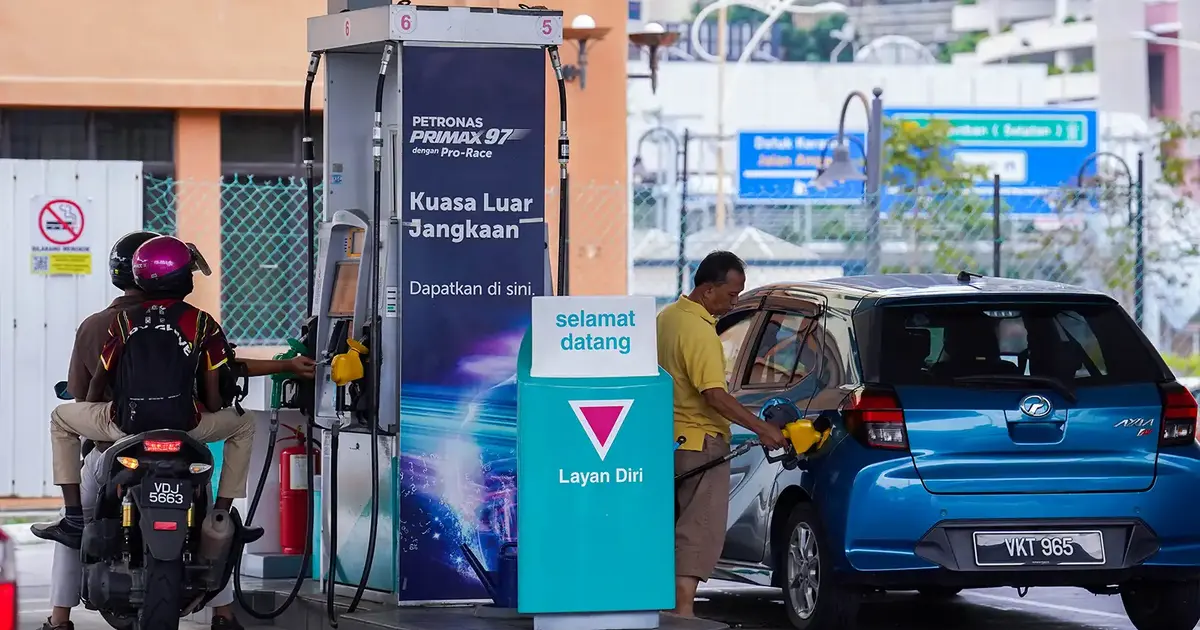
The Malaysian government faces a mounting fiscal burden as its fuel subsidy bill is forecast to reach RM40 billion in 2026, reflecting the ongoing strain on public finances from consumer energy price support programmes. Prime Minister Anwar Ibrahim addressed this significant spending projection while simultaneously providing assurances that the nation's petroleum reserves and supply chains remain secure, a dual messaging that underscores the delicate balance Putrajaya must maintain between supporting household budgets and managing budgetary constraints.
Fuel subsidies represent one of the largest discretionary expenditures in Malaysia's annual budget, competing directly with allocations for healthcare, education, and infrastructure development. The projected RM40 billion figure for 2026 signals a substantial commitment to insulating Malaysian consumers from volatile global oil price movements, a policy approach that has defined energy politics in Southeast Asia for decades. This level of spending requires careful parliamentary scrutiny, as lawmakers must weigh the political benefits of keeping pump prices artificially low against the economic costs of perpetually subsidising fuel consumption.
The timing of this projection arrives as Malaysia navigates broader macroeconomic challenges, including currency fluctuations, inflationary pressures, and competing demands on the federal budget. An RM40 billion allocation represents approximately 7 to 8 percent of Malaysia's total federal government spending in recent budgets, making it one of the top five expenditure categories. This magnitude of commitment necessarily impacts the government's ability to fund other development priorities, including the digital economy transition, renewable energy infrastructure, and healthcare system improvements.
Prime Minister Anwar's reassurance regarding petroleum supply stability carries particular weight given Malaysia's status as a net oil exporter with proven reserves in the South China Sea and onshore fields. Petronas, the national oil corporation, manages these resources and has historically maintained production levels sufficient to meet domestic demand while generating significant export revenues. The emphasis on supply adequacy suggests the government is attempting to counter any public anxiety about energy security, particularly important given recent global supply chain disruptions affecting energy markets across Asia.
The relationship between fuel subsidy levels and domestic consumption patterns creates a complex feedback loop that policymakers must carefully manage. When governments maintain artificially depressed fuel prices, economic theory predicts increased consumption and reduced pressure on consumers to adopt conservation measures or shift toward alternative fuels. Malaysia's experience with fuel subsidies demonstrates this principle in practice, as domestic petroleum consumption has grown steadily despite periodic subsidy reforms. The RM40 billion projection implicitly reflects expectations that consumption patterns will continue along historical trajectories rather than shifting dramatically toward alternative energy sources.
Regional context matters significantly for understanding Malaysia's subsidy commitment. Several Southeast Asian nations, including Indonesia and the Philippines, have attempted subsidy reforms with varying degrees of political success and economic impact. These neighbouring experiences inform Malaysian policymakers' cautious approach to major restructuring, as premature or poorly implemented subsidy reductions can trigger public backlash and affect electoral outcomes. The government's continued commitment to maintaining price supports reflects both political pragmatism and recognition that sudden removal could disadvantage lower-income households who depend heavily on affordable fuel for transportation and livelihoods.
The fiscal projection also intersects with Malaysia's medium-term fiscal consolidation plans, which require the government to gradually reduce its budget deficit over the coming years. An RM40 billion subsidy bill represents a substantial claim on resources that could otherwise address critical infrastructure gaps or build fiscal buffers against future economic shocks. Finance ministry officials must continuously evaluate whether current subsidy levels align with long-term budgetary sustainability, particularly if global oil prices remain elevated or if Malaysia's own petroleum production faces unexpected disruptions.
Innovative approaches to subsidy reform have emerged globally, with some nations implementing targeted support mechanisms that direct assistance to vulnerable populations rather than subsidising fuel uniformly across all income groups. Malaysia has experimented with such approaches through programmes like the Bantuan Petrol and other cash transfer initiatives, yet comprehensive means-tested subsidy systems remain administratively challenging to implement at scale. The government's RM40 billion commitment suggests that despite awareness of these alternatives, comprehensive targeted reform remains politically complicated to implement.
Looking forward, Malaysia's energy transition strategy will increasingly influence subsidy expenditure trajectories. As the nation accelerates electric vehicle adoption, expands renewable energy capacity, and develops alternative fuels, the proportion of total energy subsidies directed toward petroleum may gradually decline. However, the transport sector's heavy dependence on conventional fuels means that this transition will unfold over years rather than months, implying that massive subsidy bills will likely persist through the remainder of this decade. The government's focus on maintaining supply stability while acknowledging fiscal burdens demonstrates recognition that both dimensions of energy policy require serious attention and sophisticated implementation.
Stakeholders ranging from fiscal conservatives to social advocates will scrutinise how Malaysia allocates the RM40 billion subsidy commitment across fuel types and consumer categories. Strategic decisions about which fuels receive the greatest support, how much assistance goes to commercial users versus private consumers, and whether differential pricing applies across regions all carry political implications that extend beyond mere economics. Prime Minister Anwar's statements positioning the government as both fiscally responsible and genuinely concerned with citizens' welfare reflect the political calculus surrounding energy policy in contemporary Malaysia.

