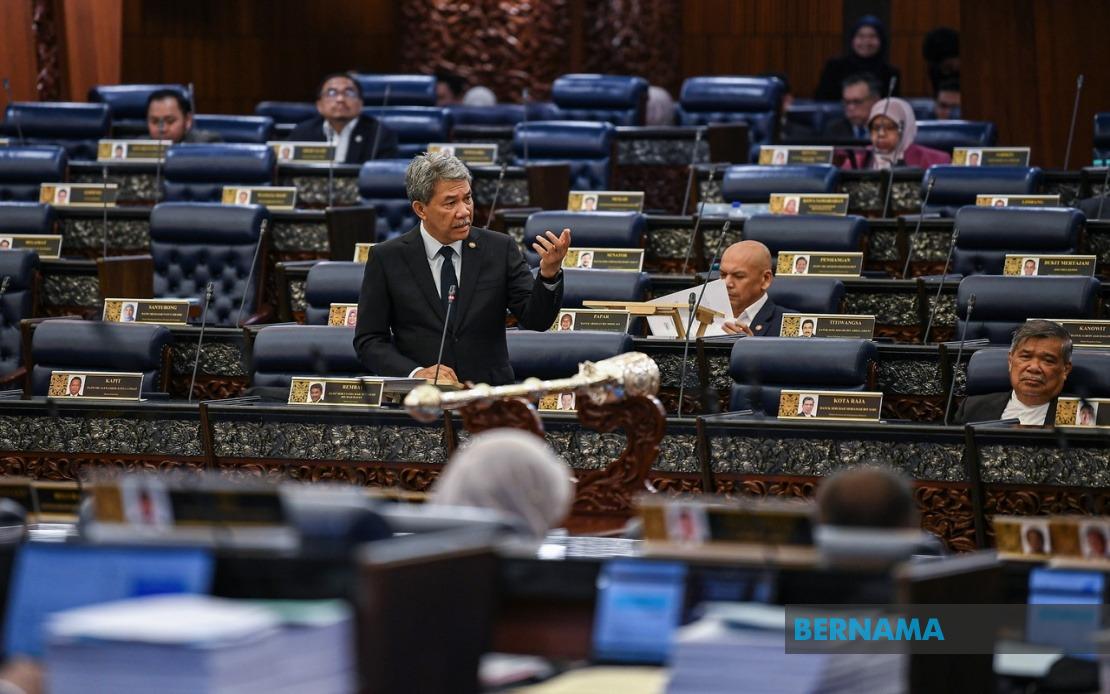
Malaysia's government has moved to counter online criticism surrounding the administration of its Humanitarian Trust Fund for the People of Palestine, with Foreign Minister Datuk Seri Mohamad Hasan providing lawmakers with detailed assurances about the fund's governance and oversight mechanisms during parliamentary proceedings on June 23. The minister's statement came in response to parliamentary inquiries about how Malaysian humanitarian assistance reaches Palestinian recipients, reflecting growing public concern about fund accountability in an era of widespread social media claims and counter-claims about aid distribution.
The Foreign Ministry operates the AAKRP as a government-administered trust account rather than allowing independent organisations autonomous control over disbursement decisions. This structural distinction carries significant implications for accountability, as it positions state institutions—specifically the Auditor-General and Cabinet—as the primary oversight bodies responsible for ensuring proper fund utilisation. Such centralised management contrasts with some international aid mechanisms that grant implementing agencies greater operational independence, though this approach can enhance governmental transparency in a Malaysia-specific context where parliamentary scrutiny operates within an established framework of executive accountability.
Mohamad emphasised that allegations regarding mismanagement lack substantive foundation and stem largely from misinformation circulating across social media platforms rather than documented irregularities. The minister's reference to inaccurate online claims reflects a broader challenge facing aid-dependent states in the modern information environment, where viral narratives about fund misuse can undermine public confidence in governmental programmes regardless of their factual accuracy. For Malaysian taxpayers and concerned citizens, the distinction between unverified claims and verified audited accounts remains crucial for informed civic participation.
The fund channels assistance through established international humanitarian organisations with recognised operational capacity in Palestinian territories. The United Nations Relief and Works Agency for Palestine Refugees in the Near East (UNRWA) serves as a primary conduit, supplemented by partnerships with the Jordan Hashemite Charity Organisation (JHCO), the Palestine Red Crescent Society, and King Hussein Hospital. These institutional partners bring decades of field experience and their own governance structures, creating multiple checkpoints beyond Malaysia's direct supervision. This multi-layered approach distributes accountability across institutions with different mandates but aligned objectives in Palestinian humanitarian assistance.
Beyond monetary transfers, Malaysia has deployed tangible aid resources including food supplies, medical equipment, and healthcare materials destined for Gaza's overwhelmed health infrastructure. The minister noted that certain shipments experienced delays but have since reached their destinations following the reopening of land-based humanitarian corridors with Egyptian government coordination. These logistics challenges underscore the complexity of operating aid programmes in conflict zones where border crossings face political sensitivities and security constraints that extend beyond any single donor nation's control.
The humanitarian environment in Gaza remains dire according to government assessments, with essential civilian infrastructure sustaining severe damage from ongoing hostilities. Hospitals, educational institutions, and religious facilities have reportedly suffered substantial destruction, constraining the capacity of local systems to address basic population needs independently. This context elevates the significance of external humanitarian assistance as a supplementary mechanism maintaining minimum service provision and preventing complete societal collapse—considerations that frame Malaysian aid contributions as responses to acute crises rather than permanent solutions to underlying political conflicts.
For Malaysian readers and policymakers, this parliamentary exchange highlights the tension between demonstrating fiscal responsibility through transparent fund administration and maintaining political commitment to Palestinian humanitarian concerns. The government's emphasis on audit procedures, Cabinet reporting, and institutional partnerships seeks to satisfy domestic accountability expectations while preserving Malaysia's historical advocacy position on Palestinian issues. This balancing act becomes increasingly important as domestic scrutiny of foreign aid spending grows alongside rising domestic economic pressures affecting Malaysian households.
The minister's reiteration that aid reaches intended beneficiaries rather than disappearing into administrative overhead addresses a persistent public anxiety about development assistance—the concern that donated resources fail to materialise as concrete support for vulnerable populations. By specifying delivery mechanisms and institutional partners, the Foreign Ministry attempts to bridge the credibility gap between abstract fund announcements and ground-level impacts that ordinary Malaysians find difficult to independently verify. However, such assurances depend ultimately on public willingness to trust government claims without requiring direct evidence of aid delivery.
The parliamentary question from Ahmad Tarmizi Sulaiman of Perikatan Nasional signals that fund management has become a matter of cross-party political interest, suggesting that both government and opposition parliamentarians perceive constituent concern about Palestinian aid administration. This bipartisan attention may reflect either genuine governance concerns or political positioning around Malaysia's long-standing support for Palestinian causes. Either way, it indicates that aid transparency has entered mainstream parliamentary discourse beyond routine Foreign Ministry briefings.
Moving forward, Malaysia faces pressure to reconcile its humanitarian commitments with demands for governance rigour that satisfy domestic accountability standards. The government's response—emphasising audits, Cabinet oversight, and established international partners—represents a conventional transparency approach familiar to Malaysian administrative culture. Whether these measures sufficiently counter social media narratives and public scepticism depends partly on the ministry's capacity to communicate audit findings and delivery statistics beyond parliamentary debates to broader public audiences. For a regional audience, Malaysia's approach offers insights into how mid-income nations balance foreign policy priorities with domestic governance expectations in an increasingly scrutinised aid environment.