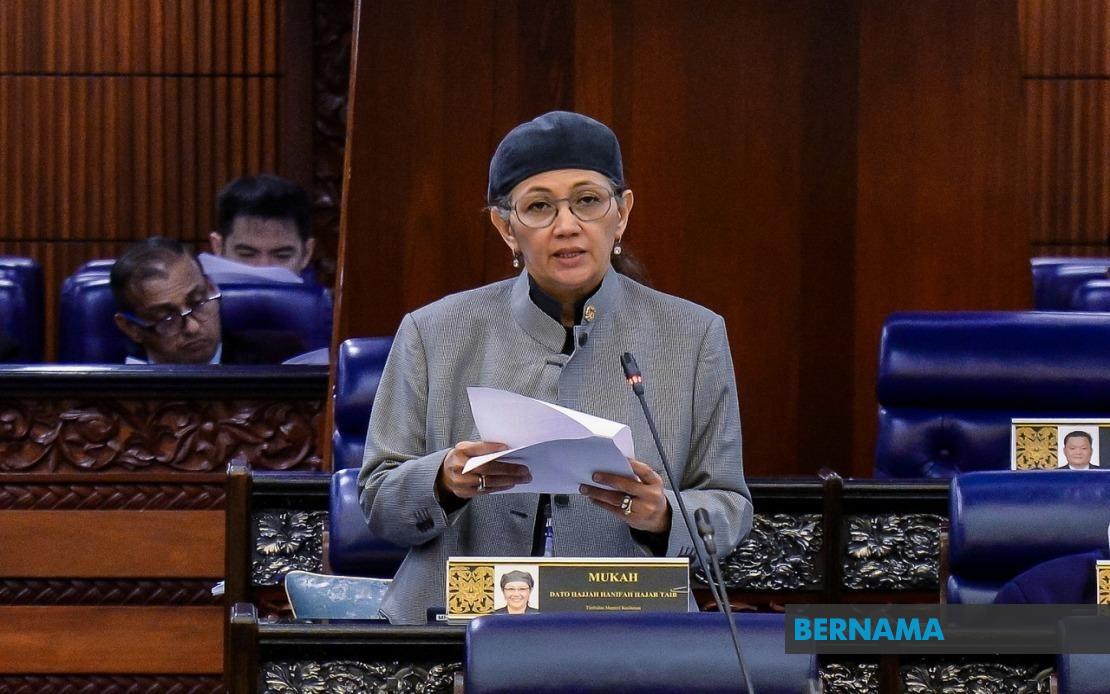
The Ministry of Health is taking direct action to confront Sabah's longstanding physician shortage by committing 560 permanent medical officer positions starting October 2026, Deputy Health Minister Datuk Hanifah Hajar Taib announced in Parliament. The initiative represents a significant portion of a nationwide campaign to fill 4,500 permanent posts across Malaysia in two accelerated recruitment phases. Yet the announcement carries a sobering caveat: based on historical precedent, the ministry anticipates only half of appointed doctors will actually accept postings in the state, leaving Sabah still short of its requirements despite the substantial allocation.
Sabah faces a documented shortfall of 256 medical officers against its established needs, a gap that has persisted for years and contributed to deteriorating healthcare delivery across the state. With only 1,863 of Sabah's 2,803 authorized medical officer positions currently filled—representing 66.5 per cent occupancy—the state has become emblematic of Malaysia's broader healthcare workforce crisis, particularly in East Malaysia. The situation has been further complicated by 366 doctors on study leave and 570 vacant posts, forcing health facilities to rely on 680 contract physicians to maintain service levels. This structural dependency on temporary staffing arrangements strains both budgets and continuity of patient care, making permanent placements essential to system stability.
The ministry's realistic assessment of appointment-to-acceptance ratios underscores a persistent challenge in healthcare recruitment. In the first recruitment phase completed in June 2026, 39 medical officers were offered Sabah postings, but only 20 accepted the offer while 19 declined. This 51 per cent acceptance rate reflects deeper difficulties: doctors often prefer positions in urban centres with better amenities, educational opportunities for families, and proximity to specialist networks. Rural and semi-urban postings in Sabah, despite offering allowances and incentives, struggle to compete for talent in Malaysia's competitive medical labour market. Projecting this historical pattern onto the October 2026 cohort of 560 appointments yields an estimated 280 acceptances—substantial, but leaving a gap of minus 24 against the stated shortage target.
Sabah's position within Malaysia's medical workforce distribution reveals pronounced regional disparities. According to the 2024 Health Indicators report, eight states including Sabah fall below the national average for doctor-to-population ratio, a persistent metric of healthcare inequality. However, the ministry highlighted a positive trajectory: Sabah achieved a 25.1 per cent improvement in its physician-to-population ratio between 2020 and 2023, suggesting that targeted investment can yield measurable gains. This improvement, driven partly by previous contract physician deployments, demonstrates that sustained effort produces results even when absolute numbers remain below ideal benchmarks. Maintaining this upward momentum depends on successfully recruiting and retaining permanent staff, which the October 2026 initiative seeks to accomplish.
To address the recruitment challenge more systematically, the ministry has introduced structural incentives within its revised e-Placement system rolled out in 2025. Under new rules, contract doctors transitioning to permanent status must select at least one placement preference in Sabah, Sarawak, or Labuan—a significant lever that encourages geographic distribution beyond doctor preferences for peninsular postings. This mandatory choice mechanism recognizes that without structural intervention, market forces alone will not allocate physicians equitably across Malaysia. The policy represents a shift toward balancing individual career preferences with national healthcare equity imperatives, though its effectiveness depends on adequate remuneration and supporting infrastructure in these jurisdictions.
The placement quota structure reveals the ministry's commitment to East Malaysian healthcare. Sabah and Sarawak combined will receive 960 permanent positions from the nationwide 2,248 quota under the e-Placement system—representing 42.7 per cent of total allocations despite these states comprising a smaller proportion of Malaysia's population. This preferential distribution acknowledges historical underinvestment and current deficits in both states. Sarawak receives 650 positions while Sabah receives 310 through the e-Placement mechanism alone, supplemented by the broader 560 appointment through direct ministry channels. The dual-track approach—combining quota-based placements with direct ministry appointments—indicates sophisticated effort to maximize recruitment flexibility and target penetration.
For Malaysian healthcare policymakers, the Sabah recruitment initiative illustrates both the scale of necessary intervention and the limitations of supply-side solutions without demand-side reforms. Simply appointing more doctors proves insufficient if retention and acceptance remain problematic. The 50 per cent historical acceptance rate suggests that compensation structures, career progression pathways, professional development opportunities, and quality-of-life factors in posting locations require parallel attention. Without addressing why half of appointed doctors reject Sabah postings, future recruitment phases will likely encounter similar attrition, perpetuating the cycle of shortage and temporary staffing arrangements.
Regional implications extend beyond Sabah's borders. As Malaysia positions itself as a regional healthcare hub and seeks to improve medical tourism and service quality, workforce deficiencies in peripheral states undermine national ambitions. Patients in underserved areas who cannot access adequate local care may seek private or offshore treatment, draining spending from public healthcare while exacerbating inequality. Neighbouring Southeast Asian nations watching Malaysia's healthcare development will note whether the country successfully solves its geographic distribution problem—a challenge faced across the region.
The ministry's multi-phase recruitment strategy indicates sustained commitment, yet success ultimately depends on whether appointment offers translate into working physicians in Sabah's clinics and hospitals. The October 2026 cohort represents a substantial commitment of 560 positions, potentially adding 280 permanent doctors based on historical experience. When combined with previous and ongoing initiatives, this should meaningfully reduce Sabah's deficit, though meeting the complete 256-officer shortfall may require additional measures beyond permanent postings. Policymakers must also consider whether the current establishment post structure itself reflects true healthcare needs or represents outdated allocation formulas, potentially requiring recalibration alongside recruitment efforts.

