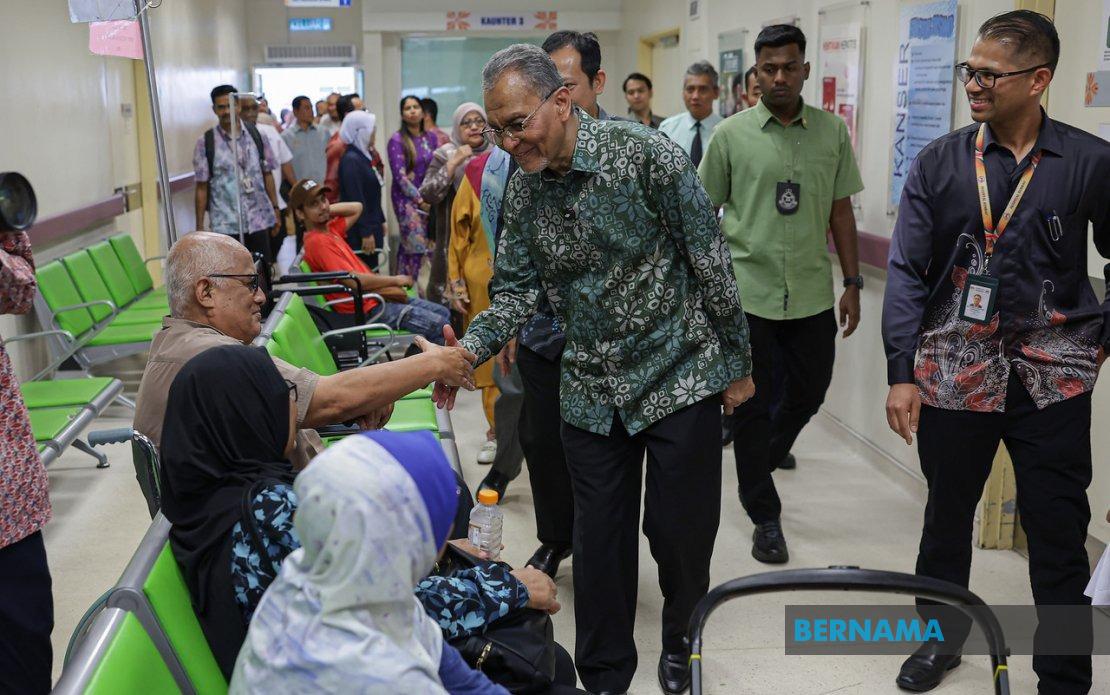
The Ministry of Health expects to complete its workplace mental health policy framework by September or October, marking a significant step towards addressing occupational stress in Malaysia's evolving employment landscape. Health Minister Datuk Seri Dr Dzulkefly Ahmad disclosed the timeline during a visit to Negeri Sembilan's Hospital Rembau, signalling the government's commitment to protecting worker psychological well-being as a priority area within public health.
The finalisation process depends on completing consultation rounds with multiple key institutions that shape Malaysia's employment landscape. The Ministry of Human Resources, the Department of Occupational Safety and Health, the Malaysian Employers Federation, and the Malaysian Trades Union Congress will all provide input into the policy's development. This multi-stakeholder approach reflects the complexity of workplace mental health, which spans regulatory frameworks, business interests, and employee rights—domains where these organisations exercise significant influence.
For Malaysian employers and workers, the emerging policy represents an overdue institutional response to mounting evidence of psychological strain in modern work environments. Burnout, anxiety disorders, and depression increasingly affect productivity and workplace safety across sectors, yet comprehensive national guidance has remained absent. By establishing baseline expectations and support mechanisms, the policy aims to shift workplace culture from viewing mental health as a personal responsibility toward recognising it as a shared organisational concern.
Dzulkefly emphasised that the policy would transcend basic counselling provision, addressing systemic factors that undermine employee psychological health. Work-life balance arrangements, transparent workload management, and institutional support structures form the policy's conceptual foundation. This breadth reflects international best practice seen in developed economies, where effective workplace mental health initiatives combine individual support with organisational redesign. Malaysian organisations accustomed to minimal mental health integration will face adjustment, particularly regarding flexible working arrangements and reasonable accommodation standards.
The policy's alignment with the Sustainable Development Goals underscores Malaysia's positioning within global health governance frameworks. SDG 3 emphasises well-being and mental health as universal development indicators, positioning psychological support not as a fringe benefit but as essential infrastructure for national advancement. By anchoring the policy within this international commitment, the MOH strengthens its case for employer compliance and resource allocation, appealing to multinational corporations and export-oriented industries already operating under SDG reporting obligations.
Creating workplace environments that genuinely support mental well-being requires shifting beyond theoretical commitments to measurable accountability structures. The MOH's emphasis on capacity-building within organisations acknowledges that many Malaysian employers lack expertise, resources, or trained personnel to implement mental health initiatives effectively. The forthcoming policy presumably addresses this gap through practical guidelines, training frameworks, and perhaps certification pathways that enable organisations to demonstrate compliance and competence.
Risk reduction constitutes another critical dimension of the policy's anticipated framework. Excessive workload remains a primary burnout driver across Malaysian industries, from manufacturing to services and government administration. By establishing reasonable standards for work distribution and pace, the policy potentially protects both individual workers and organisational productivity, since research consistently demonstrates that burned-out employees incur higher absenteeism, lower output quality, and elevated turnover costs.
Parallel to this workplace initiative, the MOH is strengthening hospital service architecture through its cluster hospital concept. This approach leverages specialist expertise from leading institutions to enhance service availability at secondary hospitals, addressing Malaysia's geographic service disparities where specialist care remains concentrated in major urban centres. Rather than expanding physical infrastructure, the cluster model optimises existing capacity by creating coordinated referral networks and periodic specialist outreach programmes.
The cluster strategy's scope extends across paediatrics, obstetrics and gynaecology, ophthalmology, and otolaryngology—specialties with significant population health impact. Rural and semi-urban populations accessing non-specialist hospitals would gain closer proximity to expert consultation, reducing travel burden and treatment delays. This integration simultaneously strengthens primary healthcare by clarifying referral protocols and enabling frontline providers to build diagnostic confidence through specialist collaboration.
Malaysia's approach to healthcare service distribution reflects resource constraints characteristic of middle-income countries balancing universal coverage with fiscal sustainability. By prioritising strategic specialist capability enhancements over capital-intensive hospital expansion, the MOH adopts a financially pragmatic framework while addressing genuine service gaps. Implementation success depends on robust coordination mechanisms, digital infrastructure supporting referral pathways, and incentive structures encouraging specialist participation in outreach activities.
The workplace mental health policy and hospital service strengthening initiatives represent interconnected elements of Malaysia's evolving health system strategy. Psychologically healthier workers require fewer mental health-related emergency interventions, reducing acute hospital demand and enabling resources to shift toward preventive and primary care. Concurrently, improved specialist access supports early identification of work-related psychological conditions, breaking cycles of deterioration that might otherwise culminate in crisis presentations.
Implementing these parallel initiatives within the projected timeframe requires sustained political will and adequate resource allocation. International experience demonstrates that workplace mental health policies frequently encounter resistance from organisations viewing mental health support as overhead cost rather than investment. The MOH's engagement strategy with employer federations and business associations attempts to build stakeholder buy-in through collaborative development, though enforcement mechanisms and incentive structures remain critical for policy effectiveness beyond voluntary adoption by progressive organisations.

