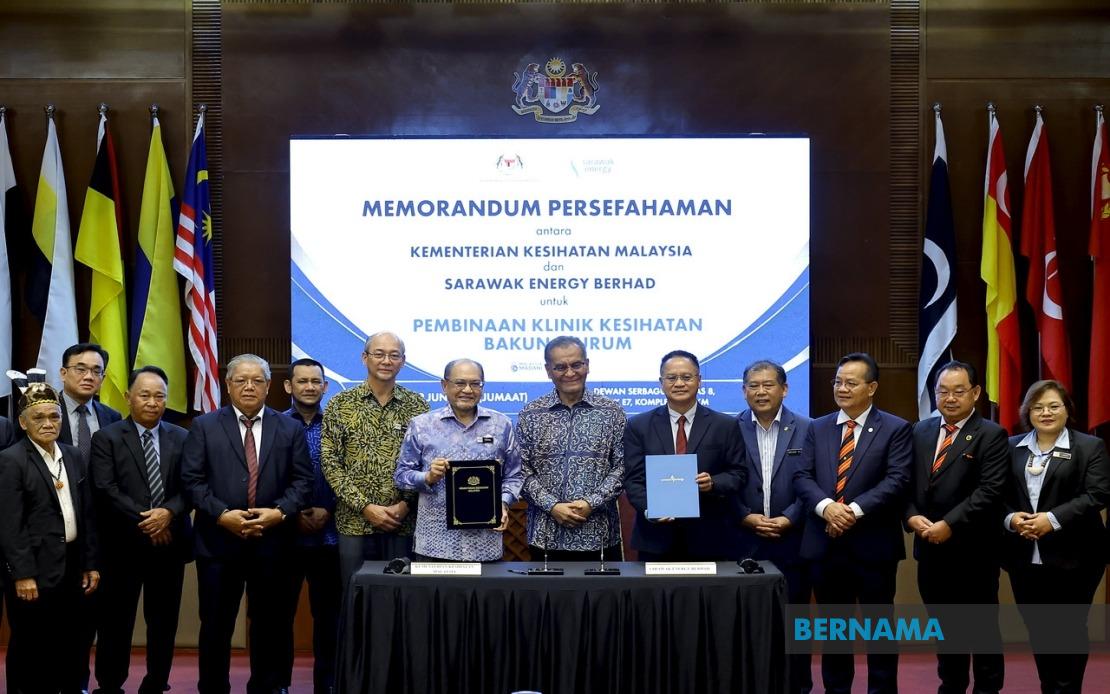
The Malaysian Health Ministry has entered the final phase of dismantling bureaucratic barriers that have constrained the development of medical specialists, according to Health Minister Datuk Seri Dr Dzulkefly Ahmad. Speaking at a ceremony in Putrajaya where the ministry signed a memorandum of understanding with Sarawak Energy regarding the Bakun-Murum Health Clinic construction, the minister acknowledged systemic impediments affecting specialist training pathways whilst confirming that resolution efforts are substantially advanced.
The healthcare landscape in Malaysia confronts a significant manpower gap. The nation currently faces a deficit of approximately 11,000 medical specialists across both governmental and private healthcare institutions, a shortfall that carries profound implications for service delivery and patient outcomes throughout the system. This numerical gap represents not merely a statistical concern but a tangible pressure point affecting hospital operations and outpatient care delivery from Johor to Sabah.
Dr Dzulkefly emphasised that the ministry has systematically identified multiple structural constraints requiring rectification. These bottlenecks—rooted in administrative protocols and regulatory frameworks—have historically slowed the pipeline through which medical graduates transition into specialist roles. The acknowledgement of these constraints represents a candid assessment of systemic friction points that have previously received less public attention from healthcare leadership.
Crucially, the minister articulated a fundamental principle guiding the expansion strategy: specialist workforce augmentation must proceed in synchronisation with healthcare infrastructure advancement. This approach reflects recognition that deploying additional specialists without corresponding facility enhancement creates unsustainable working conditions and may paradoxically degrade service quality. The phased expansion strategy therefore represents a deliberate calibration balancing immediate needs against long-term sustainability and infrastructure capacity.
The planned increase in specialist numbers will unfold progressively, responsive to evolving healthcare priorities and current operational requirements. Rather than pursuing rapid recruitment divorced from facility readiness, the ministry has instituted planning frameworks that marry specialist development to infrastructure projects. This synchronisation requirement means that specialist training programmes, recruitment initiatives, and physical healthcare facility expansion must advance in tandem across Malaysia's diverse regional contexts.
Pending fuller implementation of structural reforms, the Health Ministry has activated a cluster crisis management system serving as an interim operational mechanism. This approach centralises collaboration among hospitals sharing geographic or functional clustering, integrating associated primary health clinics into coordinated response frameworks. The system permits flexible redeployment of healthcare personnel according to fluctuating operational pressures and service demands.
The cluster model represents pragmatic adaptation to persistent constraints. By facilitating inter-institutional workforce redistribution and reorganisation guided by immediate operational necessity, the system maintains service continuity whilst systemic reforms mature. This interim architecture acknowledges that patients cannot be denied care whilst comprehensive solutions progress through planning and implementation cycles.
The minister underscored that healthcare service continuity remains paramount irrespective of workforce pressures. Maintaining uninterrupted patient access constitutes the measure by which interim measures and long-term strategies alike must be evaluated. This framing positions worker welfare concerns—substantial though they are—within a broader service delivery imperative.
Recognition of workforce burden represents an important shift in ministerial discourse around specialist shortage. Rather than dismissing concerns as inevitable costs of healthcare delivery, Dr Dzulkefly acknowledged genuine pressure experienced by practitioners operating within constrained specialist ratios. This acknowledgement, whilst not immediately alleviating conditions, signals receptiveness to occupational stress concerns that have periodically featured in medical associations' advocacy.
For Malaysian readers and healthcare stakeholders, the ministry's stated timeline and structural approach carry several implications. The phased expansion model means that specialist availability improvements will emerge gradually rather than through sudden influxes of newly trained practitioners. Regions currently experiencing acute specialist deficits may experience continued pressure even as national-level initiatives advance. The interdependence between specialist training and infrastructure development also means that facility projects in underserved areas merit particular attention as potential catalysts for subsequent specialist recruitment.
The broader Southeast Asian context adds dimension to Malaysia's specialist shortage challenge. Regional healthcare competition, brain drain toward higher-income economies, and varied training standards across neighbouring countries all influence Malaysian recruitment and retention dynamics. Addressing domestic bottlenecks whilst improving training pathways may enhance Malaysia's relative attractiveness as a medical careers destination within the region.
The intersection of bureaucratic reform, infrastructure investment, and interim operational management suggests that the Health Ministry has diagnosed its specialist shortage as multifactorial rather than attributable to single causation. Resolving such complex challenges typically requires protracted implementation, meaning patience from stakeholders alongside continued scrutiny of progress. The completion of bureaucratic reforms, acceleration of infrastructure projects, and evolution of training programmes will collectively determine whether Malaysia's specialist deficit diminishes as anticipated.