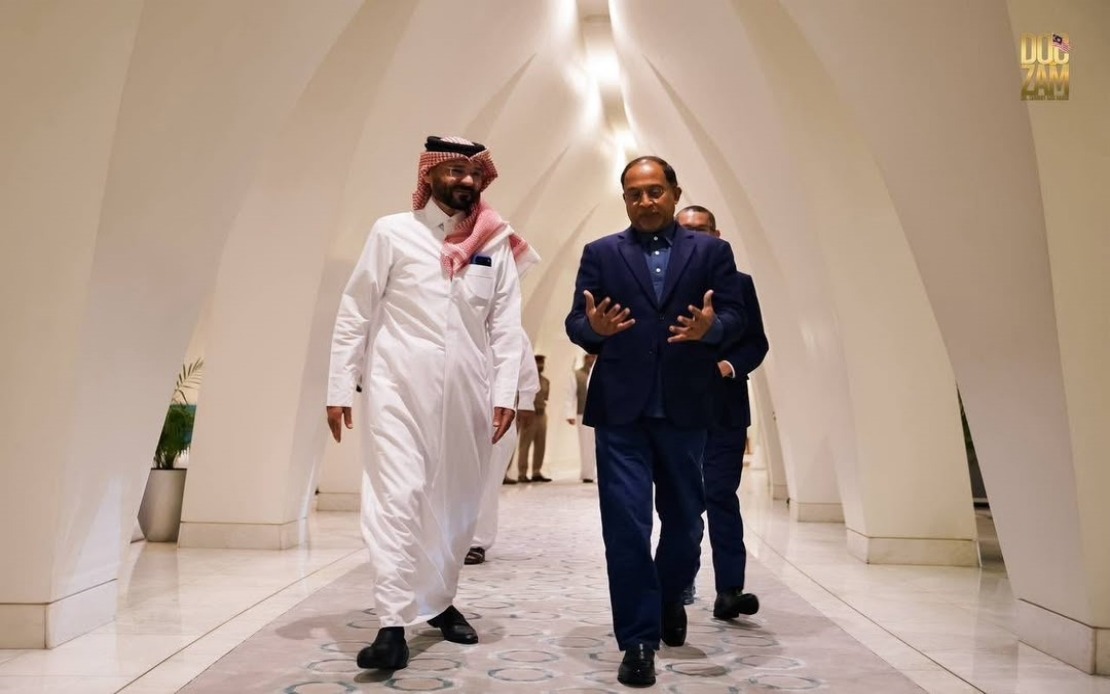
Malaysia's Higher Education Minister Datuk Seri Dr Zambry Abd Kadir touched down in Doha on Tuesday morning as the official representative of the Malaysian government, honouring the death of Qatar's revered former leader, Sheikh Hamad bin Khalifa Al Thani. The minister's presence underscores the diplomatic ties between Malaysia and Qatar, two significant Muslim-majority nations with longstanding bilateral relations across trade, defence, and cultural exchanges.
Sheikh Hamad, who led Qatar through a transformative period as its supreme ruler, died on Sunday at the age of 74. His passing marks the end of an era for the Gulf state, which he steered from relative obscurity into one of the world's wealthiest and most influential nations during his 18-year reign from 1995 until his abdication in 2013. The death has prompted the Qatari government to declare four days of official mourning across the country, during which government offices, ministries, and public institutions remain shuttered to allow citizens and officials to pay their respects.
Zambry's itinerary reflects standard diplomatic protocol for such occasions. Upon his arrival in the Qatari capital, he planned to visit the Lusail Palace to meet with the current Amir, Sheikh Tamim bin Hamad Al Thani, Qatar's reigning leader who assumed power a decade ago when his father voluntarily stepped down. This personal audience demonstrates Malaysia's commitment to maintaining strong governmental relations with Qatar's existing administration while honouring the legacy of its former ruler.
In his public statement, Zambry articulated Malaysia's formal condolences on behalf of the nation's government. The minister emphasised that Malaysia extends its sympathies not only to Qatar's ruling family but also to the broader Qatari population mourning their late Father Amir. Such sentiments reflect the warm relationships that exist between Southeast Asian nations and Gulf states, relationships built on shared Islamic values, economic partnerships, and mutual regional interests.
Sheikh Hamad's transformation of Qatar cannot be overstated in the context of contemporary Middle Eastern politics and economics. When he assumed power through a bloodless coup in 1995, Qatar was a modest oil and gas exporter with limited global influence. Under his visionary leadership and strategic policies, particularly regarding energy sector development and economic diversification, Qatar emerged as a global financial powerhouse. His government leveraged vast natural gas reserves to build sovereign wealth funds and establish Qatar Airways, transforming the nation into a major international player.
The former Amir's decision to voluntarily relinquish power in 2013 was unprecedented in the Gulf region, setting an example of peaceful democratic transition that resonated across the Muslim world. Unlike many leaders in the region who cling to authority, Sheikh Hamad's abdication in favour of his son demonstrated a progressive approach to governance and succession planning. This smooth transition has allowed his son, Sheikh Tamim, to continue his father's legacy of economic development and strategic positioning.
Qatar's relationship with Malaysia extends beyond mere diplomatic courtesy. Both nations maintain active trade partnerships, with Malaysian companies operating across Qatar's diverse economic sectors. The two countries share strategic interests in Islamic finance and the broader Organisation of Islamic Cooperation framework. Additionally, Malaysian workers form a significant expatriate community in Qatar, making the nation an important employment destination for Malaysian citizens seeking opportunities in the Gulf's booming economy.
The funeral proceedings taking place in Doha this week will attract dignitaries and representatives from across the Muslim world and beyond, testament to Sheikh Hamad's influence on global affairs. His tenure saw Qatar host the 2022 FIFA World Cup, an unprecedented achievement for a Middle Eastern nation that reshaped international perceptions of the region. This international status ensures that his death garners significant attention across diplomatic circles, with countries large and small sending representatives to pay final respects.
Zambry's mission in Doha carries particular significance as Malaysia seeks to deepen its relationships with Gulf states, especially amid evolving regional dynamics and economic recalibrations following global supply chain disruptions. Qatar, as a major liquefied natural gas exporter and financial hub, remains strategically important to Southeast Asian nations navigating complex geopolitical waters. The minister's presence at this solemn occasion reaffirms Malaysia's commitment to maintaining cordial relations with Qatar's government and people during a period of national reflection.
The four-day mourning period declared by Qatar reflects the nation's respect for the departed leader and provides time for citizens, officials, and international representatives to contemplate Sheikh Hamad's contributions to Qatar's modern development. During this period, the usual rhythms of Qatari government and commerce pause, allowing space for ceremonial observances deeply rooted in Islamic tradition and Qatari cultural practices.
For Malaysia and other Southeast Asian nations with significant economic and human ties to Qatar, Sheikh Hamad's passing also prompts reflection on the stability and continuity of governance in the Gulf region. Sheikh Tamim's continued leadership and demonstrated commitment to his father's developmental agenda suggest that Qatar will maintain its course as a regional power and attractive destination for foreign investment and talent. Malaysia's participation in the funeral rites, through Zambry's official representation, sends a clear message of solidarity and support for Qatar's transition period.

