The Malaysian Ministry of Higher Education has stepped up its vigilance regarding the welfare of Malaysian students scattered across West Asian nations, responding to heightened security concerns gripping the region. Higher Education Minister Datuk Seri Dr Zambry Abd Kadir outlined the ministry's comprehensive monitoring framework during remarks in Putrajaya, underscoring that MOHE maintains continuous coordination with the Foreign Ministry to gauge risks and implement protective measures. The announcement comes amid a broader reassessment of regional stability, with major powers revising their travel advisories and urging nationals to exercise extreme caution or evacuate altogether.
The ministry's approach reflects the delicate balancing act required when managing educational placements in geopolitically sensitive zones. Rather than issuing blanket evacuation directives, Zambry indicated that MOHE is calibrating its response based on real-time intelligence from Wisma Putra, Malaysia's Foreign Ministry headquarters. This collaborative arrangement acknowledges that security assessments require specialised diplomatic channels and early-warning mechanisms beyond the scope of educational administrators alone. The minister specifically noted the unpredictability of external policy shifts, observing that decisions made by foreign powers today may reverse tomorrow, necessitating flexible contingency planning rather than reactive crisis management.
The geographic distribution of Malaysian students across the region varies considerably. Egypt hosts the largest concentration, with thousands of Malaysians enrolled across multiple disciplines ranging from Islamic studies to medicine, dentistry, and pharmacy. Jordan represents the second major hub, with estimates suggesting between one thousand and two thousand Malaysian students actively pursuing degrees there. Morocco, while maintaining a smaller Malaysian student presence, has witnessed gradual growth in enrolments, though coordination for student-related matters there operates through Malaysia's Education Ministry office based in Cairo rather than a dedicated local outpost.
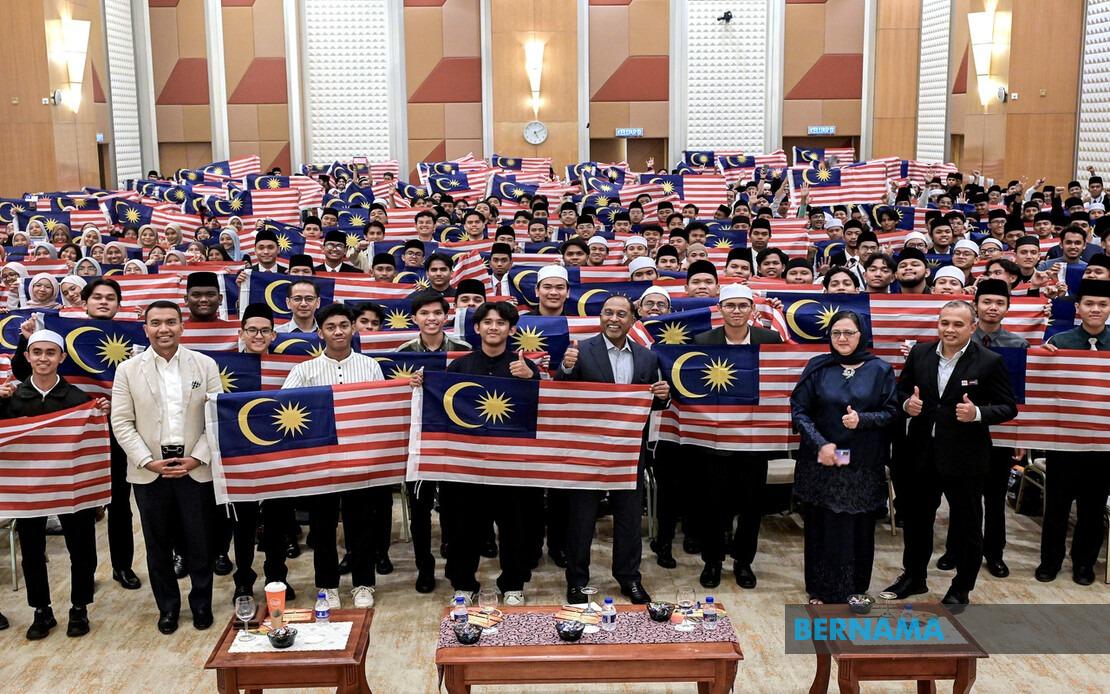
A particularly symbolic event underscoring the ministry's commitment to student welfare was the recent International Charisma Programme hosted in collaboration with the Malaysia Nationhood Academy. Some 456 Malaysian students destined for studies beginning September 1 in Egypt, Jordan, and Morocco participated in this structured orientation initiative. The programme served multiple functions simultaneously: it provided security briefings tailored to regional conditions, facilitated direct dialogue between students and ministry officials, and created a database enabling MOHE to maintain reliable contact with deployed students. Such preparatory engagement represents a proactive approach rather than reactive crisis response.
Zambry's statements emphasise that institutional infrastructure already exists to support Malaysian scholars abroad. Education Malaysia offices operate as frontline resources in both Egypt and Jordan, equipped to address emergencies, provide visa assistance, and coordinate with local authorities when circumstances demand intervention. The absence of a dedicated office in Morocco has been addressed through practical arrangements whereby Cairo-based staff extend their services to Moroccan locations. This distributed network design recognises that West Asian countries maintain varying levels of development in communications technology and institutional capacity, requiring Malaysia to adapt its support mechanisms accordingly.
The minister's framing of Malaysian students as strategic national assets carries profound implications for how the government conceptualises its higher education investment strategy. Beyond viewing foreign study as individual pursuit of credentials, the government increasingly recognises that these students represent Malaysia's soft power projection and future knowledge economy competitiveness. His expectation that graduates will return to contribute expertise to national development reflects calculated ambition to convert educational expenditure into tangible developmental benefits. This perspective aligns with Malaysia's broader aspirations to build a high-skill workforce capable of competing in increasingly sophisticated global markets.
Zambry articulated a pedagogical framework extending beyond conventional academic achievement, emphasising three Arabic-derived concepts that characterise comprehensive education. The concept of ta'lim addresses knowledge transmission, tarbiah encompasses personal development and self-cultivation, while ta'dib focuses on ethical and moral formation. This tripartite model acknowledges that technical competence divorced from ethical grounding remains insufficient for nation-building, a particularly pertinent consideration given Malaysia's commitment to values-based governance and pluralistic coexistence.
The ministry's current posture reflects informed caution rather than alarmism. Despite acknowledging the shifting security landscape, Zambry reported that no information indicates the situation has negatively impacted Malaysian students currently studying in the identified countries. This distinction matters significantly: it differentiates between precautionary alertness and panic-driven overreaction, positioning MOHE as a responsive rather than paralysed institution. The stated readiness to implement immediate protective measures should circumstances deteriorate signals contingency planning without premature implementation of disruptive protocols.
Malaysia's position as an emerging education destination itself reflects the ministry's broader strategic success. The country now attracts students from approximately 180 nations, a statistic signifying international confidence in local institutional quality and competitive positioning. This diversification insulates Malaysian universities from over-dependence on single-country student recruitment pipelines, creating stability amid regional volatility. The achievement demonstrates that Malaysia has successfully elevated its higher education brand beyond Southeast Asian recognition to genuine international standing.
The monitoring framework MOHE has established carries implications beyond immediate student safety considerations. It establishes precedent for how Malaysia responds to transnational challenges affecting diaspora populations and citizen interests across contested regions. The coordination mechanisms now activated—particularly the Foreign Ministry partnership—create institutional pathways that may be adapted for other vulnerable populations should similar crises emerge elsewhere. Furthermore, the emphasis on maintaining student deployments rather than wholesale evacuation suggests Malaysia values long-term educational continuity and strategic presence over short-term risk mitigation.
For Malaysian families with children studying in West Asia, the ministry's reassurances carry both comfort and realism. The acknowledgement of monitoring does not guarantee immunity from regional instability; rather, it indicates systematic awareness and predetermined response protocols. Parents can draw modest reassurance from knowing their children form part of an enumerated, tracked cohort rather than dispersed individuals receiving ad-hoc attention. The existence of institutional channels for crisis communication and coordination represents genuine value even if broader security situations remain beyond official control.

