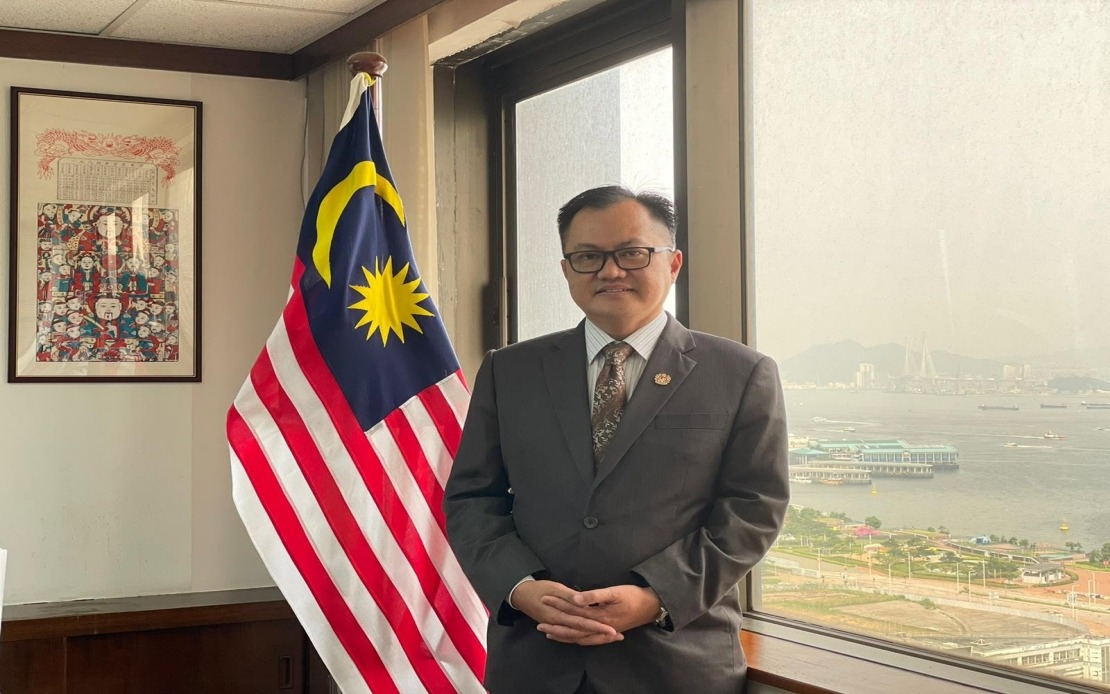
The Malaysian Consulate General in Hong Kong has moved to counter assertions that Malaysians abroad faced significant barriers to participation in the recent Johor state election, claiming the mission executed a comprehensive communication programme designed specifically to keep expatriate voters informed. Consul General Muzambli Markam took issue with a South China Morning Post article published in early July that portrayed overseas voters as effectively locked out of the electoral process, arguing that the headline and framing grossly mischaracterised both the efforts of Malaysia's Election Commission and the broader commitment of the government to enable citizens living abroad to exercise their voting rights.
The consulate's response addresses a growing conversation about whether Malaysians in diaspora communities can meaningfully participate in domestic elections. The SCMP piece, which ran both online and in print on July 9-10, had suggested that tight registration deadlines and limited awareness created practical obstacles for expatriate voters seeking to cast ballots in Johor's state assembly contest. Such concerns have relevance across Southeast Asia, where millions of citizens from the region live and work abroad, often facing bureaucratic and logistical challenges when attempting to engage with electoral processes back home.
According to Muzambli, the Consulate had proactively disseminated information through multiple channels well ahead of the election period. The mission consistently published advisories and instructional guidance across its official digital platforms, ensuring that Malaysians in Hong Kong had ready access to details about voting procedures and eligibility requirements. Beyond direct government communication, the Consulate worked in partnership with the Malaysian Association of Hong Kong, a key community organisation, to circulate updates about registration windows and to encourage participation in the democratic exercise. This multi-layered approach, Muzambli contended, demonstrates that the premise of widespread unawareness among overseas Malaysians does not withstand scrutiny.
The consul general also clarified that he had explicitly briefed the SCMP journalist prior to publication about the proactive communication strategy the Consulate had implemented specifically in advance of the state elections. Muzambli's assertion that crucial context was omitted from the final article suggests a disconnect between what the journalist was told and how the story ultimately portrayed the situation. This raises questions about editorial decisions and whether the final narrative adequately reflected the full picture of government efforts, or whether legitimate concerns about accessibility were overshadowed by a focus on structural challenges.
A particular point of contention centres on voter statistics. The SCMP article had suggested that the Consulate's inability or unwillingness to provide local voter numbers pointed to administrative gaps in the system. Muzambli rejected this interpretation, explaining that the Consulate deliberately functions as a non-intermediary in the registration workflow. Instead, Malaysia has modernised its electoral infrastructure by digitalising the overseas voting registration process, allowing Malaysians abroad to submit applications directly through MySPR, a centralised online portal. This design choice shifts responsibility away from diplomatic posts and places it directly in the hands of voters and the central electoral system.
The decision to eliminate intermediaries in the digital workflow reflects a broader shift toward efficiency and security in electoral administration. By allowing overseas voters to register directly with the system rather than through consulates, Malaysia aims to streamline procedures and reduce potential bottlenecks. However, this approach also means that consulates are no longer gatekeepers of voter data, which explains why the Hong Kong post could not furnish statistics on how many Malaysians in its jurisdiction had registered to vote. Muzambli framed this not as a shortcoming but as a deliberate feature of a secure and modern electoral process.
For Malaysian expatriates in Hong Kong and across Asia, the implications of this debate are significant. The tension between decentralised digital access and traditional consular support highlights a transition in how governments manage overseas voting. On one hand, an online portal removes geographical and temporal constraints, allowing voters anywhere with internet connectivity to register at their convenience. On the other hand, voters who are unaware the system exists or who lack digital literacy may struggle without intermediary support from their local embassy or consulate. The adequacy of public outreach thus becomes critical to ensuring that digital accessibility translates into actual participation.
Muzambli's response also signals the Malaysian government's broader confidence in its digital electoral infrastructure. By emphasising the modernised MySPR portal and the direct-to-system approach, the Consulate presents a vision of overseas voting that is contemporary and secure, not antiquated or dependent on physical presence. This aligns with Malaysia's wider digital transformation agenda and reflects an understanding that younger, tech-savvy expatriate communities can navigate online platforms independently. Yet such assumptions may not account for demographic diversity within diaspora populations or for citizens with limited exposure to Malaysian government digital systems.
The exchange between the Consulate and the SCMP also underscores the importance of diplomatic communication in shaping narratives around electoral access. A media report that emphasises barriers and limitations can influence public perception of electoral fairness and inclusivity, even if mitigated by government outreach efforts. Conversely, a consulate's assertion that it has done sufficient work may overlook gaps that voters themselves experience on the ground. The truth likely lies somewhere between these poles, suggesting that while the Hong Kong Consulate did undertake outreach, questions about awareness and accessibility may not be entirely baseless.
Looking ahead, Malaysia's experience with overseas voting during the Johor election offers lessons for the region. As democracies across Southeast Asia grapple with enabling expatriate participation, they must balance efficiency with accessibility, digital infrastructure with human support, and centralised security with consular responsiveness. The Malaysian Consulate General in Hong Kong has made a case for its efforts, but the broader question of whether those efforts sufficiently reach all segments of the overseas Malaysian population remains open to debate. What seems clear is that as electoral systems evolve, so too must the strategies for ensuring that geographical distance does not translate into political distance from the democratic process.

